

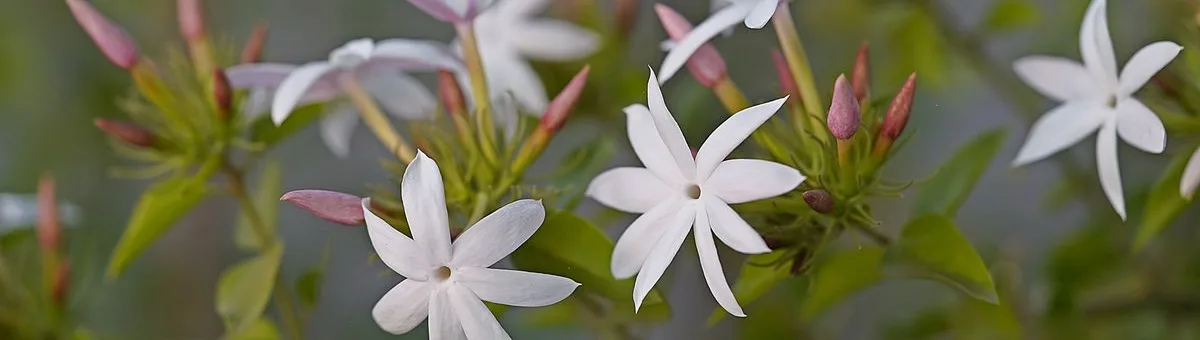
Identify the plant and its growth habit
Decide whether the plant is a climber or shrub and check its mature size. The RHS jasmine guide describes the differences among common, winter and Chinese jasmine and notes that some need protection from low temperatures. Its separate star jasmine guide explains that Trachelospermum needs a support even though it is often called jasmine.
Choose a sheltered site and suitable support
Match light and drainage to the identified species. Many climbing types need wires, a trellis or another sturdy support; do not assume a plant can attach directly to a wall. In a cold or frost-prone climate, use local hardiness guidance to decide whether a container or protected site is needed.
Water and prune according to species
Check container moisture more frequently than in a garden bed, but avoid waterlogging. Pruning depends on flowering time and growth form; wait until you know whether the plant blooms on old or new growth. If a name tag says only “jasmine,” ask the nursery for the botanical name before planting or pruning. For other climbers, see our climbing plant guide.
Compare common jasmine species
The name “jasmine” is used for several plants, and their hardiness and growth habits differ. The Royal Horticultural Society’s jasmine growing guide describes common, winter and Chinese jasmine. Star jasmine has its own RHS growing guide because it belongs to another genus. Use this table to decide which label details to verify:
| Plant commonly called jasmine | Habit and feature | Check before growing |
|---|---|---|
| Jasminum officinale | Climbing shrub with fragrant summer flowers | Support, space, local winter exposure and pruning after flowering |
| Jasminum nudiflorum | Scrambling shrub with yellow winter flowers | Whether the site gives it room to arch or spread, and when to shape it |
| Jasminum polyanthum | Fragrant climber often grown under cover in cooler climates | Cold sensitivity, indoor light and ventilation needs for your region |
| Trachelospermum jasminoides | Evergreen climber with jasmine-like fragrant flowers; not a Jasminum | Shelter, drainage, support and cold exposure for the exact site |
Common names on labels can be abbreviated or translated. When comparing two plants, ask for the full botanical name and check the nursery’s care advice for that exact species. Do not use the temperature tolerance of one jasmine for another.
Plant jasmine in a garden or container
Choose a position that fits the species’ light and cold requirements, then make sure the soil drains. A climbing jasmine needs a support installed before its stems become difficult to direct. Keep the trellis or wires far enough from a wall to allow air circulation and access for maintenance. Tie young growth loosely with a soft tie; do not bind stems tightly or assume every species attaches itself to a wall.
For container growing, choose a stable pot with drainage and room for the root ball plus a proportionate increase in size. A climber may need a heavier base or a securely fixed support so the pot does not tip as growth extends above it. Use container mix and check moisture more often in warm, windy locations. Empty saucers after watering, and avoid keeping the root zone saturated.
When planting in a bed, water the root ball and the surrounding soil to help establish contact, then monitor both as the plant settles. Mulch can moderate moisture loss; keep it away from the stems. Avoid feeding automatically when a plant is not flowering: too much fertilizer, inadequate light, recent transplanting or incorrect pruning can all affect flowering. Follow the plant label before applying fertilizer.
Troubleshoot poor growth and flowering
If jasmine has leaves but few flowers, check the species and pruning history first. A plant cut back before its flowering period may have lost buds. Next, review light, winter damage, root moisture and whether the climber has enough space. A newly moved or recently planted jasmine may need time to establish, and a plant in a dark indoor location may grow weakly even when it is described as suitable for a conservatory.
Yellowing leaves or wilting do not automatically mean a plant needs more water. Check the root zone, drainage holes and recent weather before changing irrigation. In a pot, inspect for compacted mix or a blocked drain; in a bed, look for waterlogging, dry soil or root competition. If symptoms persist, use an extension or horticultural reference for the identified species rather than applying a generic treatment.
Keep a brief record of the botanical name, planting date, light exposure, watering and pruning. It will help distinguish a seasonal change from a care problem. For broader guidance on site selection, see our outdoor plants guide.
Use a seasonal care plan for the identified species
In spring, check the botanical name, support and drainage before new growth becomes tangled. Remove dead or damaged stems and tie young shoots loosely. If the plant has just been purchased, allow it to adjust to outdoor exposure gradually and keep the root ball from drying while it establishes. Avoid pruning before you know whether the species flowers on old or new wood.
During active growth, monitor moisture after hot or windy weather and keep the support secure. Water containers based on the medium’s condition rather than a fixed number of days. If a plant produces leaves but few flowers, review light, species identity, pruning date and recent stress before feeding it. Over-fertilizing can create more foliage without solving a site mismatch.
After flowering, remove misplaced or spent growth according to species-specific guidance. The RHS guides to true jasmines and star jasmine explain why the common name should not be used as the only care reference. As autumn approaches, check local cold guidance and protect or move a tender container plant only if the species and available winter conditions support that plan.
Keep a short record of the species name, planting location, flowering time, pruning and winter response. This helps you decide whether the plant is suited to the site and when to repeat maintenance. If the name on a tag is unclear, ask the nursery to confirm it rather than applying a generic “jasmine” schedule.
Use a checklist when buying or planting jasmine
- Read the full botanical name and distinguish Jasminum from plants sold under jasmine common names.
- Check mature height, spread, growth habit and the support needed.
- Compare local winter conditions with a regional care source for that exact species.
- Choose a site with suitable light and drainage, and prepare the support before planting.
- Keep the nursery label and note planting date, watering and flowering period.
- Confirm pruning timing and winter protection before cutting or moving the plant.
These checks help avoid a mismatch: buying an attractive jasmine-labelled plant for a location where its cold tolerance, growth habit or support needs do not fit. A nursery can help confirm the species and cultivar. For broader site planning, see our outdoor plants guide.
Check jasmine growth through the seasons
Use the plant’s botanical name to find a care guide before pruning or changing its position. “Jasmine” can refer to different climbing plants, and star jasmine (Trachelospermum jasminoides) is not the same genus as true jasmines (Jasminum). Their hardiness, fragrance, growth habit and pruning response can differ. Keep the nursery label and photograph the flowers and leaves if you need help identifying a specimen.
During active growth, guide a climber along a support that can carry the mature plant and allow access for tying and maintenance. Inspect ties so they do not constrict stems, and check that the support is clear of gutters and window frames. For a container plant, confirm that the pot drains, the root zone does not stay saturated and the container can be moved or protected if local winter conditions require it.
After flowering, remove only growth that needs shaping or is damaged, and consult a species-specific guide before making a major cut. Record the timing of pruning and flowering so you can judge whether the chosen routine suits the plant. The Royal Horticultural Society’s jasmine guide and its star-jasmine guide distinguish these groups and give cultivation advice. A guide from a milder British climate may not map directly to your local winter, so confirm hardiness and exposure with a regional source.
Keep identification notes for jasmine plants
Common names are not always enough to identify a plant. Record the botanical name, cultivar if known, source and a photo of the flowers and foliage. If a label is missing, compare the specimen with a reliable botanical or horticultural source before pruning, propagating or changing its exposure. Ask a regional garden centre or botanical garden for help if the identification remains uncertain.
When buying a jasmine, confirm whether it is intended for a container or the ground, what support it needs and how it handles your local winter. Check mature size and expected flowering period from the exact species guide. A plant sold under the word “jasmine” may not share the same care needs as another species with that common name, so avoid transferring a routine from one plant to another.