

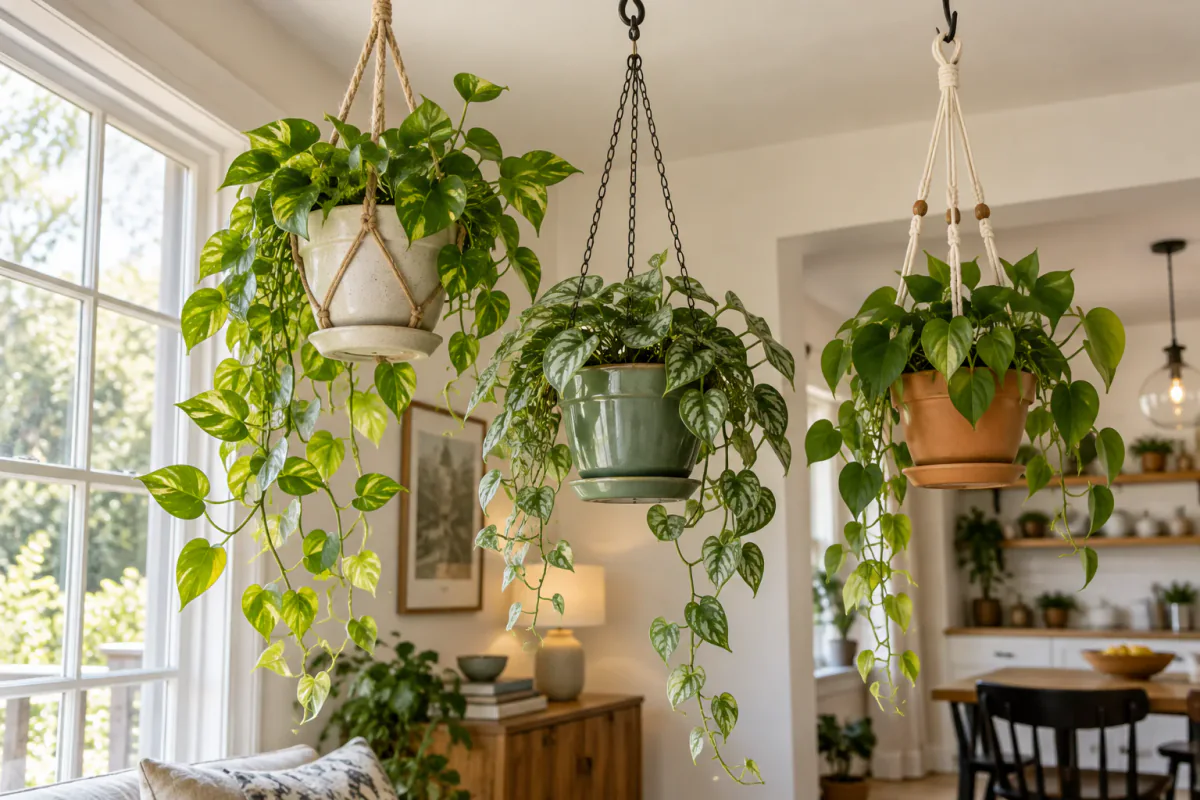
Choose the right hanging planter format
A hanging planter may be a basket with an integral liner, a rigid pot with a chain, a reservoir-style self-watering container, or a decorative cachepot that holds a separate nursery pot. The last option is often easiest indoors: lift out the inner pot, water it over a sink, let it drain fully, then return it. This avoids carrying a wet basket and keeps drips off floors. For an outdoor basket, an open frame with a replaceable liner allows side planting, while a solid pot is easier to clean and may shield roots from direct sun.
Think about the finished display, not just the empty container. A wide basket offers room for a central plant and spillers around the rim; a narrow pot may suit one trailing plant. A large basket can look balanced outdoors but may be awkward to lower for pruning or seasonal storage. Check the opening, depth, chain length and whether the liner or inner pot can be replaced. If an attractive outer pot has no drainage, treat it as a cover pot rather than filling it directly with compost.
Size the pot for roots and mature growth
Use the root ball and the plant’s likely mature size to select the inner pot. A small root system in a very large volume of wet compost may stay damp for too long, while an overfilled, root-bound pot can dry rapidly and need constant attention. For one houseplant, compare the nursery pot with the interior dimensions of the new container and move up gradually when repotting is actually needed. A mixed basket needs enough root room for every plant without crowding stems or hiding the center from light.
Basket measurements usually describe the rim, not the usable soil volume. Check internal width and depth, and leave a little space at the rim so watering does not wash compost over the edge. Take into account the liner: thick coir or a fitted reservoir can reduce the space available to roots. Plan the trailing length as well. A vigorous vine can reach a doorway, lamp or fan, and mature foliage can make the container harder to reach. Penn State Extension’s houseplant repotting guide explains why a pot should be chosen for the plant and drainage rather than appearance alone.
Plan drainage before you hang it
Most foliage and flowering plants grown in containers need excess water to escape the root zone. For a directly planted hanging pot, inspect the drainage holes before adding compost and make sure the liner does not seal them. A mesh square can keep media from falling through a large opening without blocking water. Do not add a layer of gravel as a substitute for a drainage hole; coarse material at the bottom does not solve a saturated growing medium.
For an indoor display, use a removable inner pot, a lift-out saucer or a reservoir designed to hold water. Empty any cachepot or tray after watering so roots are not left in standing water. If the container is over furniture, flooring, a radiator or a neighbor’s balcony, consider the path taken by overflow and wind-driven rain. Penn State’s guidance on decorative outer pots describes using a draining pot inside a cachepot and removing excess water after irrigation. The best drainage setup is one you can inspect and empty without unhooking the basket.
Install the hanger on suitable support
Choose the fixing for the actual structure: a ceiling joist, masonry wall, balcony beam or purpose-built stand each needs different hardware. Follow the hanger and fixing manufacturers’ installation instructions, including the substrate and rated load. A small hook driven into plasterboard or a decorative ceiling panel is not automatically a safe anchor. If you cannot identify the structure or are unsure how the fixing is installed, ask a qualified person or use a freestanding plant stand instead.
Estimate the complete load, not the dry basket alone. Include the container, liner, wet growing medium, plant at mature size, chain, reservoir and water held after irrigation. A plant can also move in a gust, so an exposed position adds forces that a simple static weight estimate does not capture. Keep the hanger away from doors, walkways, glazing, ceiling fans and electrical fixtures. Do not hang a heavy pot where a failure could strike a person, pet or fragile surface.
Before planting, test that the hook is correctly installed and the chain is not twisted or rubbing against a sharp edge. Check the basket periodically for corrosion, cracked plastic, frayed rope, loose fasteners and a degrading liner. Replace damaged hardware before the pot is full. A ceiling hook is only one part of the support system: the fixing, host structure, chain and basket all need to remain sound.
Water hanging plants without guesswork
There is no universal schedule for hanging pots. Sun, wind, room temperature, species, pot material, basket size and root growth all change how quickly the mix dries. A small outdoor basket in hot wind may need checking daily, while a larger indoor pot in lower light may remain moist longer. Check the growing medium at root depth rather than judging only by a dry surface or wilted leaves. Learn the difference in weight between the basket after watering and as it dries; that can be a useful second signal.
Water slowly so the mix absorbs it instead of letting the first pour run along a dry surface. If the inner pot can be removed, water at a sink and allow it to drain before hanging it again. If watering in place, use a narrow-spout can or controlled nozzle, protect the area below and stop when the medium is evenly moist and excess has drained. Do not leave water in a reservoir unless the design and plant are intended for that method. The RHS hanging-basket guide recommends checking compost regularly and notes that hot summer conditions can increase watering needs; its advice is a starting point, not a fixed calendar.
Repeated runoff can wash nutrients out of containers, but adding fertilizer is not a substitute for checking moisture and drainage. If the basket dries unevenly, rotate it when safe, verify that the root ball is being wetted and inspect whether compacted or hydrophobic mix is shedding water. Adjust care after repotting because fresh media may hold water differently from the old root ball.
Match plants to light and location
Start with the light where the leaves will hang, not the brighter spot at floor level. Observe the location through the day and note direct sun, reflected heat and shade from a roof or balcony. Use the botanical name and plant-care label to check light and moisture requirements. A trailing habit is visually convenient, but it does not mean a plant tolerates low light, dry air or a continuously wet root zone.
For a mixed basket, group plants with similar needs. Combining a drought-tolerant plant with one that needs consistently moist compost creates a watering compromise that may suit neither. Consider mature width and trailing length, and leave room for air to move through foliage. Place heavy or large plants where they do not block a path, window or handrail. For edible or flowering baskets outdoors, confirm that the site receives the light required by that particular crop.
Pet owners should check each species by its botanical name with a veterinary or poison-control reference before placing it overhead. A hanging position does not prevent a cat from reaching a trailing vine or leaves that fall to the floor. The ASPCA plant database can help identify plants that may be harmful to dogs or cats; when uncertain, choose a known non-toxic alternative and contact a veterinarian if an animal chews a plant.
Use hanging pots indoors without damaging surfaces
For indoor use, prioritize easy watering and a catch system over a sealed decorative pot. A removable plastic nursery container inside a woven basket is simple to lift and clean. A fitted saucer can work if it is accessible and emptied after watering. Keep the bottom of the basket far enough from wallpaper, woodwork, electronics and furnishings that occasional splashes will not damage them. If the plant needs a shower or sink rinse, make sure the chain releases safely or use a liner that can be removed without lifting an unstable plant overhead.
Indoor air movement and heating can dry foliage and media, but misting leaves is not a replacement for appropriate watering or humidity. Avoid positioning the pot above a bed, desk, crib or busy seating area. Check that the ceiling finish and hook remain dry, especially if water has previously overflowed. If you rent, check the rules before drilling; a tension stand or wall-mounted shelf may be a better option where permanent fixings are not allowed.
Choose a basket for an exposed balcony or porch
Outdoor baskets face rain, wind, direct sun and temperature swings. Select a container rated for outdoor use and a liner that can be replaced when it breaks down. An open wire basket lined with coir can dry faster than a solid plastic pot, so it may require closer moisture checks. A reservoir basket can reduce how often you need to carry water, but inspect the reservoir, wick and overflow path; no self-watering system is maintenance-free.
Consider where drainage will fall. Do not let nutrient-rich runoff stain a façade, cross onto a lower balcony or drip onto pedestrians. Ask building management about hanging planters, permitted fixings and balcony rules before installation. Keep the basket inside the railing rather than projecting it over a public area. In freezing weather, follow the container maker’s advice and move vulnerable pots to shelter where practical. Remove the basket before storms if the manufacturer or building rules call for it.
Set up a new hanging planter step by step
- Choose the plant and inspect the intended light, access and mature reach.
- Measure the nursery pot and compare it with the hanging planter’s usable interior dimensions.
- Confirm the planter drains, or choose a separate inner pot and catch system for a decorative cover.
- Read the hanger and fixing instructions and identify a suitable structural attachment point before filling the basket.
- Use a container potting mix suited to the species; do not fill with heavy garden soil by default.
- Plant at the same depth as the root ball and leave space at the rim for watering.
- Water at a safe, reachable location, allow full drainage, then install the completed basket.
- Write down the plant name and observe moisture for the first few weeks before setting a routine.
For a basket that is difficult to lift, assemble and plant it on a stable work surface at a comfortable height, then have another person help move it only if the finished weight is manageable. Do not climb a chair while holding a wet planter. If the container is too heavy to position safely, reduce its size or use a stand at floor level.
Troubleshoot common hanging-pot problems
Leaves wilt soon after watering: check that water reaches the root ball, rather than running down a gap at the sides. A dry, compacted mix can repel water; water in small passes or soak a removable pot briefly, then drain it completely. Leaves yellow while the mix stays wet: stop adding water until the root zone has been checked, clear blocked outlets and review light and temperature. Yellowing alone does not diagnose a nutrient deficiency.
Brown tips or crispy edges: examine moisture, sunlight, heat, fertilizer use and water quality before changing several factors at once. Water drips onto the floor: use a removable inner pot or accessible tray and water at a sink. The chain tilts or creaks: lower the pot safely and inspect the hook, links and substrate; do not keep using a doubtful fixing. Change one care variable at a time and observe new growth rather than expecting damaged leaves to recover immediately.
Maintain the basket through the season
Inspect stems and the underside of leaves during watering so pests or disease are found early. Remove dead flowers or damaged leaves where appropriate for the species, and trim vines before they reach fans, sockets or walkways. Reassess the support as the plant grows; a small plant can become a much larger load and may catch more wind. Clean a reusable inner pot and saucer between plants, and replace a liner if it no longer holds the medium securely.
At the end of a seasonal display, decide whether the plant should be kept, repotted or composted according to its species and local guidance. Store empty baskets dry and out of weather if the manufacturer recommends it. Before rehanging each year, check the fixing, chain, liner, drainage and catch tray again. For broader advice on choosing materials and matching pot size to a plant, continue to our plant pots guide and the focused guide to hanging houseplants.