

How to Choose the Right Grass Seed
Three questions determine which seed is right for you. First: do you have cool-season or warm-season grass? (See our complete lawn guide if you're unsure.) Second: how much sun does your lawn get? Full sun (6+ hours), partial shade (3–6 hours), or dense shade (under 3 hours) require different species blends. Third: what are you trying to accomplish — establishing a new lawn, thickening a thin one, or repairing specific bare spots?
Most homeowners have mixed sun/shade conditions and want a general-purpose overseeding mix. That's exactly what the Scotts Sun & Shade blend is designed for. Homeowners with specific conditions (heavy shade, high traffic, consistent drought) will get better results from a targeted mix.
Our Top 3 Grass Seed Picks for 2026
1. Scotts Turf Builder Sun & Shade Mix — Best All-Purpose
The Scotts Sun & Shade Mix is the most versatile cool-season seed blend available — and the right starting point for anyone who isn't sure what their lawn needs. It contains a blend of species suited for the range of conditions most residential lawns include: areas in full sun, areas under trees with partial shade, and areas alongside structures with deeper shade. The WaterSmart coating absorbs 2× more water than uncoated seed, reducing the risk of drying out during the critical first days after seeding.
Scotts Turf Builder Grass Seed Sun & Shade Mix, 7 lbs
- ✓ Grows in full sun, partial shade, and deep shade conditions
- ✓ WaterSmart coating — absorbs 2× more water than uncoated seed
- ✓ Contains starter fertilizer to feed seedlings
- ✓ 7 lbs covers up to 2,900 sq ft for overseeding
No verified direct Amazon.com listing is linked for this exact model.
The blend typically includes Kentucky bluegrass (for sunny areas), fine fescues (shade tolerant), and perennial ryegrass (fast germination). This combination provides visual uniformity across varied conditions. Scotts backs this with extensive trial data and the mix has consistently performed well in user reports across diverse climates.
One note: the "Sun & Shade" designation means it works in both conditions, not that it excels equally in both. In very dense shade — under large conifers or on the north side of a structure — specialized shade-tolerant fine fescue blends will perform better than any general mix.
2. Scotts Turf Builder High Traffic Mix — Best for Busy Yards
The High Traffic Mix is formulated specifically for lawns that take a beating — active families with kids, dogs, or sports use. It relies heavily on turf-type tall fescue, which forms a deep, extensive root system and bounces back quickly from wear. It also includes Kentucky bluegrass, which spreads through underground rhizomes to fill in damaged spots that other grasses can't repair without reseeding.
Scotts Turf Builder Grass Seed High Traffic Mix
- ✓ Turf-type tall fescue + Kentucky bluegrass blend
- ✓ Kentucky bluegrass spreads via rhizomes to self-repair
- ✓ Deep-rooting species handles heavy foot traffic
- ✓ WaterSmart coating for reliable germination
No verified direct Amazon.com listing is linked for this exact model.
The trade-off with the High Traffic mix is that it doesn't perform as well in heavy shade as the Sun & Shade blend, since tall fescue and bluegrass prefer sun or light shade. For a yard with a mix of play areas (sun) and shaded spots, you might use the High Traffic Mix in the open areas and the Sun & Shade mix under trees.
3. Pennington Smart Seed Sun & Shade Mix, 7 lb — Best Premium
Pennington's Smart Seed line is Scotts' closest competitor in the consumer grass seed market, and on some metrics it edges ahead. The Smart Seed coating technology (Penkoted treatment) includes fungicide protection that reduces the risk of seed rot in cool, wet conditions — a real advantage if you're seeding in fall when temperatures and moisture levels can be unpredictable.
Pennington Smart Seed Sun and Shade Grass Mix, 7 lb
- ✓ Penkoted treatment with fungicide protection for wet conditions
- ✓ Blend of Kentucky bluegrass, fine fescue, and perennial ryegrass
- ✓ Water-absorbing coating for improved germination
- ✓ 7 lbs covers up to 2,330 sq ft for overseeding
No verified direct Amazon.com listing is linked for this exact model.
In head-to-head tests, Pennington Smart Seed tends to germinate slightly faster than comparable Scotts blends — typically 7–10 days versus 10–14 days under similar conditions. The resulting lawn is also somewhat more drought-tolerant as it matures. For homeowners who have had past germination failures or seed rot in wet falls, the Penkoted treatment is worth the small price premium.
Grass Seed Comparison Table
| Product | Best For | Sun Requirement | Germination |
|---|---|---|---|
| Scotts Sun & Shade 7 lb | Mixed conditions | Full sun to deep shade | 10–14 days |
| Scotts High Traffic | Play areas, dogs | Full sun to light shade | 10–14 days |
| Pennington Smart Seed 7 lb | Premium / wet climates | Full sun to partial shade | 7–10 days |
How to Seed or Overseed: Step-by-Step
Step 1 — Timing. For cool-season grass, seed between late August and mid-October. Soil temperature should be above 50°F. Check your local soil temperature at the USDA or your state's extension service website.
Step 2 — Prepare the surface. Mow existing grass short if overseeding (2–2.5 inches). Dethatch if the thatch layer exceeds half an inch. Core aerate for best results — the holes dramatically improve seed-to-soil contact and germination rates.
Step 3 — Apply seed. Use a broadcast spreader or drop spreader at the rate recommended on the bag. Apply half the seed in one direction, then the remaining half in a perpendicular pass for even coverage.
Step 4 — Starter fertilizer. Apply a starter fertilizer (high phosphorus, like a 12-24-8 formula) immediately after seeding. Phosphorus supports root development in new seedlings.
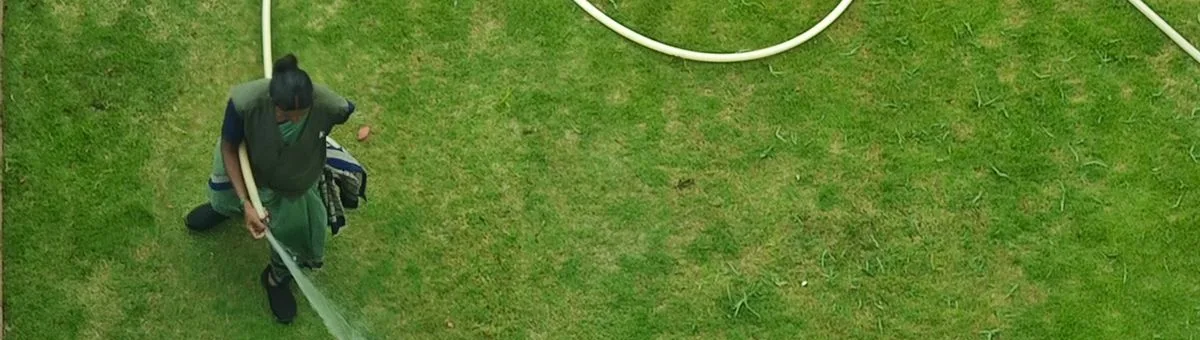
Step 5 — Water consistently. Keep the top inch of soil consistently moist until germination — this typically means 2–3 light waterings per day. Do not let seeds dry out even once during the first two weeks. Once seedlings are 1 inch tall, reduce to once-daily watering. Once established (after the first mowing), train the lawn to deep watering by watering less often but more deeply.
Step 6 — First mowing. Wait until new grass reaches 3.5–4 inches before the first mow. Set the mower blade high to remove no more than one-third of the height. Keep foot traffic minimal for the first 4–6 weeks.
Regional Seed Selection Guide
The three picks above are cool-season blends best suited for USDA hardiness zones 3–7 (roughly the northern half of the US). If you're in a different region, here's the short guide:
Transition zone (zones 7–8, Virginia through Oklahoma): This is the most challenging area — neither pure cool-season nor warm-season grasses perform perfectly. Tall fescue is the most common choice as it tolerates both heat and cold reasonably well. Look for turf-type tall fescue seed specifically labeled for the transition zone.
Deep South and Gulf Coast (zones 8–10): Warm-season grasses dominate — Bermudagrass, Zoysiagrass, St. Augustinegrass, and Centipedegrass. Most of these do not establish well from seed (Bermuda is the exception and seeding works well). St. Augustine and Zoysia are typically established from sod or plugs rather than seed.
Pacific Northwest: Cool, wet conditions favor fine fescues and perennial ryegrass. The Sun & Shade mix works well in most of Washington and Oregon west of the Cascades.
Visit our complete lawn care guide for a full breakdown of grass types by climate zone, or see our fertilizer guide for feeding recommendations once your lawn is established.
Understanding Grass Seed Types: Blends vs Mixes vs Pure
Not all grass seed products are created equal. Understanding the difference between seed blends, mixes, and pure seed cultivars helps you select the product that matches your specific lawn needs rather than buying a generic option.
Seed Blends (Multiple Cultivars of Same Species)
A blend combines different cultivars (varieties) of the same grass species—for example, a perennial ryegrass blend might contain 40% Delta cultivar, 35% Chardin, and 25% Colosseum. Each cultivar was bred for slightly different characteristics (disease resistance, drought tolerance, traffic wear). By combining them, blends reduce the risk that a single disease or environmental stress will wipe out your entire lawn. Blends are recommended for most home lawns because they spread risk. The Pennington Sun & Shade example in our top picks is a blend, offering better overall resilience than a single cultivar.
Seed Mixes (Multiple Species)
A mix combines different grass species—typically a combination of perennial ryegrass, tall fescue, and fine fescues. Premium lawn seed mixes are engineered for specific conditions: shade mixes emphasize fine fescue (more shade-tolerant) while reducing ryegrass; sun mixes reverse this weighting. A "traffic mix" might include more tough perennial ryegrass. High-quality mixes undergo rigorous testing and university research before release. They're more expensive ($40–80 per bag) but deliver superior results compared to commodity blends. If you're seeding a large area, a premium mix justifies the cost through higher germination rates and better establishment.
Pure Seed Cultivars (Single Cultivar)
Professional turf managers sometimes use pure seed—for example, 100% Linn perennial ryegrass. This is rarely recommended for home lawns because a single cultivar can't adapt to variable conditions across your property. A pure cultivar might excel in full sun but struggle in your shaded northeast corner. Golf courses and sports fields use pure seed because they manage each area uniformly (all-sun fairways, all-shade under trees). Home lawns have mixed sun, varying soil, and inconsistent maintenance, making blends or mixes essential for success.
Cheap vs Premium: Does Price Matter?
Mass-market grass seed ($15–25 per bag) often contains significant "filler" content (chaff, inert material) and older seed with lower germination rates (often 50–70%). Premium seed ($40–80) has germination rates of 85%+ and higher purity percentages. Lower germination means more seed wasted. For example, 1 pound of 50% germination seed provides only 0.5 pounds of viable seed; 1 pound of 90% germination provides 0.9 pounds of viable seed. You'd need to apply 80% more cheap seed to achieve the same coverage. Premium seed often proves more economical per pound of viable seed despite higher upfront cost. Always check the germination percentage on the label—it's the single best predictor of success.
Overseeding vs Lawn Renovation: When to Use Each
Overseeding improves thin lawns with existing turf. Renovation starts from scratch. Knowing which approach your lawn needs prevents wasted time and seed.
Overseeding for Thin or Damaged Lawns
Overseed when your lawn is still mostly healthy turf (>50% grass cover) but has thinned areas, bare patches, or sections weakened by compaction or disease. The goal is to thicken the existing turf rather than replant. Before overseeding: mow the lawn short (2 inches), dethatch if thatch exceeds 0.5 inches, and core aerate in the problem areas. Applying seed directly to undisturbed soil dramatically reduces germination—aeration holes provide essential soil contact. Use 3–5 pounds of seed per 1,000 sq ft (versus 5–10 for full renovation). Keep the seeded area moist for two weeks. Existing turf will shade and suppress new seedlings, but persistence wins—gradual thickening occurs over one full growing season. Overseeding in spring (April–May) or fall (August–October) works, but fall is superior because cool temperatures reduce disease pressure on young seedlings.
Full Lawn Renovation (Nuclear Option)
Renovation is justified when >50% of your lawn is dead, weedy, or severely compacted. The process kills all existing turf and replants from bare soil. Method 1 (fastest): apply a non-selective herbicide (like glyphosate) to kill all vegetation, wait 2 weeks for complete death, then till the soil to 4–6 inches depth and level. Method 2 (longer): solarize the lawn by covering it with clear plastic for 4–6 weeks in summer heat (kills weeds and seeds, improves soil structure, but takes 6+ weeks). Both methods prepare a blank canvas for new seed. Apply 5–10 pounds of premium seed per 1,000 sq ft directly to the prepared soil. Keep moist for 3 weeks until establishment. Renovated lawns take 8–12 weeks to become walkable and 6–8 months to fully mature. The time and expense are significant, but a renewed lawn free from weeds and compaction is worth it if the damage is extensive.
Timing Considerations
Fall (August–October for cool-season grass) is the ideal overseeding and renovation window. Soil is still warm (promoting seed germination), but cooler air temperatures reduce heat stress on new seedlings. Spring seeding works but struggles with summer heat and competition from rapidly emerging weeds. Late summer/early fall seeding allows grass to establish strong root systems over winter, making it ready to expand vigorously in spring. If you missed fall and it's now winter or early spring, wait until late spring/early summer heat has passed (June), then wait again for August and do it right. Seeding in the wrong season is seed wasted.
5 Common Lawn Seeding Mistakes (and How to Avoid Them)
Professional landscapers and extension agents see the same seeding failures repeatedly. Learn from these mistakes to ensure success on your first attempt.
Mistake 1: Seeding Without Aeration or Thatch Removal
Seeds need direct soil contact to germinate. Applying seed to a thick thatch layer or undisturbed compacted soil results in 50–70% germination failure. Core aeration (creating small holes) is non-negotiable. A $200–400 core aeration service pays for itself in seed success. Budget aeration into your seeding plan.
Mistake 2: Wrong Seed Type for Your Conditions
Planting warm-season grass seed in zone 4 (it won't survive winter) or shade mix in full sun (it thins) guarantees failure. Before buying seed, identify your USDA hardiness zone and your yard's sun/shade pattern. Confirm that your seed choice is rated for both. Extension offices provide free hardiness zone information; plant profiles on seed bags specify light requirements.
Mistake 3: Inconsistent Watering During Germination
The first two weeks after seeding are critical. Seeds need constant moisture (top inch moist, never drying completely). Many homeowners water deeply once, then assume the seed is "set." In reality, light daily watering 2–3 times is needed until germination (5–10 days) and initial growth (two weeks total). Setting a timer or putting a calendar reminder prevents the fatal one-day skip when seeds dry out and die.
Mistake 4: Fertilizing Too Early or Wrong Formula
Pre-emergent herbicides (weed preventers) applied before seeding kill grass seed as readily as weeds—never apply them within 60 days of seeding. Balanced fertilizer (like a 10-10-10) works, but a phosphorus-heavy starter formula (12-24-8) is better for root development in young grass. Most lawns have adequate nitrogen but benefit from the extra phosphorus boost early. Over-fertilizing before establishment creates excessive vegetative growth and weak roots—avoid "weed and feed" products in seeding areas.
Mistake 5: Mowing Too Soon or Too Short
New seedlings are fragile. Don't mow until grass reaches 3.5–4 inches tall (typically 3–4 weeks after germination, depending on temperature). When you do mow, set the blade high and remove no more than one-third of the height. Mowing too short scalps young grass and slows establishment. Light foot traffic over the first 6 weeks also stresses seedlings—keep play and parking on established areas if possible.