

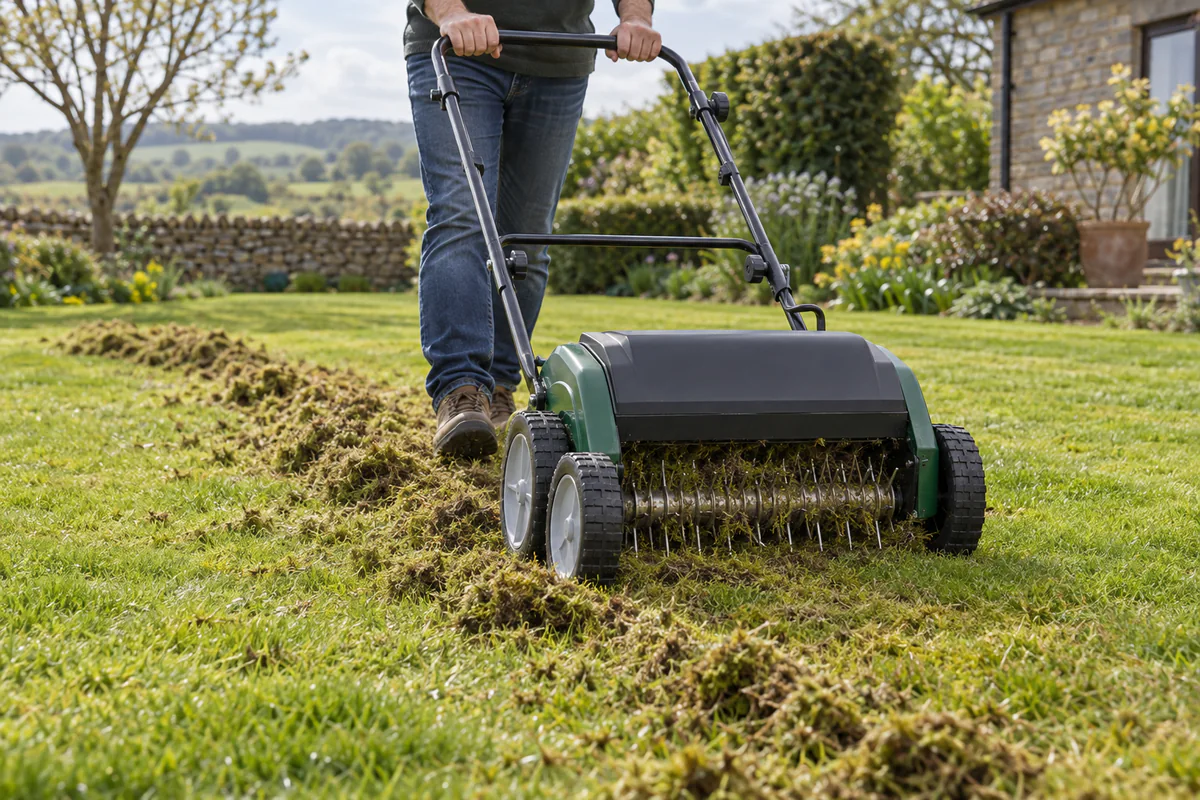
Diagnose thatch before choosing a machine
Thatch is the layer of living and dead stems, roots and other organic matter between green growth and soil. A thin layer is normal; removal is only relevant when it becomes excessive or interferes with the lawn. Cut a small plug and measure the layer before renting or buying a machine.
Thresholds depend on local guidance and grass type. UMN Extension discusses about one-half inch for Minnesota lawns, while Penn State describes removal around an inch or more. These recommendations are regional, not universal. Also check whether the real issue is soil compaction, poor drainage, disease or drought before choosing a dethatcher.
See UMN Extension’s thatch guidance and Penn State’s lawn guidance.
Separate thatch from compaction and other lawn problems
A brown, thin or slow-growing lawn does not automatically need a scarifier. Several problems can look similar from above but call for different work. Check a small plug from an affected area and compare it with one from healthier turf. Look at the layer between soil and green blades, but also examine roots, soil texture, moisture and signs of disease. Avoid running a machine across the whole lawn until you know what condition you are treating.
| What you observe | Possible explanation | Next check before using a machine |
|---|---|---|
| A dense, springy layer above the soil | Thatch may be accumulating. | Measure the layer in several spots and compare with regional Extension advice. |
| Hard soil, shallow roots or poor water infiltration | Compaction may be limiting growth. | Check soil and consider whether aeration guidance is more relevant than dethatching. |
| Patchy color after heat or dry weather | Drought or heat stress may be responsible. | Review irrigation, weather and grass dormancy before disturbing turf. |
| Spots, lesions or unusual growth | Disease, insects or another plant-health issue may be present. | Identify the cause and follow local Extension diagnosis rather than power-raking. |
| Loose clippings after mowing | Clippings may be long, wet or poorly dispersed. | Check mower blade sharpness, cutting height and mowing frequency first. |
Take measurements at more than one point because thatch can vary across a lawn. If the layer is thin and roots reach soil normally, leave it in place and address the actual maintenance issue. If the lawn is newly seeded, dormant, under drought stress or already weak, aggressive removal can set recovery back. Regional guidance matters: the thresholds cited above come from Minnesota and Pennsylvania recommendations and should not be copied uncritically to a different climate or grass type.
When a thatch problem is confirmed, select a machine by the action of its working parts. Spring tines lift loose organic material; blades or vertical knives cut into the turf more aggressively. Product names such as “scarifier,” “dethatcher” and “power rake” are not used consistently across brands. Check the manufacturer’s description, attachments and operator manual to learn which mode is included, how depth is set and what safety equipment is required.
For a first pass, follow the manual’s least aggressive setting and test a small area that is not the lawn’s most visible section. Inspect the result before continuing: the objective is to remove the targeted thatch without uprooting healthy crowns or stripping large areas of turf. Stop if the machine pulls out living grass or exposes substantial soil, then reassess the setting and diagnosis. A more powerful motor or wider working width does not make a machine appropriate for every lawn.
After the test pass, rake or collect material as the manufacturer instructs and compare the turf with an untreated section. If the machine has removed little thatch, check the working mechanism and setting before making another pass. If the surface is heavily disturbed, stop and allow the lawn to recover rather than repeating the treatment. Do not increase depth simply to make the machine pull up more material.
Write down the lawn type, measured thatch depth, weather, machine setting and result. Those notes make it easier to decide whether further work is appropriate and help avoid repeating an aggressive treatment unnecessarily. If the diagnosis remains unclear, contact a local Extension service or lawn-care professional before buying a machine or scheduling a rental.
Greenworks DT13B00: published configuration
The Greenworks DT13B00 listing identifies a 13-amp motor and 14-inch working width. Check the current product page and manual for the exact configuration and depth settings before purchase.
Greenworks DT13B00 Corded Dethatcher and Scarifier
- ✓ 13-amp corded dethatcher / scarifier
- ✓ 14-inch working width, as named in the product listing
Check current price and availability on Amazon.com.
Greenworks lists a 14-inch dethatching path and a two-in-one dethatcher/scarifier configuration for model DT13B00. Consult the manufacturer product page and owner’s manual for assembly, setting and safety instructions.
Sun Joe AJ801E: verify the current configuration
The Amazon.com listing identifies the Sun Joe AJ801E as a 12-amp dethatcher/scarifier with a 12.6-inch cutting width and an 8-gallon collection bag. Confirm the selected configuration and instructions before buying, and consult the manufacturer’s AJ801E operator manual for operation and safety.
Sun Joe AJ801E 12.6-Inch 12-Amp Electric Dethatcher and Scarifier
- ✓ 12-amp corded dethatcher / scarifier
- ✓ 12.6-inch cutting width and 8-gallon bag, as listed
Check current price and availability on Amazon.com.
Compare these model specifications only after diagnosing that dethatching is needed. Confirm the exact configuration, availability, power access and manual for the selected model. No hands-on performance test is claimed here.
Dethatcher Comparison Table
| Model | Amps | Width |
|---|---|---|
| Greenworks DT13B00 | 13A | 14 in |
| Sun Joe AJ801E | 12A | 12.6 in |
Choose timing by grass type and region
If thatch removal is justified, schedule it when the grass is healthy and actively growing under local conditions. The recovery window differs for cool-season and warm-season grasses; avoid drought, heat stress, waterlogged soil and dormancy. Follow a regional Extension calendar rather than copying national month ranges.
Do not dethatch solely because the calendar says to. Soil compaction calls for a different diagnosis; a low layer of thatch may need no intervention.
Compare electric, petrol and rental options
For any machine, compare working width, power source, collection method, adjustment settings, cord or fuel handling, storage and the manufacturer’s maintenance requirements. An electric model requires a suitable power source and cable management. Petrol equipment adds fuel and engine maintenance. Rental can avoid storage and infrequent ownership, but availability and cost depend on location.
Do not use generic lawn-size thresholds or old price estimates as a purchase rule. Obtain a current local quote and compare the same scope of work.
Decide whether to rent or buy
First determine whether your lawn needs dethatching at all. Then compare local rental availability, total cost, storage space, intended frequency of use and the exact machine’s instructions. If the condition is widespread or diagnosis is uncertain, a local lawn professional or Extension service may help avoid unnecessary damage.
Use the machine cautiously
- Read the manual and inspect the lawn for hidden obstacles, slopes and cables.
- Choose the manual’s least aggressive starting setting and try a small, inconspicuous area.
- Observe whether the machine lifts thatch or pulls healthy grass crowns; stop if the turf is being torn up.
- Collect loosened debris and follow local disposal or composting advice.
- Clean, disconnect and store equipment according to the manufacturer’s safety instructions.
Check the lawn after dethatching
Inspect the lawn and adjust care to grass type, season, weather and the amount of turf disturbance. Do not automatically aerate, fertilize or overseed after every treatment; those actions address different conditions and should follow soil or local Extension recommendations. Keep the grass within its normal care range and monitor recovery.
See the lawn care guide for related maintenance topics.
Frequently Asked Questions
Measure thatch before renting or buying a dethatcher. Cut a small wedge of turf and measure the tightly interwoven layer between green grass and soil. UMN Extension discusses monitoring Minnesota lawns when thatch exceeds about half an inch; deep power-raking can remove living turf, so aeration or correcting compaction may be the better intervention. Dethatching need and timing depend on grass species and local growing conditions. See UMN Extension’s lawn-care guidance and Penn State’s dethatching guidance. The product details below are manufacturer/listing specifications, not hands-on test results.