

Start with the site, not a watering calendar
Choose the position before you decide how to care for the plant. North Carolina State Extension describes Monstera as a climbing houseplant that prefers warmth, moderate brightness without direct sun and good drainage. A plant beside a bright window, in a small dark room or next to a heating vent will use water at different rates, even if the two plants are the same size.
| What to inspect | What it tells you | First adjustment |
|---|---|---|
| New leaves grow smaller or farther apart | The plant may not have enough usable light for compact growth. | Move it gradually toward brighter, filtered light; do not scorch it with a sudden change. |
| The mix stays wet for a long time | The root zone has more moisture than the plant is using. | Check drainage, pot size and light before adding more water or fertilizer. |
| Stems lean or bend under leaf weight | A naturally climbing plant needs physical support. | Add a stable stake, board or moss-covered support and tie stems loosely. |
Light, temperature and humidity
Bright light without prolonged direct sun is the practical starting point for an indoor Monstera. Penn State Extension recommends a location near a sunny window where the plant receives bright but not direct light; it also notes that the plant becomes leggy in lower light. Rotate the pot occasionally if one side consistently faces the light, and change its position gradually so leaves can acclimate.
Monstera prefers a warm room and dislikes cold drafts. Humidity can help in a dry interior, but it is not a reason to keep the potting mix wet. If the air is very dry, a humidifier nearby is more predictable than repeatedly misting leaves. Wipe dust from large leaves so you can inspect new growth and common pests such as scale, mealybugs or spider mites.
Water and potting mix: observe the root zone
Water thoroughly until excess can leave through the drainage holes, then wait until the upper portion of the mix dries before checking again. North Carolina State Extension suggests allowing the top quarter to one-third of the potting mix to dry. This is more reliable than saying that every Monstera needs water on the same day each week.
Use a well-draining soilless mix rich in organic matter. Penn State Extension notes that purchased mix can be opened with materials such as bark, charcoal or perlite. Garden soil is not a substitute for potting mix in an indoor container: it is harder to manage for drainage and may bring pests or disease issues indoors.
Do not diagnose every yellow leaf as a nutrient shortage. First check whether the mix is persistently wet, whether the pot can drain and whether the plant has sufficient light. Only feed during active growth according to the product label and the plant’s response; extra fertilizer cannot compensate for poor root conditions.
For two weeks, make a brief note after each watering: how dry the upper mix felt, whether water drained freely and how long the pot took to become ready for another check. This small record reveals the pattern of a particular room far better than a generic frequency. If the plant sits in much brighter light, a smaller pot or warm dry air, it may need checks sooner; in a cool, dim space it may need them less often.
Support and repotting for a climbing plant
In nature, Monstera uses aerial roots to attach to trees. Indoors, a sturdy stake, trellis, board or moss-covered support helps prevent stems from bending or breaking. Attach stems gently with soft ties; do not force aerial roots into a position where they snap. Support is a care decision, not a decorative upgrade, once the plant becomes top-heavy.
Repot when roots crowd the lower and side areas of the pot, when the root ball is dense or when the plant needs a more stable base. Choose a slightly larger container with drainage. A very large pot gives a small root system a larger volume of wet mix to manage, which makes watering harder to judge.
Choose support height for the plant you have now plus room for the next season of growth. A short stake can stabilize a young Monstera, while a taller board or pole helps a mature stem climb without repeated disturbance. The goal is not to make every aerial root attach immediately; it is to support the stem and keep the plant stable enough to continue growing.
Propagate a cutting that includes a node
A leaf without a node will not make a new plant. Take a healthy stem cutting with at least one node, use clean tools and keep foliage above the rooting medium. Monstera can root from stem cuttings or by layering. Water propagation is possible, but Iowa State Extension cautions that water-grown roots are coarser and may show stress when transferred to potting mix.
- Identify a node on a healthy section of stem.
- Make a clean cut and remove leaves that would sit under water.
- Keep the node in clean water or a suitable moist rooting medium, with the leaves above it.
- Refresh water once or twice a week and provide bright, indirect light.
- Move a water-rooted cutting to a draining potting mix once roots are established, then keep care consistent while it adapts.
Troubleshoot by looking at new growth
Old damage does not reverse, so use new leaves and the condition of the root zone to judge whether an adjustment helped. Smaller, more widely spaced growth can point to inadequate light. Persistently wet mix, yellowing and a soft stem base need a drainage and root check before more water or feed is added. Fine webbing, scale-like bumps or cottony clusters are reasons to isolate the plant from others and identify the pest before choosing a treatment.
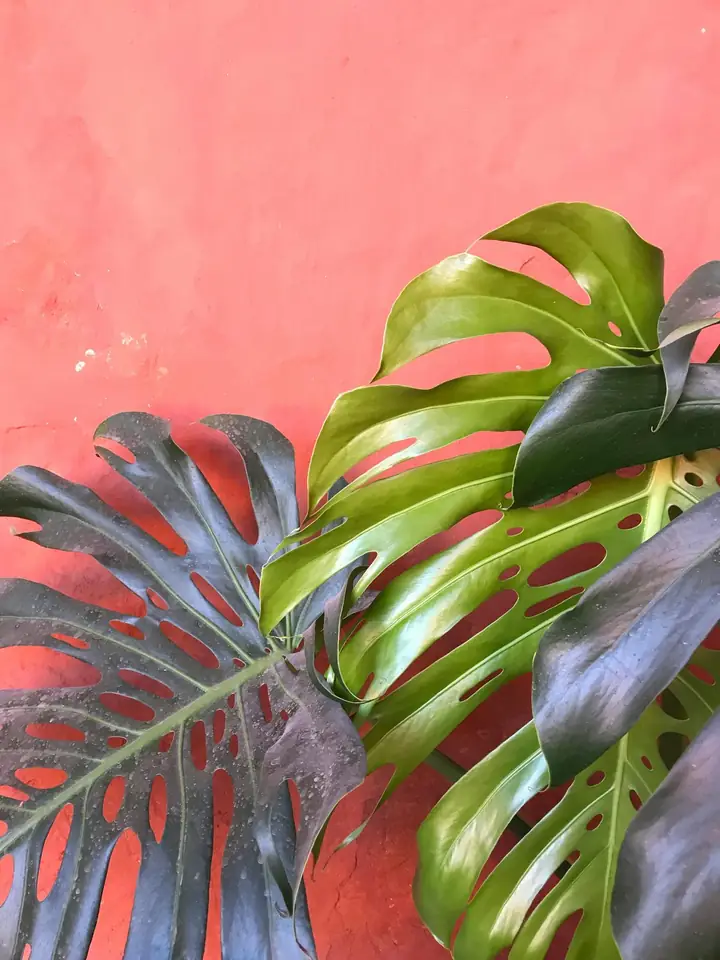
Fenestrations are also a development clue, not a deadline. Mature leaves commonly have splits and holes, while young leaves can be whole. Better conditions may influence later leaves; cutting or damaging an existing leaf will not create fenestrations.
Make one change, then wait for the next leaf where possible. Moving the plant, changing the mix, adding fertilizer and increasing watering on the same day makes it impossible to know which decision helped or hurt. A cautious sequence is simpler: improve the site or drainage first, continue normal observation and only then consider a nutritional adjustment if new growth still points to one.
Pets and household safety
The ASPCA lists Monstera deliciosa as toxic to cats and dogs because of insoluble calcium oxalates. Chewing it can cause oral irritation, drooling, vomiting and difficulty swallowing. Place the plant where pets cannot chew it, and contact a veterinarian promptly if ingestion is suspected.
Sources and editorial method
This is an evidence-led care guide, not a product review. It was revised in September 2026 using university Extension and veterinary sources. It does not claim that Tu Jardín Pro has tested a particular Monstera cultivar, potting mix or support. Conditions vary by home, so observing light and the root zone remains more useful than copying a fixed schedule.
- Monstera deliciosa — North Carolina State Extension
- Monstera as a Houseplant — Penn State Extension
- How to Propagate Houseplants by Stem Tip Cuttings — Iowa State Extension
- Monstera toxicity for cats and dogs — ASPCA