

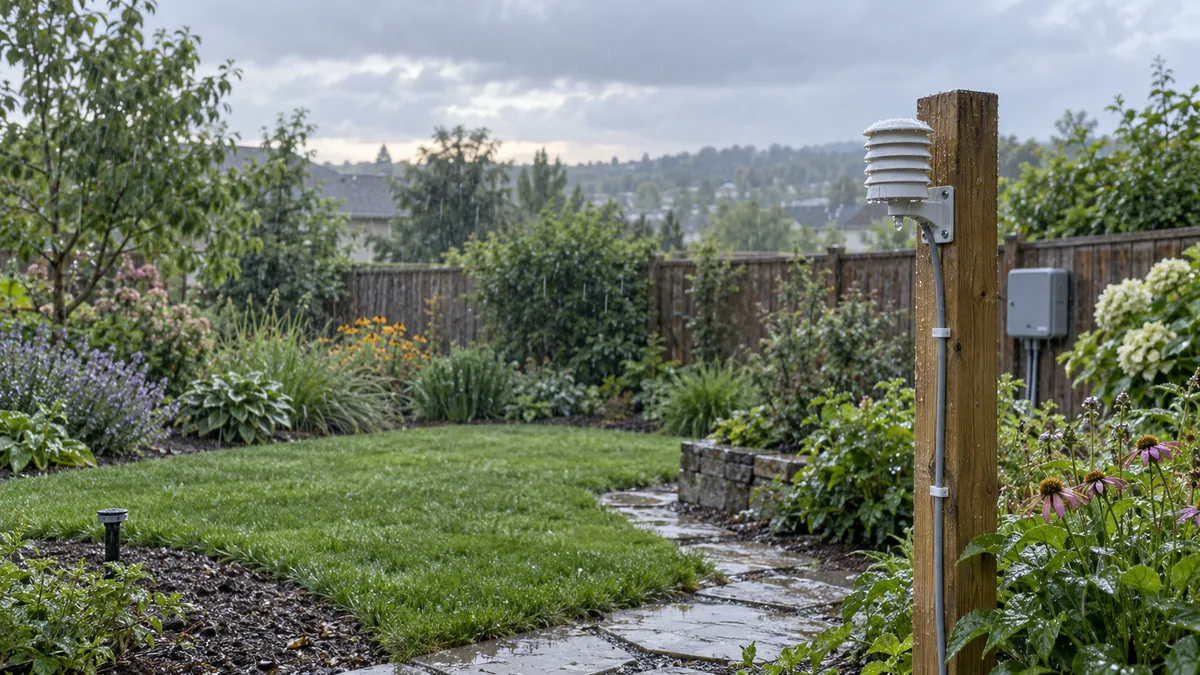
Rain Bird RSD-BEx: identify the wired model
Rain Bird lists the RSD-BEx as a wired rain sensor with a latching mounting bracket and extension wire. It detects rainfall and interrupts an irrigation schedule through the controller wiring. It does not include the wireless sensor/receiver arrangement described for RSDP, so check the exact model label before using a manual, ordering a replacement or comparing products.
Use Rain Bird’s RSD Series support page and the RSD Rain Sensor user manual for the current instructions tied to the model.
Rain Bird RSD-BEx specifications and rainfall settings
| Published detail | RSD-BEx | Practical implication |
|---|---|---|
| Sensor type | Wired rain sensor with bracket | Plan a cable route to the controller; this is not an RSDP wireless kit. |
| Rainfall setting | 1/8–3/4 in (5–20 mm) | The dial sets the rainfall amount at which the sensor interrupts watering. |
| Cable | 25 ft (7.6 m), #20, 2 conductor, UV-resistant | Check distance and manufacturer routing notes before mounting. |
| Circuit application | Low-voltage 24 VAC control circuits | Do not treat this note as permission to connect to a high-voltage pump circuit. |
| Other adjustment | Adjustable vent ring | Use the manual when changing sensor drying behavior. |
Rain Bird’s technical catalog gives these specifications and also lists ESP-SMT and ESP-SMTe as incompatible. That specific exclusion is a reminder to check the exact controller rather than infer compatibility from a nominal voltage alone.
24 VAC wiring and controller compatibility
Before connecting the RSD-BEx, turn off power to the controller and compare both wiring diagrams. Rain Bird describes use on low-voltage 24 VAC control circuits; the manual shows different controller wiring arrangements. Depending on the controller, a sensor may use dedicated sensor terminals or interrupt the common circuit. Do not apply a generic “two wires fit, therefore it works” rule.
- Check the exact controller model’s sensor input and supported contact logic.
- Confirm that the installation falls within 24 VAC low-voltage guidance.
- Check Rain Bird’s stated exclusion for ESP-SMT and ESP-SMTe controllers.
- Keep clear of high-voltage pump-start wiring; ask a qualified irrigation/electrical installer if the diagram is ambiguous.
Sensor placement and functional test
Mount the sensor where rainfall can reach it and where sprinkler spray, roof runoff, leaves or other obstructions will not distort its exposure. The supplied bracket is part of the RSD-BEx model. Follow the manual’s mounting and wiring sequence, then run an irrigation zone and use the specified test action to confirm the sensor interrupts watering. Restore normal controller operation after the test.
If a scheduled cycle still runs, check the controller’s sensor bypass or rain-sensor setting, the wiring terminals and the sensor’s alignment before changing the rainfall dial. A rain sensor only affects the system if the controller is configured to respond to it.
Checks before installing the RSD-BEx
- Read the RSD manual and controller manual for your specific models.
- Verify the device is labeled RSD-BEx, rather than RSDP or another RSD mount variant.
- Confirm there is a supported low-voltage sensor connection and that your controller is not one of the excluded models.
- Plan a protected route for the supplied 25-foot cable and a location with natural rainfall exposure.
- After wiring, test an active zone before relying on rain shutoff.
For a broader explanation of wired and wireless sensors, see the irrigation rain sensor guide. For a different wired model, compare the Hunter Mini-Clik wiring reference.
Set the rainfall threshold separately from drying time
The RSD-BEx has two adjustments that answer different questions. The rainfall dial sets how much measured precipitation triggers a shutoff. The vent ring controls how quickly the sensor dries and allows the controller to resume its schedule. Changing the rainfall threshold does not directly set the length of the pause, and adjusting the vent ring does not alter the measured threshold.
Rain Bird's manual gives a 1/8–1/4-inch starting range for long direct-sun exposure or clay-type soils, and 1/2–3/4 inch for frequent heavy rain, mostly shaded sensor locations or sandy soils. These are manufacturer guidelines, not universal settings for every garden. Consider how the sensor's exposure compares with the actual root zone: a shaded sensor beneath an eave may receive or dry differently from an open bed, while sprinkler spray or roof runoff can give it a false reading. Use the manual, then observe whether irrigation resumes at a sensible time for your site.
Rain Bird says the vent ring is generally left fully open; partially closing it can extend the time irrigation is suspended where water tends to pool after rain. Do not use that control to compensate for a leaking valve, a poorly draining site or a schedule that needs correction. Let the soil and weather response guide adjustment, while following local watering restrictions.
Tell the RSD-BEx apart from other RSD variants
RSD-BEx is the bracket-mounted wired model, with a 25-foot lead in the manufacturer manual. The Rain Bird RSD-CEx uses a conduit fitting. The model family and older web listings can also appear beside wireless products, so a name beginning with “RSD” is not enough to identify the included hardware. Check the model suffix, cable or receiver, mounting bracket and the exact manual before ordering.
The RSD-BEx is a rainfall interruption device. It does not measure root-zone moisture, create a watering schedule or connect to an app. A timer or controller still determines scheduled start times and zone durations; the sensor only interrupts a compatible schedule when its sensing element responds to accumulated rain. This distinction helps explain why a working sensor may not correct overwatering caused by the wrong zone grouping or a schedule that remains too long after rainy weather.
When replacing an existing sensor, photograph its label, mounting point, controller terminals and wire route before disconnecting it. Compare those details with the Rain Bird model documentation and controller manual. A visually similar sensor can have a different lead, mounting method or interface. Do not assume the old wiring proves that a replacement is compatible if the controller or installation has changed.
Plan the bracket position and cable route
Choose a location that receives natural rainfall without being affected by sprinkler spray, roof gutters, tree cover or wind exposure. Rain Bird also calls for a level sensor cap and a position without overhead obstructions. These details matter because the sensor responds to the water it collects, not to an independent measurement from the whole garden. The cable length limits the practical position, so plan its route before drilling or securing the bracket.
Use fasteners appropriate to the mounting surface and secure the lead so it is not pulled, pinched by a window or exposed to routine tool damage. The manual places the sensor within 25 feet of the controller and says adding wire to the supplied lead is not recommended. If the route cannot reach, ask Rain Bird or an irrigation professional for an approved solution rather than improvising a splice. Keep electrical work within local code and the manufacturer's low-voltage instructions.
Before mounting permanently, hold the unit in its proposed position and check that it is level, exposed to rainfall and serviceable for later inspection. Avoid locations where branches can drop debris into the housing or where a ladder would be needed for routine access. On a multi-zone property, compare the sensor's exposure with the planted zones it controls; one weather sensor may not represent every microclimate.
Test the shutoff and inspect the sensor
Test the controller-sensor pair after installation before relying on automatic shutoff. Start a zone using the controller and follow Rain Bird's manual test: press the sensor's plunger and check that the active zone stops after a few seconds. If there is no response, stop and inspect the installation against both wiring diagrams. Confirm the controller has not bypassed or disabled the sensor, and verify that the tested zone is actually controlled by that controller.
After the test, return the controller and sensor to their intended settings and confirm irrigation resumes as the manufacturer describes once the sensor dries. Do not assume that a successful plunger test confirms the rainfall dial, vent ring and installation position are ideal. Observe the next rain event and inspect the soil before the next scheduled watering. Keep a note of the settings so a later change can be evaluated.
The manual says the sensor normally needs no scheduled maintenance, but its absorbent disks can collect debris or insects. If cleaning is necessary, follow the manual's removal and reassembly directions; it instructs users to allow washed disks to dry for at least 24 hours before reinstalling them, or the system may remain interrupted. Do not pull the housing apart or use chemicals that the manufacturer does not recommend.
Troubleshoot a sensor that does not pause watering
If a zone continues running during the manual test, Rain Bird directs the installer to check the sensor wire connections. Also compare the exact controller model's sensor terminals, any removed jumper, the common-wire path if there are no dedicated terminals, and the controller's bypass setting. Follow the diagram for that model instead of trying alternate terminals while powered. Isolate power as the manuals instruct before checking wiring.
If watering pauses when the plunger is pressed but not during rain, review the rainfall dial, sensor exposure and whether a roof or tree blocks precipitation. If watering stays suspended after the disks dry, inspect the vent-ring setting and allow the sensor's sensing element to return to its normal state. Dirt or insects may affect it; use only the documented cleaning procedure. If the controller reports a fault or wiring behavior remains unclear, contact Rain Bird support or a qualified irrigation professional.
For a single wet zone, the issue may be a valve leak or schedule overlap rather than the rain sensor. Turn the controller off using its supported manual control and check whether water continues. A sensor cannot close a mechanically faulty valve. If water will not stop or electrical wiring appears damaged, isolate the system if safe and arrange professional service.
Check the exact listing before ordering a replacement
Product titles often shorten model names, and marketplace photos may show a related variant. Before purchasing, confirm that the title, product label and included parts identify RSD-BEx, that the listing describes the bracket and wired lead, and that the seller can confirm the exact SKU. Check the current return terms in case the controller interface or mounting needs do not match your installation.
Use Rain Bird's support page and manual as the source for installation and operating specifications. If an online listing makes broader compatibility claims than the manufacturer documentation, verify them with Rain Bird before connecting the device. This page does not claim hands-on testing, current stock or compatibility with a controller that has not been identified.
Frequently asked questions
Is the Rain Bird RSD-BEx wireless?
No. RSD-BEx is the wired RSD rain sensor with a mounting bracket and 25-foot, two-conductor extension cable. It is a different model from wireless rain sensors such as Rain Bird RSDP.
What rainfall setting does the Rain Bird RSD-BEx support?
Rain Bird specifies adjustable settings from 1/8 to 3/4 inch (5–20 mm). The side vent ring can be adjusted to influence drying time; follow the manual for both controls.
Will an RSD-BEx work with every irrigation controller?
Do not assume universal compatibility. Rain Bird specifies low-voltage 24 VAC control circuits and excludes ESP-SMT and ESP-SMTe controllers in its technical catalog. Check the sensor terminals, wiring diagram and exact controller manual before installation.
Can the RSD-BEx be connected to a high-voltage pump circuit?
Rain Bird says the sensor is not recommended for high-voltage pump-start circuits or devices. Keep the installation within the manufacturer’s low-voltage guidance and use a qualified installer if the wiring is unclear.
How long is the RSD-BEx cable?
The manufacturer specifies a 25-foot (7.6 m), 20 AWG, two-conductor UV-resistant extension wire. Follow Rain Bird instructions about routing and extensions rather than assuming any cable splice is suitable.
Manufacturer sources and method
- Rain Bird: RSD Series support — manuals and model support.
- Rain Bird: RSD Rain Sensor manual — installation, adjustment, wiring and testing.
- Rain Bird: RSD-BEx technical catalog — rainfall range, wire, application and stated controller exclusion.