

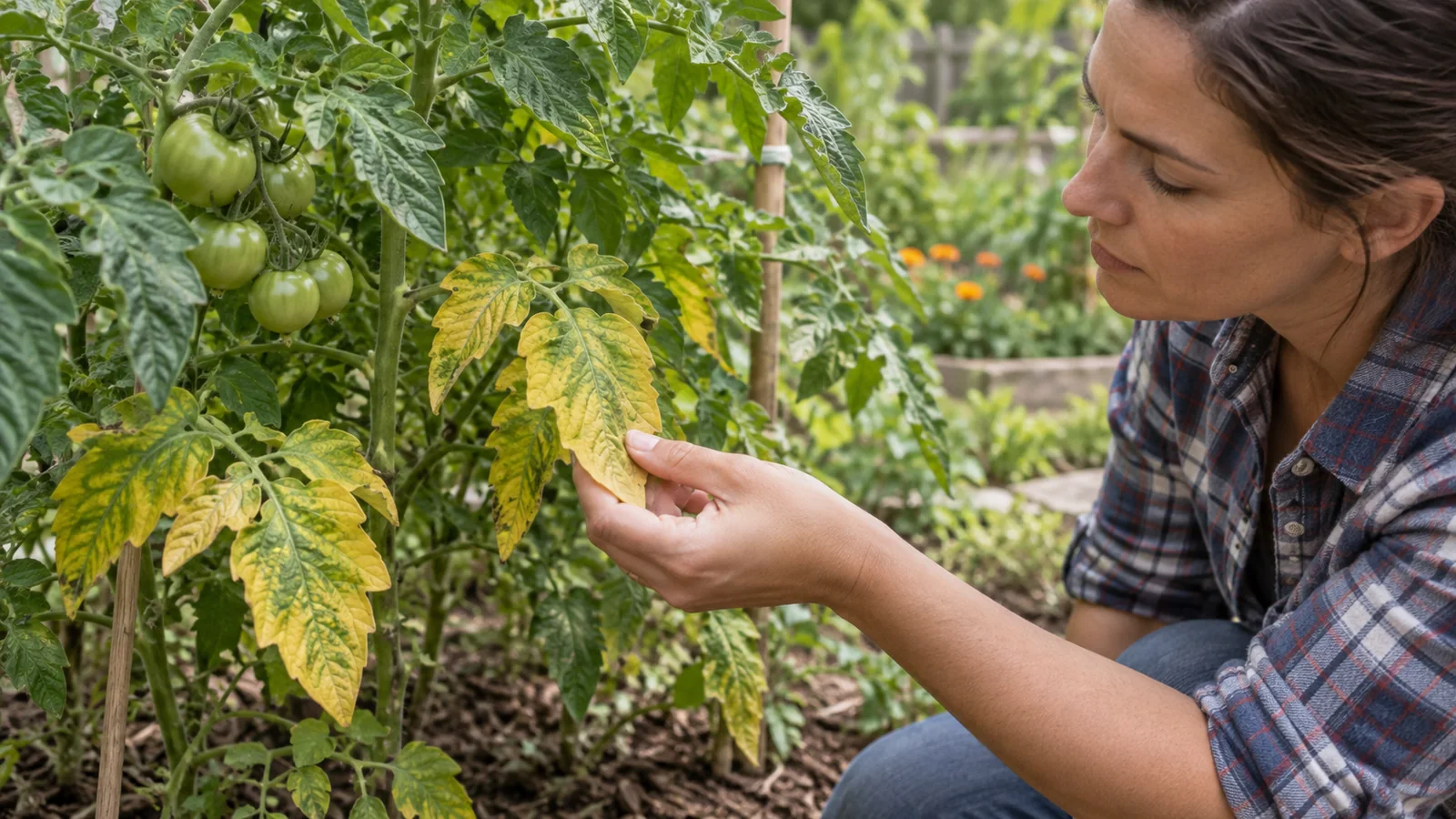
Investigate before adding nutrients
- Record which leaves are affected, when symptoms began and whether symptoms follow veins, leaf edges or new growth.
- Check moisture, drainage, light, root condition, temperature, pests and recent fertilizer use.
- Compare the affected plant with healthy plants of the same species.
- Use a soil test for the site and, where appropriate, a plant-tissue test before adding a nutrient.
- Apply an amendment only when the test and crop-specific recommendation support it.
Yellowing or leaf spots alone cannot diagnose a deficiency. UMN Extension explains soil testing and crop-specific tissue sampling; see its soil-testing guide and tissue-sampling advice.
Nutrients and possible symptoms are not a diagnosis
The symptoms below are clues to investigate, not proof of a nutrient deficiency. Plant species, age, water stress, disease, pests, root injury and pH can produce similar patterns.
Nitrogen
Older leaves may become uniformly pale when nitrogen is limiting because nitrogen can move within a plant, but drought, waterlogged roots, low light and natural leaf aging can look similar. Many home-garden soil labs do not routinely use a single soil nitrogen value as a long-term recommendation because plant-available nitrogen changes quickly. Follow the crop-specific test interpretation rather than applying nitrogen from color alone.
Iron
Young leaves with green veins and yellow tissue can be associated with iron availability, but high pH, waterlogging or root injury may be involved. Confirm the cause before adding iron; a soil can contain iron that roots cannot access under certain conditions.
Potassium
Leaf-edge symptoms can have multiple causes, including drought or salt injury. A soil test is a safer basis for a potassium application, and high potassium can interfere with other nutrient uptake.
Phosphorus
Slow growth or purplish coloration is not a reliable standalone diagnosis. Cold soil, root stress and species traits can affect color and uptake. Check temperature, root health and a test result before adding phosphorus, which can accumulate in soil and contribute to water pollution.
Magnesium
Interveinal patterns on older leaves may prompt investigation, but species, pH and other nutrient interactions matter. Confirm with testing instead of using a general-purpose fertilizer that adds more nutrients than the plant needs.
Calcium
Localized tissue disorders can involve calcium transport, water movement or root conditions, not just low soil calcium. Follow crop-specific Extension guidance; adding lime or calcium to an untested soil may not solve a fruit or leaf disorder.
Manganese
Symptoms can resemble iron or other micronutrient issues. Use a diagnostic lab or local Extension before treatment. Micronutrients are needed in small amounts, so an incorrect application can create toxicity or block other nutrients.
Use observations to choose the next test
| Observation | Check next |
|---|---|
| Symptoms on older or younger leaves | Plant species, leaf age, water and pest pattern |
| Symptoms across one bed | Soil test, irrigation uniformity and site conditions |
| Symptoms on one plant or branch | Root damage, pests, disease or local exposure |
| New symptoms after fertilizer | Product label, application rate and possible salt injury |
This is a triage aid, not a diagnosis chart. Use a laboratory or local Extension office for persistent problems.
Collect samples the way the laboratory requests
A useful test depends on a representative sample and the right test type. For a soil test, separate areas that differ in crop, past fertilizer use, drainage or management. Do not mix a vegetable bed with a lawn or combine healthy and affected zones if the lab’s instructions call for separate samples. Use the lab’s requested sampling depth, tool, number of subsamples and container; do not send wet soil or a handful from only the visibly worst spot unless the lab says to do so.
A plant-tissue test answers a different question from a soil test. It can show what a sampled plant has taken up, but results depend on the crop, plant part, growth stage and sample handling. Ask the lab for the exact tissue to collect and whether symptomatic and healthy plants should be submitted separately. Do not wash, combine or store samples contrary to lab instructions. UMN Extension’s tissue-sampling advice is crop-specific and illustrates why collection details matter.
Attach a short history: plant and cultivar, site, when symptoms began, recent weather, watering, fertilizer, pesticides and previous soil amendments. Include clear photos of a whole plant and close-up symptoms. This context helps a lab or Extension diagnostician distinguish a nutrient issue from disease, root injury or a site problem.
Soil pH affects nutrient availability
Soil pH is one factor that influences which nutrients plants can access. A pH value that suits one crop may be unsuitable for another; it is not a universal “ideal” target. Test the soil and follow the laboratory’s crop-specific recommendation before adding lime or sulfur.
Do not try to correct pH by guesswork or add micronutrients solely from leaf color. See UMN Extension’s soil-testing guidance.
Correct a confirmed deficiency without overfeeding
Read the recommendation as a combination of crop, site, amount and timing. A soil-test report for a lawn, perennial bed or vegetable crop may give different instructions, and a regional result should not be copied to a different lab or state. Before buying fertilizer, compare the recommendation with nutrients already supplied through compost, manure, irrigation water or a previous application. Keep product analysis and measuring units in the same system; pounds per 1,000 square feet, per plant and per acre are not interchangeable.
Apply only the stated rate with a calibrated spreader or measured container and keep fertilizer off paved areas and storm drains. Water in only when the label or local recommendation requires it. Do not try to correct a suspected deficiency by spraying concentrated fertilizer on leaves: foliar products can burn tissue and may not fix a root-zone or pH problem. If the test does not support nutrient application, investigate compaction, drainage, planting depth, pests, light and weather instead.
Retest on the interval recommended by your lab or Extension office, especially after a major soil change or long-term amendment program. Repeated annual applications without tracking can build up phosphorus, potassium or salts even when plants do not show an obvious deficiency. A simple record of the test date, crop, product, rate and result is more reliable than repeating last year’s fertilizer routine.
Confirm a nutrient problem before adding fertilizer
Leaf color is a clue, not a diagnosis. Before choosing a fertilizer, describe the pattern precisely: which leaves changed first, whether the symptom is between veins or across the whole leaf, whether the edge is affected, and whether the pattern is on one branch, one plant or a whole bed. Note whether the youngest leaves, older leaves or both are affected. Nutrients move differently within plants, so where symptoms appear can help narrow a question, but it cannot identify a shortage on its own.
| Observed pattern | Check before assuming a deficiency | Useful next step |
|---|---|---|
| General yellowing or pale growth | Root-zone moisture, drainage, light, recent cold or heat, and whether older leaves are affected first | Compare several plants and review the crop’s normal color and growth stage |
| Yellow tissue between greener veins | Leaf age, soil pH, root damage and whether the pattern is uniform across the plant | Use a soil or tissue test that includes the relevant nutrient and pH information |
| Brown margins, scorched tips or dead patches | Drying, salt buildup, fertilizer history, wind, heat, disease and pesticide exposure | Check irrigation and product records before applying a nutrient amendment |
| Distorted new growth or weak roots | Waterlogged or compacted soil, transplant stress, pest injury and herbicide drift | Inspect roots and growing conditions; request a diagnostic review if symptoms spread |
Use a comparison plant or unaffected area when available. Similar plants growing under the same weather can help show whether the issue follows a particular bed, irrigation line, cultivar or recent application. Photograph the whole plant and close-ups in natural light, include the leaf surface and underside, and record when the symptom began. A photo of one yellow leaf without the plant, location or recent care history is rarely enough to choose a treatment responsibly.
Check the root zone before adding soluble fertilizer. Roots in waterlogged soil may not take up nutrients normally; dry soil can prevent uptake; compacted soil can limit oxygen and root growth. High or low pH can make a nutrient less available even when the soil contains it. Drainage problems, root disease, pests, temperature stress and herbicide injury can all imitate deficiency patterns. Correct the underlying condition where possible instead of layering fertilizer onto stressed roots.
Take samples according to the instructions of the laboratory or Extension service that will interpret them. Soil and plant-tissue samples answer different questions. A soil sample is most helpful when collected from the correct depth and area, with separate samples for meaningfully different beds; do not mix a problem patch with healthy soil if you need to compare them. Tissue sampling requires the right plant part and growth stage, so follow the lab’s specific instructions rather than mailing whichever leaves look worst.
Ask what the test includes before paying for an add-on. A basic soil report may include pH and selected nutrients, while a tissue analysis may be more informative for a particular crop or timing question. Results need to be interpreted for the plant, soil and region; an “adequate” range for one crop may not apply to another. The University of Minnesota soil-testing guide explains the value of representative samples, and its tissue-sampling notes show why crop and sample timing matter.
When a result confirms a nutrient need, match the product and rate to the recommendation and label. Apply only to the area and crop identified, account for nutrients already supplied by compost or previous fertilizer, and keep the record. Do not add several nutrients at once unless the report supports them; if new growth does not improve, retest the diagnosis and check roots, pests, light and water before making another application.
Read a nutrient test with the crop and soil in mind
Read a laboratory report as a recommendation for a specific sample, not as a universal formula for every plant in the garden. Confirm that the report identifies the correct crop or intended use, sample area, depth and date. If you submitted a tissue sample, confirm that the lab received the plant part and growth stage it requested. Ask the lab or Extension specialist to explain any term or result that is unclear before applying a product.
Pay particular attention to pH and the report’s interpretation of nutrient availability. A result can show that a nutrient is present while pH or root conditions prevent the plant from taking it up normally. Amendment recommendations are often tied to crop type and local soils, so do not copy a rate from another state, crop or online forum. A soil test also cannot identify every disease, pest or root issue; it answers the questions covered by the test panel.
Compare the report with your garden record. Note compost, manure and fertilizer applied since the previous test, as well as irrigation source, flooding, construction or recent landscaping. These changes can affect nutrient levels or plant access. If a problem is confined to one bed, compare a separate sample from an unaffected area rather than blending the two into one average. Follow the lab’s sampling procedure for each area to keep the comparison meaningful.
Use the smallest correction that matches the recommendation and label. Measure the treatment area, check the product analysis and account for nutrients supplied by other sources where the report instructs you to. Avoid using a concentrated foliar feed as a substitute for a root-zone amendment unless the crop guidance specifically calls for it. Wear protective equipment, prevent runoff and store products in original containers.
Do not expect damaged leaves to regain their original color after a deficiency is corrected. Observe whether new growth develops normally and whether the symptom stops spreading. If a test-supported correction does not improve the plant, revisit drainage, soil pH, root disease, light, pests or application method before adding more fertilizer. The UMN soil-testing guide describes how to collect representative samples; use a local lab’s own directions for current rates and interpretation.
Frequently Asked Questions
Use leaf symptoms to decide what to investigate, not as a diagnosis by themselves. Check watering, drainage, light, recent weather and pest signs first; compare affected and healthy plants, then use a soil test and, where appropriate, a plant-tissue test before adding nutrients. pH and root problems can block uptake even when a nutrient is present. See UMN’s soil-testing guide and its plant-tissue sampling guidance; the latter is crop-specific and explains why samples need careful interpretation.