

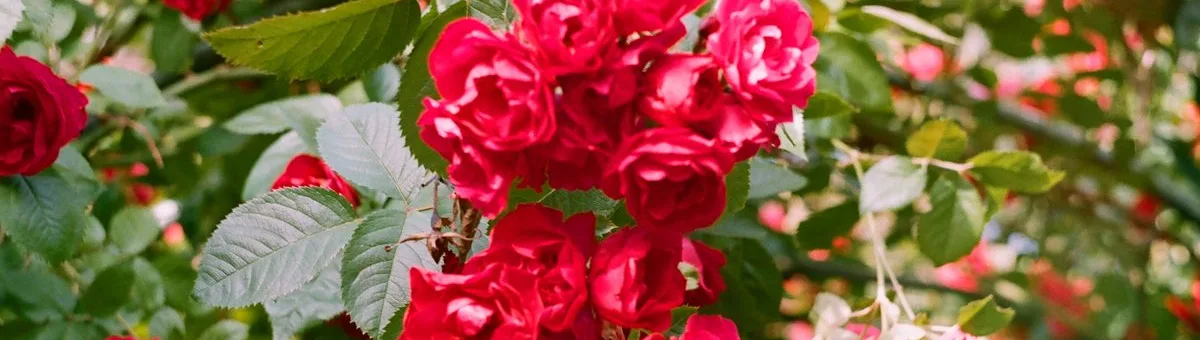
Choose a rose for your space
Before buying, check the label for mature height and spread, sunlight needs, bloom frequency, and disease resistance in conditions similar to yours. A label such as “easy care” is not a guarantee that a cultivar will thrive in every region.
| Common group | What it offers | Often suits | Check before buying |
|---|---|---|---|
| Shrub or landscape | Fuller shrub form; repeat bloom varies by cultivar | Borders and larger beds where a broader plant fits | Mature spread, regional hardiness, and disease resistance |
| Floribunda | Clusters of flowers; bloom cycles vary by cultivar | Mixed beds and massed color | Final size, repeat-bloom habit, and pruning needs |
| Hybrid tea | Large blooms, often grown for cutting | Gardens where the grower is comfortable with more maintenance | Local disease pressure, winter hardiness, and care requirements |
| Climbing rose | Long canes trained onto a structure | Fences, trellises, or arbors with room to tie in growth | Whether it repeats bloom and which canes carry flowers |
| Rambling or once-blooming climber | Vigorous growth and often one main flowering period | Larger supports where canes can be renewed and directed | Available space, vigor, and pruning after flowering |
| Miniature or patio | Compact growth, depending on cultivar | Containers and small garden spaces | Container heat, mature size, and winter protection |
Group names do not tell the whole story: cultivars differ in fragrance, mature size, hardiness, disease resistance, and how long they bloom. Match those traits to your local growing conditions. The American Rose Society’s selection guidance also recommends considering site, climate, and the purpose of the planting.
When and how to plant roses
Roses generally perform best with several hours of sun and soil that drains well while retaining enough moisture for roots. If water stands after rain, address drainage or choose another site. In hot regions, consider reflected heat from walls and paving; in cold regions, hardiness and winter protection may matter as much as bloom color.
Bare-root roses are planted while dormant and container-grown roses have a broader window. Avoid planting in frozen, saturated, or very hot soil. Use regional extension advice for local timing; Iowa State Extension’s planting dates and graft-depth advice are specific to its cold-winter conditions and should not be applied nationwide.
- Keep bare roots from drying out before planting and prepare the plant according to the nursery directions.
- Dig a hole wide enough to spread the roots without bending them. Loosen compacted soil at the base.
- Set the rose at the depth recommended for its type and local climate. For grafted roses, the best graft-union position can differ by region, so follow a local extension recommendation or the supplier’s instructions.
- Backfill with the excavated soil, firm gently, and water to settle the soil around the roots. Do not put concentrated fertilizer in direct contact with roots.
- Check moisture as the plant establishes and add mulch without piling it against the canes.
Water, soil, and fertilizer without a universal schedule
Water for the conditions
Water needs change with rainfall, temperature, wind, soil, plant age, and container size. A newly planted rose needs closer monitoring while it establishes; an established plant in the ground may need less frequent watering depending on weather and soil. Check moisture near the roots before watering again, and avoid both prolonged drought and waterlogged soil.
When possible, water the soil around the base rather than keeping foliage wet for long periods. In a container, check more often because a limited volume of potting mix can dry faster than a garden bed.
Fertilize only when it is useful
Fertilizer needs depend on soil, plant growth, rose type, and the product. If the plant is growing well, extra fertilizer is not automatically helpful. Follow label directions, avoid overapplication, and do not combine products by guesswork. Yellow leaves or poor flowering can also come from drainage, light, watering, heat, or disease rather than a nutrient shortage.
Prune according to rose type
There is no single pruning date or cutting height for every rose. First identify whether the plant blooms once or repeatedly and whether it is a shrub, climber, or another group. Many repeat-blooming modern roses are pruned near the start of spring growth, but the local signal varies with climate. Once-blooming roses are generally pruned after flowering so the canes that carry the next bloom are not removed prematurely.
- Start with essential cleanup: remove dead, damaged, or diseased canes and growth that rubs or crowds the center.
- Make clean cuts: use sharp tools and cut just above a healthy bud facing the direction you want new growth to go.
- For climbers: keep the main canes tied to the support and distinguish older flowering canes from new growth. The approach differs between repeat-blooming climbers and once-blooming ramblers.
- For an unknown or old garden rose: avoid a hard cut until you know its flowering habit; begin with deadwood removal and observe where flowers form.
Removing faded flowers can improve appearance and encourage another flush on some repeat-blooming cultivars. It is not necessary for every rose, and hips may be ornamental or useful to wildlife. The American Rose Society pruning guidance also emphasizes that climate and rose type affect timing and technique.
Leaf spots, pests, and other common problems
Inspect the whole plant and its growing conditions before treating. Similar symptoms can have different causes; when there are no visible signs of a pest or disease, check watering, drainage, sunlight, heat stress, and recent changes first.
| What you see | Possible cause | First check |
|---|---|---|
| Dark leaf spots, sometimes followed by yellowing and leaf drop | Possible black spot or another leaf disease | Look for a consistent pattern, remove fallen leaves, and check whether foliage stays wet for long periods |
| White powdery coating on leaves or shoots | Possible powdery mildew | Check whether the coating spreads on the plant tissue and review airflow and conditions |
| Distorted new growth or clusters of small insects | Aphids or other insects | Inspect the undersides of leaves and soft new growth before deciding whether action is needed |
| Yellow leaves, weak growth, or wilting | Water, drainage, roots, light, heat, or nutrition | Check soil moisture, drainage, and recent weather or location changes first |
Give plants room for airflow and remove fallen diseased leaves. Iowa State Extension’s rose pest and disease guide explains why site conditions and plant stress are part of diagnosis; its regional recommendations should be adapted to your area.
Grow roses in containers
Choose a cultivar whose mature size fits the container and leave room for root growth. Use a container with drainage holes and a potting mix made for containers; dense garden soil can restrict drainage in a confined volume. Place the pot where it receives suitable light without unnecessary reflected heat from a patio wall or paving.
Check container moisture more often and water thoroughly enough to wet the root ball, letting excess water drain away. Do not leave the pot standing in water. Repot when roots have filled the available space or the growing mix has deteriorated, rather than following a fixed yearly schedule.
A seasonal rose-care routine
Use plant growth and local weather as signals; seasons do not begin on the same date everywhere. Keep a short record of when your rose leafs out, flowers, and develops problems. That record helps you adapt next year’s pruning and inspection instead of copying a calendar written for a different climate.
- At the start of active growth: remove dead or damaged wood, check ties and supports, and inspect new shoots for distorted growth or clusters of insects. Apply mulch only after the soil is workable, leaving space around canes.
- During growth and flowering: check soil moisture during dry or windy spells, look under leaves for spots or pests, and remove diseased fallen leaves when local guidance recommends sanitation. Tie long canes before they become difficult to handle.
- After a flowering flush: decide whether to remove faded flowers based on the cultivar and whether you want hips. Prune once-blooming roses only after their bloom period, and avoid cutting away healthy canes just to make the plant look uniform.
- Before local winter stress: stop making unnecessary late-season cuts that could stimulate tender growth. Follow regional guidance for protection; cold, wind, freeze-thaw cycles, and wet soil call for different approaches.
This is an inspection sequence, not a treatment calendar. The American Rose Society’s pruning principles and your local Extension service can help resolve timing questions for your rose group and region.
Adjust care when a rose struggles
Change one likely cause at a time where practical. If you change the watering routine, move the pot, prune heavily, and fertilize on the same day, it becomes harder to learn which condition was limiting growth.
| Observation | Check before intervening | Useful next step |
|---|---|---|
| Wilting although the soil feels wet | Drainage, root health, recent rain, and whether water is trapped in a saucer | Let excess water drain and investigate root or site problems before adding more water |
| Wilting with dry soil | Root-ball moisture, pot size, heat, wind, and how evenly water wets the soil | Water the root zone thoroughly, then check whether the soil accepts water evenly |
| Few flowers but healthy foliage | Sun exposure, cultivar bloom habit, pruning timing, and excess nitrogen | Compare the plant label and pruning history before applying fertilizer |
| Repeated leaf disease | Whether symptoms are correctly identified, airflow, irrigation method, and fallen leaves | Improve conditions where possible and ask Extension to confirm persistent or severe symptoms |
A plant that fails to improve after a reasonable observation period may have a site mismatch, root issue, or disease that needs diagnosis. Photograph the whole plant and close-ups, note recent weather and care changes, and take that information to a local Extension diagnostic service. Do not apply a fungicide or insecticide solely because a symptom resembles a picture online.
A simple checklist before you buy
Write down four things: hours of sun, room for mature size, whether you want repeat blooms or one seasonal flush, and how much maintenance you can take on. Compare cultivars from a local nursery or regional rose trial using that list. To browse other flowers suited to different spaces, see our garden flower guide and lavender growing guide.
📚 Sources and references
Authoritative sources consulted to write this guide:
- Growing Roses in Iowa — Iowa State University Extension and Outreach
- How to Plant and Transplant Roses — Iowa State University Extension and Outreach
- Pests and Diseases of Roses — Iowa State University Extension and Outreach
- How to Choose a Rose — American Rose Society
- Basic Pruning Principles — American Rose Society