

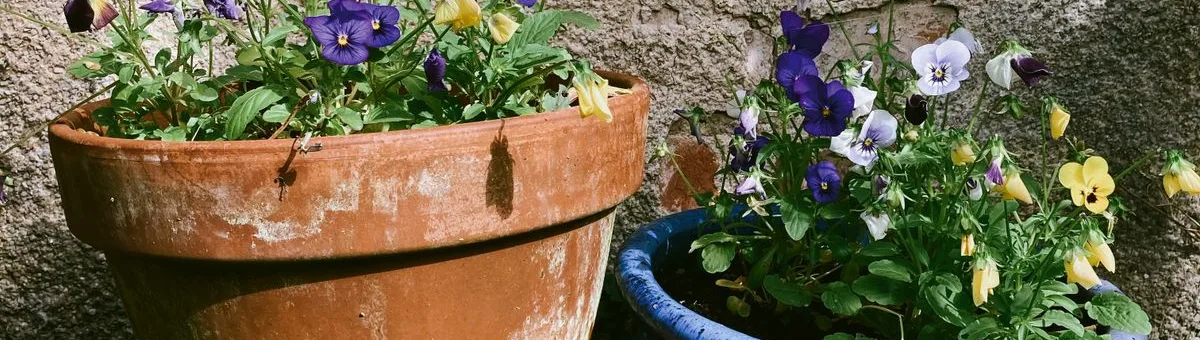
Choose pansies or smaller-flowered violas
Large-flowered pansies make a strong display in beds and pots; smaller violas offer a different, more delicate look. Compare upright and trailing cultivars for window boxes and hanging containers. NC State Extension’s pansy profile describes it as a cool-weather bedding plant suited to containers and borders, and notes that summer heat eventually ends its performance.
Plant in moist, well-drained soil
Choose full sun in cool weather or partial shade where spring afternoons are warm. Use fertile soil that drains well and keep moisture reasonably even while plants establish. In containers, use fresh potting mix and drainage holes. Check moisture directly, since wind, pot size, and sun exposure change how quickly a pot dries.
Extend the display and handle edible claims carefully
Remove spent blooms to reduce seed formation and keep the planting tidy. When temperatures rise and plants become stretched or stop flowering, replace them with warm-season plants suited to the site. Pansy flowers are sometimes described as edible, but do not eat nursery plants unless the grower confirms that they were produced for food and were not treated with products unsuitable for edible crops.
Leaf spotting, powdery growth, or collapse can reflect disease pressure favored by wet foliage, crowding, or poor drainage. Remove damaged material, improve spacing, and avoid overhead watering when practical. Confirm the cause before applying a treatment.
Use a seasonal planting calendar
In mild-winter regions, fall planting often gives pansies a long cool-season display. In colder climates, use spring planting or locally recommended protected varieties. The best date depends on when plants can establish before severe cold or summer heat, so use local extension calendars rather than dates from another state. Select trailing cultivars for edges and upright forms for compact beds.
Read weather and moisture symptoms
Temporary midday drooping can occur in warm weather, but persistent wilt calls for a soil check. Dry potting mix needs water; wet soil suggests poor drainage or root stress. Remove damaged leaves and avoid leaving foliage continually wet. When summer heat arrives, replacing exhausted cool-season plants is often more practical than trying to keep them flowering.
Select pansies for beds, pots, or edging
Choose a pansy by the conditions it will face, not just by its flower color. Large-flowered pansies make a bold close-up display, while smaller-flowered violas can look more delicate and may fit a different design. Trailing cultivars can spill over a container edge; upright selections are easier to place in a compact bed. Read the tag for mature spread and season because a variety sold for spring in one region may be marketed for fall and winter in a milder climate.
| Use | Selection detail | Site check |
|---|---|---|
| Small border or path edge | Compact pansy or viola with a known mature width | Keep the bed easy to reach for deadheading and watering. |
| Window box or hanging pot | Trailing habit and a container with clear drainage | Check wind and afternoon sun; exposed pots dry and heat quickly. |
| Large seasonal bed | Uniform plants from the same cultivar or series | Use local planting time so roots establish before heat or severe cold. |
| Mixed cool-season display | Similar light, moisture, and mature-size needs | Avoid combining pansies with plants that need consistently dry soil. |
Nursery plants should have firm crowns, evenly colored foliage, and no obvious pest clusters. Roots circling the pot are a sign to loosen the root ball gently at planting, not to tear it apart. Avoid selecting only the largest flowering pot; a plant that has been forced into bloom may still need time to establish roots. NC State Extension’s pansy profile describes the cool-season role of Viola × wittrockiana, but the local nursery label remains important for cultivar timing and hardiness.
Transplant nursery pansies without burying the crown
Water the nursery tray before transplanting if the mix is dry, then choose a cool part of the day. Prepare the bed or container first so roots are not left exposed while you work. Set each plant at the same soil level as it grew in the pot; burying the crown can trap moisture and encourage rot. Firm soil gently around the roots and water to settle the mix. Leave the spacing recommended on the label so leaves can dry after rain.
For containers, use a clean pot with drainage openings and fresh potting mix. A liner or decorative outer pot must not hold a pool of water. Place the container where it receives light appropriate to the season: pansies often accept more sun in cool weather and benefit from afternoon shade as conditions warm. Check the actual root zone because the surface may look dry while the bottom remains wet.
After planting, check soil moisture daily for a short establishment period, then reduce checks as roots extend. Water deeply enough to wet the root area, then allow excess to drain. Do not rely on leaves alone to decide whether a plant needs water; midday wilt in heat can be temporary. If the mix is already wet, additional watering can make root stress worse.
When planting into a mixed bed, group pansies where their cool-season needs can be met. Do not place them under a shrub that will fill out and shade the bed completely by spring. If the display is temporary, leave room for a planned warm-season replacement so you can lift the pansies cleanly without damaging neighboring perennials.
Maintain a cool, evenly moist root zone
Pansies need enough moisture to support leaves and flowers, but saturated soil can damage roots. Wind, container size, rainfall, and exposure all change drying time, so a fixed calendar schedule is unreliable. Push a finger into the mix or use a wooden stick to check below the surface. If the soil is dry near the roots, water; if it is wet and cool, wait and inspect drainage instead.
Water near the base in the morning when possible, helping foliage dry before evening. This does not eliminate disease risk, but it avoids leaving leaves wet overnight. Remove spent flowers and damaged leaves to keep the planting tidy, but avoid stripping healthy growth. A thin mulch can reduce soil splash in a garden bed; keep it away from plant crowns.
Use fertilizer only as needed and according to the product label or soil-test guidance. A container mix may have a different nutrient profile from garden soil, and overfeeding does not compensate for heat stress or a cramped root system. If plants become leggy, check light and temperature before adding fertilizer. A balanced routine that matches the season is more useful than repeated high-nitrogen applications.
Diagnose common pansy setbacks
| What you notice | Likely first checks | Practical response |
|---|---|---|
| Persistent wilt | Is the root zone dry, saturated, or blocked from draining? | Water only if dry; improve drainage if wet and remove standing saucer water. |
| Stretching and fewer flowers | Has the site warmed or become shaded? | Move containers to a cooler suitable position or plan seasonal replacement. |
| Yellow lower leaves | Check drainage, root crowding, recent cold, and normal older-leaf loss | Remove only dead leaves and correct the observed site issue. |
| Spots or powdery coating | Look for dense growth, wet foliage, and spread between nearby plants | Remove badly affected material and seek local diagnosis if it progresses. |
| Chewed petals or buds | Inspect at different times of day for insects or slugs | Identify the pest before selecting a control; protect pollinators and follow labels. |
Do not treat every symptom as a pest problem. Heat, root stress, and the natural end of the cool season can all reduce flowering. If spots spread or many plants collapse together, photograph the bed and discuss it with an extension diagnostic service. Pesticides should be used only for a confirmed target on a labeled ornamental, with directions followed exactly.
Know when to replace a cool-season planting
Pansies can look excellent in cool weather and then decline as days become hot. When flowering slows, stems stretch, and the root zone stays warm, changing the site or plant may be more effective than escalating fertilizer and watering. Remove plants that have finished their seasonal role, check the soil for drainage and root problems, and prepare the bed for a species suited to the coming season.
If you plan to reuse a container, empty it if roots are crowded or the mix has become compacted. Clean the pot, confirm its drainage, and replace the medium according to the next crop’s needs. Avoid placing new plants into old soil that contains visibly diseased material. Make notes on the planting date and the point when heat ended the display; that local observation is more useful than a generic calendar.
Ornamental pansies are sometimes sold as edible flowers, but the presence of a flower in a food photo is not proof that a nursery plant is safe to eat. Only use flowers grown and handled for food, with the grower’s confirmation that pesticides and other treatments are appropriate for edible use. Wash them as recommended for produce and avoid serving any flower if its identity or treatment history is uncertain.
Start pansies from seed or nursery transplants
Nursery transplants are the simplest choice when you want an immediate seasonal display or have limited space for propagation. Seed gives you a wider selection and more plants, but requires planning ahead. Follow the packet’s sowing schedule for your region and cultivar; the time needed to grow a flowering transplant varies. Do not sow by a calendar copied from another climate.
Use clean trays and a fine seed-starting medium that drains well. Keep the medium evenly moist during germination without leaving the tray standing in water. Once seedlings emerge, give them adequate light and airflow so stems stay compact. Gradually expose them to outdoor conditions before transplanting, protecting them from abrupt temperature shifts, wind, and strong sun.
When seedlings have enough roots to handle, move them carefully into individual cells or the garden bed at the same depth they were growing. Keep the crown clear of wet soil and leave room for mature spread. Water them in and monitor moisture while roots establish. Crowded seedlings may stretch and be more difficult to transplant without damage.
Seedlings may not look identical to a named hybrid, especially when the seed was saved from a mixed planting. If a particular color pattern or trailing habit matters, use a labeled nursery cultivar or a seed packet that describes the expected variation. Keep packet information with your garden notes so you can compare the resulting plants with the selection you intended to grow.
Do not use weak, diseased plants as a seed source or propagate from plants with unexplained leaf distortion. If a seedling tray develops widespread collapse, isolate it from established plants and review moisture, airflow, and hygiene. Clean trays and tools before reusing them, and seek local extension advice if the problem repeats. Strong starts make it easier to maintain pansies through the cool season and plan a clean transition when heat arrives.
Protect pansies during unsettled weather
Cool-season use does not mean every pansy is equally frost-proof. Follow the cultivar label and local recommendations, and distinguish a brief cool night from a prolonged freeze with exposed wind. Container plants are more exposed than plants in the ground; move them to a sheltered position when local forecasts warrant it, while preserving suitable light and drainage.
After a cold snap, wait until temperatures moderate before cutting back leaves that look limp. Some damage may become apparent only after the weather changes, and healthy central growth may remain. Remove fully dead material with clean scissors, check soil moisture, and avoid applying fertilizer to a plant that is still recovering. If the crown is soft or blackened, replace it rather than keeping it in saturated soil.
In fall plantings, give transplants enough time to establish before severe weather. In spring plantings, plan for the rising temperature and possible afternoon heat. A sheltered position and consistent moisture can extend the display, but cannot make a cool-season plant thrive indefinitely through summer heat.