

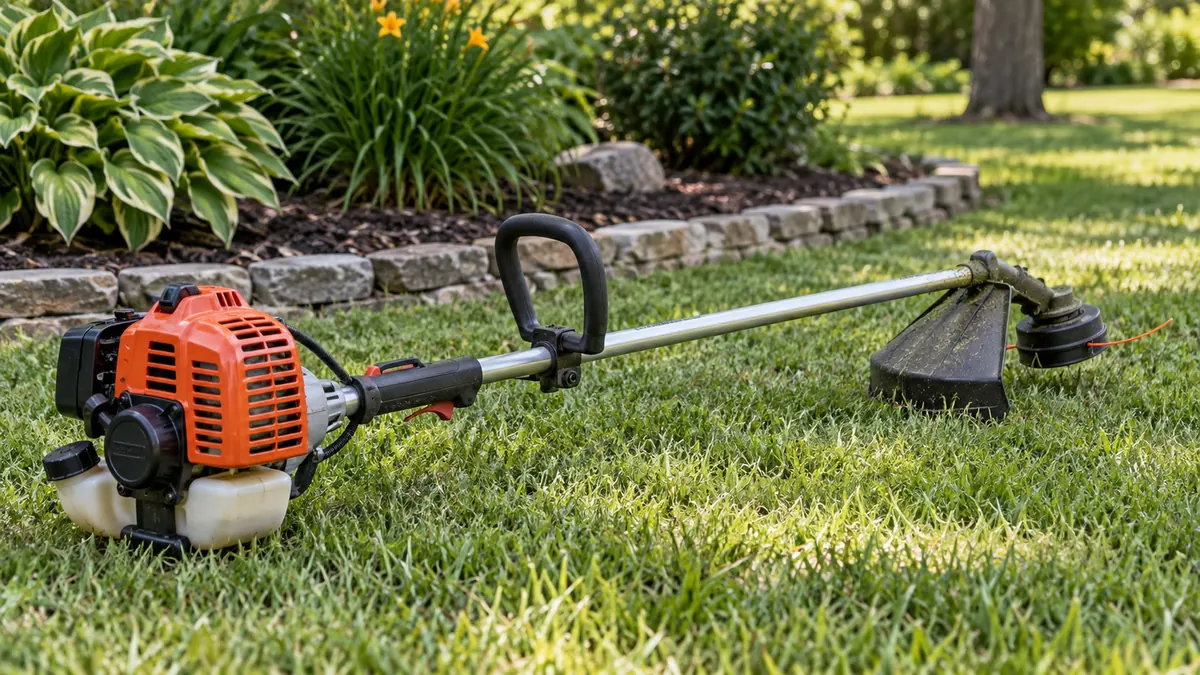
ECHO SRM-225 specifications and revision
- ECHO specifications: 21.2 cc engine, 50:1 gasoline/oil, 0.38 L tank on the cited support entry; later manual revisions list different dry weights and tank sizes.
- The operator manual revision and serial-number range matter for exact parts; ECHO provides multiple SRM-225 parts catalogs.
- The current ECHO US product page identifies a 17-inch cutting swath and Speed-Feed 400 head.
There are several SRM-225 document revisions. One support entry gives a 0.38 L tank and a dry weight without the cutting head; other manual versions show different figures. A manual tied to the machine's serial number is more useful than a generic retailer bullet because it identifies the configuration, parts list and service procedure for that unit.
| Published item | Source scope | Practical check |
|---|---|---|
| Engine | 21.2 cc, air-cooled two-stroke | Confirm the unit label and matching operator manual |
| Fuel mixture | 50:1 in cited ECHO support material | Use the ratio and oil grade from the serial-specific manual |
| Cutting swath | 17 in on current US product page | Check head, line, guard and approved setup |
| Tank and dry weight | Varies across publication revisions | Use the document matching the serial range |
Check dry weight, head and package
Use the serial number to select the correct manual and parts catalog. Check whether the listing includes the cutting head, shield, harness and package required; bare machine weight is not operating weight. Do not rely on one manual revision's tank or weight figures for every production year.
Select the manual by serial number
- Compare cutting swath, line diameter, head type and feed mechanism using the exact model documentation.
- Check whether the manual calls for premixed two-stroke fuel or separate gasoline and oil for a four-stroke engine.
- Confirm guard, harness, controls and included cutting head against the model-specific package.
- Consider engine service, vibration, noise, operating area and local replacement-part support.
The SRM-225's published 17-inch swath is a nominal setup dimension, not a promise that every user should trim at that width beside a tree, fence or path. A smaller controlled pass may be safer around trunks, young plants and edging. The 21.2 cc displacement identifies engine size but does not establish a square-foot-per-hour clearing rate. Vegetation density, line condition, access and technique affect the time much more than the catalog figure alone can show.
For a small lawn with a few edges, compare the time spent mixing fuel, checking the head and storing a gasoline tool with a corded or battery trimmer. For a larger boundary or a property without convenient power, portability may be useful, but then comfort, fuel availability, sound and service access matter. This guide does not assign the SRM-225 to a yard-size range because ECHO does not publish a comparable area test.
Before trimming, decide where debris may safely land. Clear stones, wire and loose objects from the edge, then work with the line parallel to the ground and use short controlled arcs. Around tree trunks, keep the line away from bark; repeated contact can strip the protective layer. Near fences, gravel or windows, reduce the cutting area and avoid swinging the head toward people or property.
The product page's 17-inch swath is a configured width, not a direction to trim at full reach in every space. It also does not establish how quickly a user will finish a yard. Dense growth, line wear, slopes, obstacles and time spent refueling all affect output. Treat it as an identification specification and choose the technique and accessory authorized by the manual.
Speed-Feed head, line and guard
ECHO identifies the Speed-Feed 400 as the nylon cutting head for the current US SRM-225 product page. The exact cutting line diameter, loading process and head maintenance should come from the relevant manual. The head family may be sold separately or included in a package; verify the seller's itemized list rather than assuming every used or replacement machine has it.
Stop the engine and wait for the head to stop before clearing wrapped grass or reloading line. Inspect the spool, eyelets and cover for damage, and install only line recommended for the unit. Do not substitute wire, metal cable, fishing line or an oversized trimmer line. These changes can damage the head or guard and create a projectile hazard.
Keep the factory-specified shield installed. It limits exposure to debris and works with the line cutter to manage line length. A head that physically fits is not necessarily approved for the SRM-225; confirm the part number, shaft specification, rotation and guarding in ECHO's parts catalogue.
When ordering replacement line or a head, compare the model code and component number against ECHO's catalogue for the serial range. A retailer title that says “fits ECHO” may describe only certain engines or shaft assemblies. If the documentation is unclear, ask an authorized dealer to confirm the component before fitting it. Never remove the guard to obtain a wider cutting path.
Fuel, service and model revisions
The SRM-225 uses a two-stroke engine, so fuel and oil instructions must be followed exactly. ECHO's support source cites a 50:1 ratio, but use the manual for the exact serial range and current fuel recommendation rather than a generic mixture remembered from another tool. Four-stroke equipment may use separate oil and gasoline; those instructions cannot be swapped.
Use the fuel type and oil grade listed by the manual, mix in an approved container and label the mixture. Do not refuel a hot engine, smoke nearby or spill fuel on the housing. Clean or replace the air filter, inspect spark components and service the cutting head at the intervals specified by ECHO. If the manual asks for seasonal fuel treatment or drainage, follow that procedure before storage.
Before importing or buying a regional variant, confirm a local authorized service path, emissions compliance and parts availability. A matching model name does not prove the same warranty or configuration. Keep the model/serial information with the manual so a dealer can identify the correct parts catalogue and support documents.
For regular seasonal work, record the date of service and the parts changed. This makes it easier to spot a repeated starting or vibration problem before it becomes a larger repair. Use ECHO-approved procedures for storage, stale fuel and cleaning; this article does not replace those instructions.
Manual and warranty depend on region
ECHO's current US product page lists a 17-inch cutting swath and a 5-year consumer/2-year commercial warranty for the product offered there. That is a US policy statement and must not be assumed to apply to a purchase in another country. The support specification table may describe an older revision; use the serial-specific manual and regional warranty terms for the unit under consideration.
Fuel, head and operating safety
Follow the exact ECHO manual for fuel, guard and Speed-Feed setup. Wear eye/face protection and hearing protection, secure loose clothing, keep bystanders clear and never refuel a hot engine. Stop the head before clearing wrapped vegetation.
Walk the area before starting and remove wire, stones and objects that can be thrown. Keep other people and pets beyond the manufacturer's safe distance, wear sturdy closed footwear and eye protection, and use hearing protection appropriate to the exposure. Hold the tool with both hands, keep the cutting head below waist level and direct debris away from roads, windows and bystanders. Do not run the engine in a garage, shed or other enclosed area.
Stop work if the head vibrates unusually, a guard is loose, the engine leaks or the throttle does not return normally. Let the unit cool before refueling, cleaning or storing. For service that is not covered in the manual, use qualified ECHO support instead of operating with a removed guard or improvised part.
What the old Amazon check does and does not establish
The earlier marketplace review found ASIN B00CYHFAEI associated with an SRM-225 listing, but the selected delivery destination could not receive it. That observation does not establish an offer for every US address today, nor does it justify a purchase recommendation. No Amazon card, price, rating or stock statement appears here. Check the exact model and package on the marketplace serving your location if you intend to purchase.
The source links above are manufacturer material for specifications, operator documentation and model-specific support. They support the technical details in this guide; they are not independent durability tests or owner-experience surveys.
When reviewing any later listing, compare the full product name, included head, shield, harness and manual revision with the ECHO documentation. Do not treat a retailer's compatibility note or review count as a substitute for model identity, service support or an active delivery offer.
The SRM-225 is a two-stroke gas trimmer, so fuel preparation, starting and storage must follow the ECHO manual for the specific product version. Keep the guard, handle and harness adjusted as supplied, and do not fit a blade unless the exact model and kit are rated for it. The manufacturer’s 4 kg figure excludes the cutting attachment and fuel; expect the working setup to weigh more.