

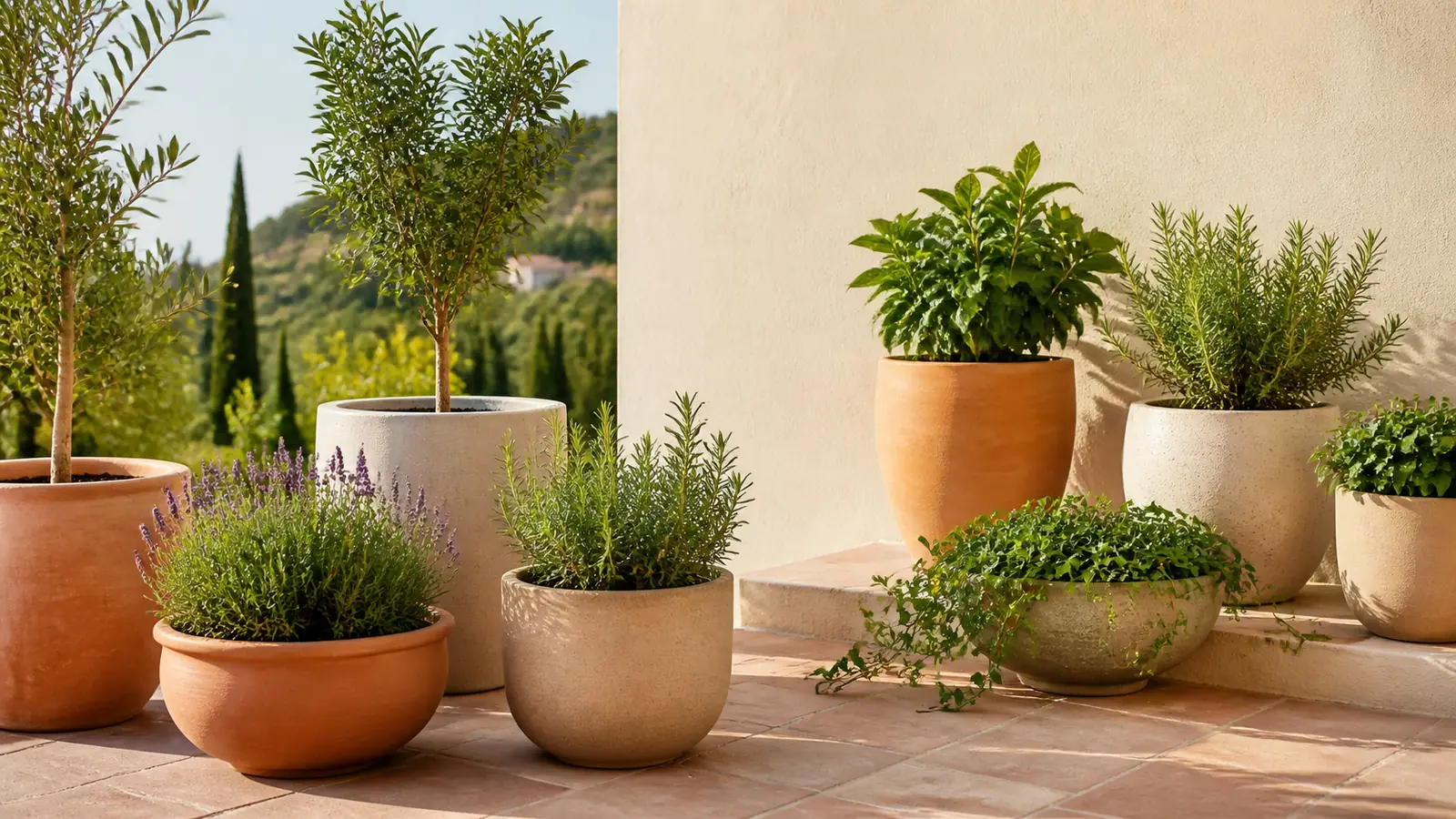
Choose a pot size that fits the root system
Start with the plant’s current root ball, not the leaves or the decorative outside of the old pot. For many houseplants, Illinois Extension recommends moving up one pot size, roughly 1–2 inches wider in diameter. That is a useful starting point for ordinary houseplant repotting, not a universal rule for every plant. Trees, vegetables, cacti, orchids and plants with unusual root systems may need different dimensions or specialist guidance.
A container that is much larger than the roots can hold unused wet growing medium for longer. A pot that is too small can restrict root growth, dry quickly or become unstable as the plant grows. Look for a size that leaves room for the plant to establish without burying a small root ball in a large volume of wet mix. Illinois Extension’s houseplant container guidance explains the one-size step and why over-potting can keep soil wet for too long.
Check plant labels and a reliable species guide for mature size and root behavior. If a plant is intended to remain in a container for several years, choose enough depth and volume for that purpose while keeping the container practical to move and water. Do not trim healthy roots just to force a plant into a pot that is too small.
Measure the pot and the place where it will sit
Nominal pot size may describe the outside rim rather than the usable root space. Before buying, compare internal width and depth, the shape of the base and the area available on a shelf, balcony or floor. Tapered pots can have a wide opening but a much narrower base; a cachepot can also hide a smaller nursery pot inside it.
| Measure or inspect | Why it matters | What to record |
|---|---|---|
| Root ball and current pot | Shows whether the plant has room and whether a modest size increase is appropriate. | Width, depth, visible roots and how quickly the medium dries. |
| Inside dimensions of the new pot | The roots need usable volume, not just a wide decorative rim. | Internal width, depth, base width and shape. |
| Final location | Determines light, wind, access, runoff and whether the pot can be moved. | Available footprint, doorways, floor protection and route for carrying it. |
| Drainage and support | Water and the wet container must both be managed safely. | Drain opening, saucer, surface, stand and any local load limit. |
For a houseplant in a 6-inch nursery pot whose roots have begun to emerge from the drain holes, a pot one size wider may be a sensible first comparison. Check the inside dimensions and the species’ needs before deciding. The University of Illinois Extension also advises that roots visible at the soil surface or growing through drain holes can indicate that a houseplant is ready for repotting; they are signs to investigate, not an automatic diagnosis for every plant.
Check drainage before comparing appearance
For most container plants, excess water needs a route out of the root zone. Confirm that drainage holes are open and that a saucer can be emptied. If the plant sits inside a decorative container without a hole, keep it in a removable inner pot, water it over a sink or outdoors, let it drain and empty the outer pot before returning it.
Do not treat gravel at the bottom of a growing pot as a substitute for drainage. Illinois Extension’s container drainage guide explains that a gravel layer does not create an outlet through the pot and can leave water perched in the medium above it. Some plants tolerate wetter conditions than others, so identify the plant and choose the right growing medium; do not assume that a universal “drainage layer” will correct poor watering or a sealed container.
Think through where the runoff will go before placing the pot indoors. Use a stable, removable saucer or tray that can be emptied, protect delicate surfaces and avoid leaving roots standing in water. Outdoors, make sure the container does not send runoff onto a neighbor’s balcony, public path or a place where it could stain or freeze.
Match the plant, material and watering routine
Material changes the way a pot feels and behaves, but does not determine the plant’s watering schedule by itself. Porous clay may lose moisture through the walls; plastic and glazed finishes do not absorb water in the same way. The growing medium, temperature, wind, sun exposure, plant size and root mass also affect how quickly a pot dries. Check the medium rather than following a fixed calendar.
| Container choice | Check before using | Typical trade-off |
|---|---|---|
| Plastic or resin | Drain openings, dimensions, stability and outdoor-use guidance. | Often easier to lift; quality, color and exposure affect longevity and heat. |
| Unglazed clay | Weight, frost rating, drainage and how often you can check moisture. | Porous walls can dry faster; a large pot may be heavy and vulnerable to freeze damage. |
| Glazed ceramic | Whether it has a drain hole, whether the glaze is suitable outdoors and how it will be moved. | A decorative finish does not guarantee drainage; large vessels can be difficult to handle. |
| Wood or composite | Construction, liner, drainage, manufacturer care and the exact filled weight. | Durability and weight vary by design; do not infer either from appearance alone. |
Match plants in a shared planter only when they have compatible light, water and growing-medium needs. A separate inner pot can make seasonal displays easier to change and lets you lift a plant for inspection. For material-specific comparisons, use the hub’s guides to terracotta pots, plastic pots and ceramic pots.
Check stability, filled weight and runoff
Shape and plant growth can affect whether a pot tips. A narrow base, tall foliage, wind exposure and a lightweight empty container can combine to make a planting unstable. The University of Illinois Extension’s container size guide specifically recommends considering stability on exposed balconies, rooftops and decks and checking weight limits before placing heavy pots there.
Estimate the whole setup, not the empty pot: container, support, plant, growing medium and stored water. Wet media can be substantially heavier than it looks. For an elevated location, confirm the permitted load with the building manager or a qualified professional before placing a heavy planter. Keep pots away from narrow ledges and choose a stable position that does not obstruct access or drainage.
Decide how the planter will be moved before filling it. Casters can help only when their rating and the floor surface are suitable and the plant remains stable. Leave room to reach the drain holes, prune and clean around the pot. A location that makes regular care awkward is likely to lead to missed checks.
Use this pot-selection checklist
- Identify the plant. Find the botanical name and a reliable care guide rather than relying only on a broad common name.
- Check the roots and growth plan. Look for roots at drain holes or at the medium surface, and compare current size with expected growth.
- Measure usable space. Compare the root ball with the pot’s inside width and depth, then check that the pot fits the final location.
- Plan water movement. Confirm that the container drains, that runoff has somewhere to go and that a decorative outer pot can be emptied.
- Match material to routine. Consider exposure, moisture checks, handling, frost and the maker’s care instructions.
- Check support and access. Include wet weight for balconies and shelves, and leave room for future watering and maintenance.
Compare two or three containers against the same checklist rather than choosing by color alone. If one fails on drainage, safe placement or root fit, eliminate it before weighing aesthetic details. The specialist plant pots guide compares the main types and material options; the potting mix guide covers the medium to use once the container is selected.
Repot when the plant gives a reason
Repotting may be useful when roots are emerging from the holes, the root ball is very dense or the medium has broken down. First slide the plant out carefully and inspect the roots and medium. Do not repot just because a calendar says a year has passed; some plants grow slowly, and some tolerate a snug pot. For a species that is declining, investigate light, watering, pests and root health before assuming pot size is the only issue.
When moving to a new container, keep the root ball supported, use a suitable fresh medium and avoid burying the stem base. Water as appropriate for the species, allow excess to drain and monitor the plant while it adjusts. Illinois Extension’s repotting guide describes signs that a houseplant may need more room and reminds readers that some plants tolerate crowded roots better than others.
Frequently asked questions about choosing a pot
For material-by-material options and planter styles, see our complete plant pots guide.