

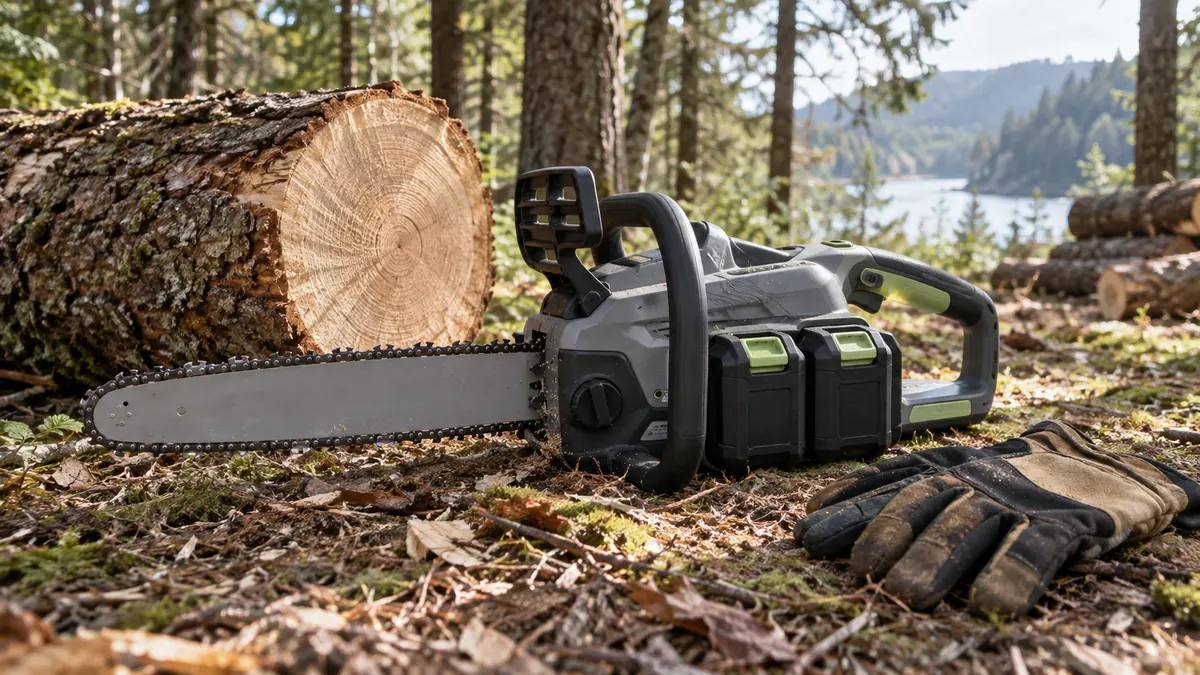
Specifications Makita publishes for DUC353Z
Makita Canada lists the DUC353Z with two 18V LXT batteries, a 14-inch (350 mm) guide bar, a maximum chain speed of 3,940 feet per minute (1,200 m/min), 3/8-inch pitch and .043-inch gauge. It lists a chain-oil tank capacity of 200 mL and identifies the Z configuration as tool-only: the saw, bar, chain and cover are included, while batteries and charger are sold separately. Makita Australia publishes matching core details and lists a 4.0 kg skin weight and 5.2 kg weight with batteries under its regional specification.
These figures describe the manufacturer's specification, not a measured cutting rate. Bar length does not by itself establish a safe cutting diameter, and a top chain-speed figure does not predict how quickly the saw will cut every species of wood. Chain sharpness, tension, lubrication, battery charge, wood condition, technique and operator control all affect the result.
Some retailers and pages also quote an electrical output or compare the saw with a petrol engine. Treat those statements as model-specific claims, not as a standardized performance test. The official DUC353Z page is the source for the data above; specifications for a DUC355Z or a different model should not be used to fill missing fields.
What the two-battery LXT platform means
The 18V×2 label means the tool is designed to use two compatible 18V LXT batteries together. It does not mean that the saw will operate with just one battery. If you already own LXT tools, check each battery's model, condition and compatibility in the DUC353Z manual before assuming it can be paired with this saw. Use matching, healthy batteries as directed by Makita; never use a pack that is cracked, wet or modified.
A tool-only package can reduce the initial cost for an existing LXT owner. A new buyer should calculate the cost of two batteries, a charger and chainsaw protective equipment as part of the purchase. The batteries add weight to the saw, and a higher amp-hour rating does not create a fixed number of minutes of cutting. It changes stored capacity, while the work demanded by the chain and the condition of the wood determine how quickly that capacity is used.
Charging and storage are part of the operating plan. Use the charger specified by Makita, keep packs dry and protected from damage, and follow the battery-care instructions for temperature and long-term storage. Do not charge a pack that has been dropped or visibly damaged until it has been checked according to the manufacturer's guidance.
Where this chainsaw may fit
A two-battery saw can suit maintenance jobs where a cord would restrict movement and a petrol engine is unnecessary. Examples might include occasional cutting of supported branches or manageable logs on a private property, provided the work matches the manual and the user's training. A 350 mm bar offers reach, but it is not permission to cut a log of that full diameter in one pass or to work beyond the operator's skill.
For firewood, estimate the typical log diameter, species, volume per session and distance from the charging area. If the job is occasional, the battery setup may be convenient when the owner already has compatible packs. If the work involves large hardwood, repeated long sessions or production quantities, compare battery replacement and charging logistics with a corded or petrol saw designed for the duty. A suitable choice is the one that matches the actual task and local service support, not the one with the largest headline number.
Do not use this product page as a felling recommendation. Tree felling, overhead cuts, storm-damaged limbs and timber under compression or tension require task-specific competence and controls. If you cannot identify how the wood will move when cut, stop and ask a qualified professional.
Interpreting Makita's runtime test
Makita Australia reports 52 cuts in a 150 mm treated-pine log using two 6.0 Ah batteries and states that results may vary. This is a defined manufacturer test. It is useful because it tells the reader the battery size, wood and log diameter behind the number; it is not a guarantee of 52 cuts on a different tree or a measure of continuous runtime.
Harder or dirtier wood, a dull chain, a longer bar, excessive pressure, low battery temperature and pauses between cuts can all change the outcome. Compare tests only when the battery capacity, wood, cut geometry and measurement method match. A battery pack that lasts through a few large cuts may behave differently from the same pack in repeated small branches. Keep a realistic margin rather than planning a job around the best-case figure.
Regional model codes and package contents
Makita Canada lists DUC353Z as a 14-inch tool-only configuration; Makita Australia's page identifies the same model family and its regional product details. Makita Spain currently lists DUC355Z, a different catalogue code. DUC355Z is relevant as a nearby family member, but it is not an automatic substitute for DUC353Z when selecting the manual, chain, warranty or package.
The US-market XCU03Z is a separate model code. Similar voltage and appearance do not make it interchangeable with DUC353Z. Do not copy a US Amazon listing, accessories or product ratings into a page about the DUC353Z unless the listing's title and model details explicitly confirm the same model and package.
Before purchasing an imported or used tool, read the label on the body, request photos of the model plate and package, then match it with the regional manual. Confirm whether batteries, charger, bar, chain and cover are included. Also check where warranty service and replacement parts are available; a low price can be offset if the tool is unsupported locally.
Chain, oiling and maintenance
The chain needs lubrication regardless of whether the motor is battery-powered. Makita Australia lists an adjustable oiling system, and both manufacturer pages list a 200 mL tank. Check the oil level before work and follow the manual to confirm the lubrication system functions correctly. A dry chain can wear the bar and chain quickly. Use only chain oil approved by the manufacturer and local environmental guidance.
Do not order a replacement chain using bar length alone. The correct chain must also match pitch, gauge and the number of drive links, and be compatible with the sprocket and bar on the exact DUC353Z configuration. Match the manual or Makita parts diagram before ordering. Keep the chain tension within the manual's range; excessive tension can add friction, while a loose chain can derail.
Before cleaning or inspection, switch the saw off and remove both batteries. Clear chips and debris around the bar and chain carefully, inspect the bar and chain for damage, and check the chain brake and guards. Do not dismantle the brake or alter safety components. If the oiling system, brake or tensioner does not work as intended, stop using the saw and contact authorized service.
Safety before cutting
Read the complete manual and make a task-specific risk check before starting. Use a firm two-handed grip, stable footing, a clear escape route and an exclusion zone that keeps other people away. Wear eye and face protection, hearing protection, gloves, protective trousers and boots selected for chainsaw work. Check the chain brake, trigger lock, chain tension, bar and oil supply before each session.
Wood may move, roll or pinch the bar when cut. A limb under tension can spring as the cut opens. Do not improvise on suspended branches, storm damage or compressed timber, and never cut from a ladder or above shoulder height. If the work requires felling or overhead cutting, use trained professional help.
Remove the batteries before carrying, cleaning or servicing the tool. Charge them in a dry, ventilated place using the recommended charger, and follow the manual if a pack becomes unusually hot. Battery operation reduces exhaust and fuel handling; it does not remove the hazards of a moving chain.
Checklist before choosing DUC353Z
- Verify the complete code: DUC353Z is not a DUC355Z or XCU03Z.
- Price the full setup: add two compatible LXT batteries, the charger and chainsaw PPE if needed.
- Match it to the real work: note typical log diameter, wood type, session size and charging access.
- Confirm consumables: use the exact manual to match pitch, gauge and drive links for a replacement chain.
- Check support: verify local warranty, authorized service and parts availability for the regional model.
- Use the right safety controls: do not select a chainsaw for felling or hazardous timber work without the required training.
For a category-level comparison, return to our battery chainsaw selection guide. If firewood is the main job, the firewood chainsaw guide explains how workload, bar length and safe handling affect the choice.