

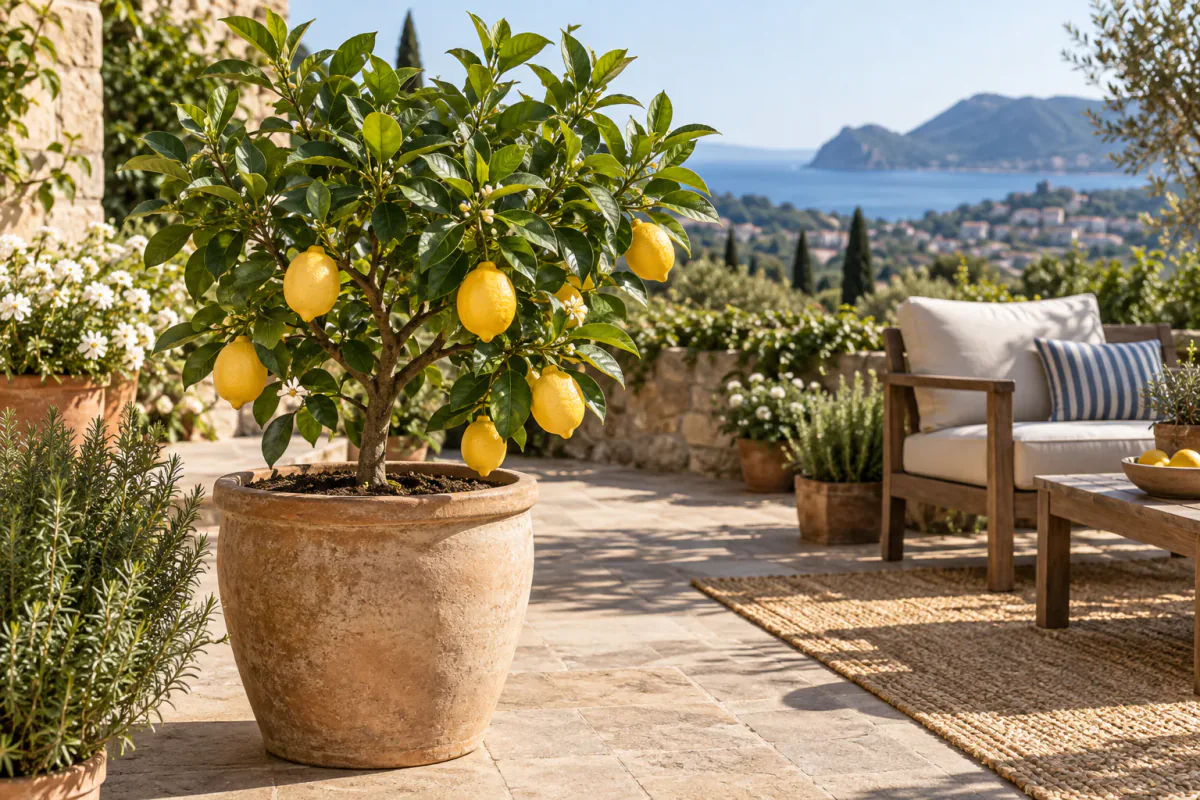
Choose a suitable tree and pollination partner
Ask the nursery for the cultivar and rootstock names. Some fruit trees need a compatible pollination partner; others may be self-fertile, and the answer depends on the crop and cultivar. Penn State Extension’s Meyer lemon container guide gives one example of a self-pollinating citrus tree, but that detail should not be generalized to apples, pears or stone fruit.
Save the cultivar and rootstock information
Keep the nursery label after planting and record the source, cultivar and rootstock. This information helps with pollination, pruning, hardiness and diagnosis later. If the label is incomplete, ask the nursery before the tree is planted permanently. A fruit name alone is not enough to answer questions about mature size, self-fertility or winter care.
Select a container and growing medium
Use a sturdy pot with drainage holes and enough volume for the tree’s roots. A larger container is heavier when wet, so consider the surface and how you will move it. Use container mix rather than garden soil alone. Illinois Extension’s container guide includes starting size guidance for fruit crops; follow crop-specific advice and the nursery’s rootstock information.
Manage light, water and winter conditions
Most fruiting trees need ample light, but exact exposure depends on species and local heat. Check moisture near the root ball because containers dry and warm differently from garden soil. Do not leave roots waterlogged. Determine whether the cultivar is hardy in your area and how to protect roots in a container during winter. For pot selection, see our plant pot guide.
Use observations to improve next season’s care
Record leaf-out, flowering, pollination conditions, fruit set, watering and any pests. Note container size and when roots or drainage were last checked. These details can help distinguish a one-year weather effect from a recurring issue. Use local extension advice for diagnosis and keep the product labels if you apply any fertilizer or crop treatment.
Move containers only when you understand the tree’s dormancy
Temperate fruit trees may need a cool dormant period, while tender citrus has a different winter requirement. Do not bring every potted fruit tree into a heated room when leaves fall. Check the species, cultivar and local climate, then choose a protected location that fits its seasonal cycle. Prevent a pot from drying completely during dormancy, but avoid keeping it saturated.
Avoid pruning a container tree on a generic schedule
Pruning time and method differ among fruit species and training systems. Identify whether the tree fruits on current-season growth, older wood or a trained framework before making significant cuts. Remove dead, broken or crossing growth only as appropriate for the species. If you want a compact canopy, choose a suitable rootstock and form early rather than repeatedly cutting back a mature tree.
Choose a cultivar and rootstock for container growing
Ask the nursery for the cultivar and rootstock, not just the fruit name or the word “dwarf.” Rootstock affects vigor and eventual size, while cultivar determines fruit characteristics and may affect pollination compatibility. Confirm that the tree is sold for container growing and suits your climate. A compact label alone does not guarantee a small mature canopy or a harvest in a particular year.
Ask the nursery how the tree was trained
Container fruit trees may be sold as a central leader, espalier or another trained form. Ask which form the nursery recommends for the named cultivar and rootstock, and whether the tree needs a support. Keep the label and a photograph from planting so you can compare later growth and avoid removing branches that form part of its intended structure.
Confirm whether the tree needs a pollination partner
Pollination requirements vary by crop and cultivar. Some trees are self-fertile; others need a compatible variety flowering at the same time and close enough for pollination. Ask the nursery or check a regional extension source before purchasing a second tree. Penn State Extension’s Meyer lemon guide is one specific example of a citrus tree described as self-pollinating; do not apply that answer to apples, pears or stone fruits.
Select a container for roots, stability and access
Use a sturdy pot with drainage and enough room for the selected rootstock and tree. A very small container can restrict root space and dry quickly; an oversized pot filled with wet mix can remain damp around a small root system. Consider the loaded weight, wind exposure and whether the container can be moved. Ensure the surface can support it and keep drain openings clear.
Use a container medium rather than garden soil alone
A potting mix designed for containers is generally easier to manage than dense garden soil in a restricted pot. The mix should support the tree while allowing excess water to leave the root zone. Illinois Extension’s container-growing guide offers crop and pot guidance; adapt it to the tree’s rootstock, climate and container. Do not add a gravel layer as a substitute for drainage holes.
Monitor water closely during flowering and fruit growth
Containers have limited reserves, so check the root zone more often during warm, windy weather and when the tree is carrying leaves or fruit. Water deeply when needed and allow runoff to escape; avoid leaving the pot in a full saucer. A fixed schedule can overwater during cool, cloudy periods or underwater a tree during heat. Record how quickly the mix dries in your position.
Feed according to growth and container guidance
Nutrients can wash out of containers, but more fertilizer is not always better. Follow the product label and species-specific guidance, and avoid feeding a stressed tree as a substitute for checking drainage, light or root health. If leaves show a pattern of discoloration, assess watering and pests before diagnosing a deficiency. Do not apply fertilizer to dry roots or exceed label rates.
Prune for structure and the tree’s fruiting habit
Container fruit trees may need pruning to keep a manageable shape, but timing and cuts depend on species, cultivar and whether the tree fruits on new or older wood. Keep the label and ask the nursery for a training system suitable for the rootstock. Remove dead or damaged material with clean tools and avoid severe reduction that removes much of the fruiting structure.
Set realistic expectations for flowers and harvest
A young tree may take time to mature, and fruit set depends on age, pollination, light, weather and care. Flowers can drop without producing fruit, and a crop may need thinning according to species guidance. Do not assume a small tree will yield a fixed quantity or fruit in its first season. Keep notes on flowering and growth so you can discuss specific issues with a local extension service.
Protect roots and canopy according to local climate
A tree that survives winter in the ground may be more vulnerable in a container because the root ball is exposed to cold and drying wind. Check hardiness for the exact cultivar and rootstock, then plan a sheltered position or protection suitable for the region. Do not move a dormant temperate tree into a warm room without checking its seasonal needs. Citrus and other tender trees require different plans from hardy temperate fruit.
Inspect leaves and fruit before treating problems
Check both sides of leaves, new shoots and developing fruit for insects, damage or discoloration. Remove fallen fruit and diseased material where appropriate, and keep the container area clean. Identify the pest or disease before using a treatment; the product label must permit use on the particular edible crop and explain any pre-harvest interval. Seek regional advice if damage is spreading or the diagnosis is uncertain.
Repot when roots or mix show that the tree needs it
A fruit tree does not need repotting on a universal annual schedule. Roots circling the pot, water draining poorly or a degraded medium can signal that attention is needed. Choose a suitable season for the species and local climate, and avoid unnecessary root disturbance while the tree is flowering or under heat stress. For pot styles and drainage considerations, see our garden trees guide and plant pot guide.
Avoid repotting during avoidable stress
Do not repot a tree simply because the calendar says it is time. Avoid disturbing roots during extreme heat, drought, flowering or other stress unless a serious drainage problem requires intervention. Prepare the new container and medium first, then move the tree carefully. Afterward, monitor moisture and protect it from abrupt changes while roots settle.
Compare fruit types before choosing a patio tree
Citrus, figs, apples and other fruit trees are sometimes sold for containers, but each crop differs in climate, pollination and size. Start with the conditions you can provide, then compare cultivars and rootstocks that are actually available for that region. A tree labeled compact may still need a large pot, regular pruning or winter protection. Ask the nursery how the named plant is intended to be grown.
Check flowering overlap when a pollination partner is required
A second tree only helps if the varieties are compatible and bloom at overlapping times. Confirm the pairing for the exact cultivar and local conditions rather than choosing a second tree of the same fruit by appearance. Some species or cultivars are self-fertile; others are not. If space is limited, ask whether a neighboring tree in the area can serve as a pollination source.
Support branches and manage a heavy crop
A young container tree may need staking while its roots establish, but stakes should not rub or constrict the trunk. Inspect ties and adjust them as the tree grows. If a tree sets fruit, follow species-specific advice on thinning or support; fruit weight can strain branches, especially on a compact form. Do not remove healthy branches just to keep a tree small without a pruning plan.
Keep the root collar and drain openings clear
When topping up a container, avoid burying the trunk base or covering the root collar with fresh mix. Keep drainage openings clear of roots, debris and the surface. A layer of mulch may reduce evaporation, but keep it away from the trunk and check moisture below it. If water begins to pool, investigate drainage and medium condition rather than adding another top layer.
Track flowering, fruit set and seasonal care
Record when the tree leafs out, flowers and sets fruit, along with watering and weather. These notes help distinguish a crop-specific problem from a one-time cold spell or pollination issue. Adjust container protection before severe weather and check root-zone moisture through hot periods. For general tree selection and site planning, see our garden trees guide.
Use flowering and harvest notes to refine the setup
A patio fruit tree may flower yet set little fruit, and a first small crop does not always indicate a permanent problem. Record the cultivar, rootstock if known, flowering dates, weather during bloom, and whether a compatible partner was nearby. Note how often the container dried during warm or windy spells, then compare fruit set and growth at the end of the season. These observations help distinguish pollination limits from water stress or a young tree still establishing. Do not respond by sharply increasing fertilizer: excess feeding cannot replace compatible pollination or suitable conditions. For practical context on growing fruit in containers, consult this Illinois Extension container-growing guide, and check crop-specific pollination information before choosing a second tree.