

A practical first response
- Pause treatment. Photograph the whole plant and close views of both leaf surfaces, stems, flowers and soil. Note when the symptoms appeared and any recent changes in watering, weather, fertilizer or products used.
- Compare plants. Check whether one plant, one species or a whole bed is affected. A pattern concentrated on a hot wall, one irrigation zone or recently treated area can point to an environmental cause.
- Inspect closely. Look under leaves, at new growth, leaf joints and the soil line. Use a hand lens if possible. Distinguish an insect, egg, web, cast skin or fungal growth from ordinary leaf texture or dust.
- Decide whether damage matters. A few insects or cosmetic marks may not justify treatment. Ask whether new growth, flowering, harvest or plant survival is being affected.
- Choose one proportionate response. Correct a growing-condition problem, remove a limited affected part or use another targeted control. Record what you did and check the plant again.
Identify the cause before treating
Penn State Extension notes that symptoms can be caused by environmental conditions, insects, pathogens or pesticide injury, and that several causes can look alike. A yellow leaf alone does not establish that the plant needs fertilizer; brown margins do not prove a fungal disease. Diagnosis combines the pattern, the plant species, growing conditions and visible signs.
Check the undersides of leaves for insects, eggs, stippling or webbing. Look for sticky honeydew, shed skins, frass, chewing, tunnels or a visible colony. For disease, note whether spots expand, have defined margins, show concentric rings, or carry visible spores. Record whether new leaves or old leaves are affected and whether the problem follows veins, a spray pattern or a section of the root system.
If you cannot identify the cause, do not apply several products in sequence. Contact a county extension office or plant diagnostic clinic; they can tell you how to collect and submit a useful sample. Follow local reporting guidance if the organism could be a quarantine or invasive pest.
Symptom guide: what to inspect next
| What you notice | Inspect for | Other possible causes |
|---|---|---|
| Small holes or missing leaf edges | Chewing insects, slime trails, frass, damage at night | Hail, wind, wildlife or mechanical injury |
| Fine pale speckles or bronzing | Leaf undersides for mites, eggs and fine webbing | Dust, sun scorch, drought or spray injury |
| White coating or fuzzy patches | Whether growth is part of the leaf, wipes away, or appears on both surfaces | Mineral residue, dust or other diseases with different causes |
| Sticky leaves or black surface growth | Honeydew-producing insects such as aphids, whiteflies or scale | Other plant residues; identify the source before treating |
| Yellowing or wilting | Soil moisture, drainage, roots, recent weather and the distribution across the bed | Water stress, root damage, heat, nutrient imbalance or disease |
| Rapidly spreading spots or collapse | Which plants and tissues are affected, recent rain or irrigation, and any visible signs | Several infectious and non-infectious problems; seek diagnosis if unclear |
This table narrows what to inspect; it does not diagnose a disease from a photograph or symptom alone. Many problems need the plant species and location, and some require laboratory analysis.
Common garden pests and their signs
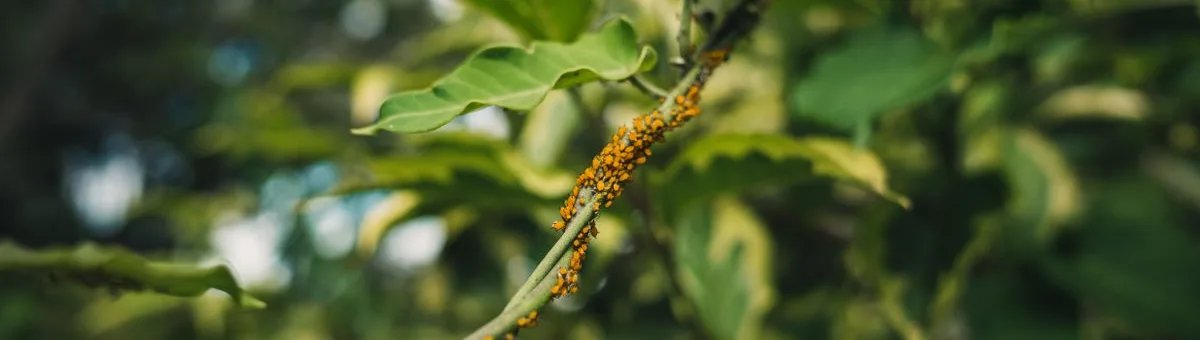
Aphids are small, soft-bodied insects that often gather on new growth or leaf undersides. Their feeding may distort tender leaves, and sticky honeydew or shed skins can be additional clues. Ants may visit honeydew, but their presence alone does not confirm aphids.
Mealybugs and scale insects can appear as cottony clusters or fixed bumps on stems and leaf joints. Confirm that a bump is an insect before scraping or spraying; scale covers vary and some plant structures can look similar.
Whiteflies may flutter from the plant when disturbed. Check the undersides for immature stages and honeydew. Spider mites are very small; stippling and fine webbing can be clues, but drought, dust and other damage can resemble mite injury. Use a lens and check several leaves.
Caterpillars and beetles chew foliage, flowers or fruit. Look for the insect, eggs, droppings and the pattern of feeding. Identify the host plant too: different caterpillars require different responses, and many native caterpillars are part of local food webs.
Slugs and snails feed mainly at night or in damp conditions and may leave slime trails. Inspect around pots, boards and dense ground cover rather than applying bait automatically.
Common diseases and non-infectious lookalikes
Powdery mildew often appears as white powdery growth on foliage, but not every white mark is mildew. Its severity and management vary by host and local conditions; remove badly affected material when appropriate and consult a plant-specific source before applying a fungicide.
Leaf spots, rusts, blights and rots describe different problems, not interchangeable diagnoses. Some are infectious; others are injury from heat, frost, water, salts or chemicals. A yellow halo, dark margin or orange pustule may be useful evidence, but it must be interpreted with the host and pattern.
When multiple plants wilt, compare irrigation delivery and soil drainage. When only sprayed foliage is damaged, review the product, weather and timing. A nutrient problem tends to show a pattern across growth or leaves, but deficiency symptoms overlap; use a soil or tissue test when the result will guide a fertilizer decision.
Choose a control using integrated pest management
Integrated pest management (IPM) is a decision process: prevent avoidable problems, monitor, identify, decide whether damage warrants action, choose a compatible control and check the result. The aim is to manage damage to an acceptable level, not to eliminate every insect from the garden.
- Prevention: choose plants suited to the site, give them appropriate spacing and water, remove diseased debris when advised, and avoid practices that repeatedly stress them.
- Physical and cultural methods: hand-remove a small number of pests, prune a limited damaged part, use barriers where suitable, or adjust irrigation and airflow. Check that the method will not injure the plant or wildlife.
- Biological controls: conserve beneficial organisms and use a purchased biological control only when it is correctly identified, suited to the pest and appropriate for the setting.
- Targeted pesticide: consider it only when the problem is identified and the expected benefit justifies the risk. Select a product labeled for that pest and plant, then follow the label exactly.
Do not use homemade dish-soap, alcohol, garlic or oil recipes as universal treatments. Household products can burn foliage, fail to control the pest or affect beneficial insects. A marketed “natural” or “organic” product can also have hazards and use restrictions.
Pesticide safety and product labels
In the United States, read the label before buying and again before mixing or applying a pesticide. Confirm that the label covers the plant, site and pest; follow the dose, timing, protective equipment, weather, harvest and re-entry instructions. Do not apply more than directed or improvise combinations. Keep children and pets away as the label instructs, store products in their original containers and dispose of leftovers according to label and local rules.
Pay attention to pollinator and wildlife precautions. Do not assume that a product is harmless because it is plant-derived, labeled organic or sold for a home garden. If the label is unclear, do not guess; ask your local extension service or the product manufacturer. This page does not recommend a particular pesticide or replace the label.
Monitor results and keep a simple record
Write down the date, plant, location, symptoms, likely cause, weather and action. Photograph the same part of the plant after a reasonable interval for the problem. Look for new damage, healthy growth and effects on nearby plants; old injury will not disappear when a treatment works. If symptoms spread or the plant declines, revisit the diagnosis rather than repeating a product automatically.
Use our focused guides when you have identified the subject: aphids, powdery mildew, mealybugs and spider mites. If you have not identified the cause yet, return to the inspection steps above.
Frequently asked questions
Frequently Asked Questions
📚 Sources and references
Authoritative sources consulted to write this guide:
- Your Plants Look Sick? Now What? — Penn State Extension
- Steps to Controlling Insect Pests in the Garden — Penn State Extension
- Plant Disease Identification and Control — Penn State Extension
- Pesticide Safety Tips — U.S. Environmental Protection Agency
- Tips for Reducing Pesticide Impacts on Wildlife — U.S. Environmental Protection Agency