

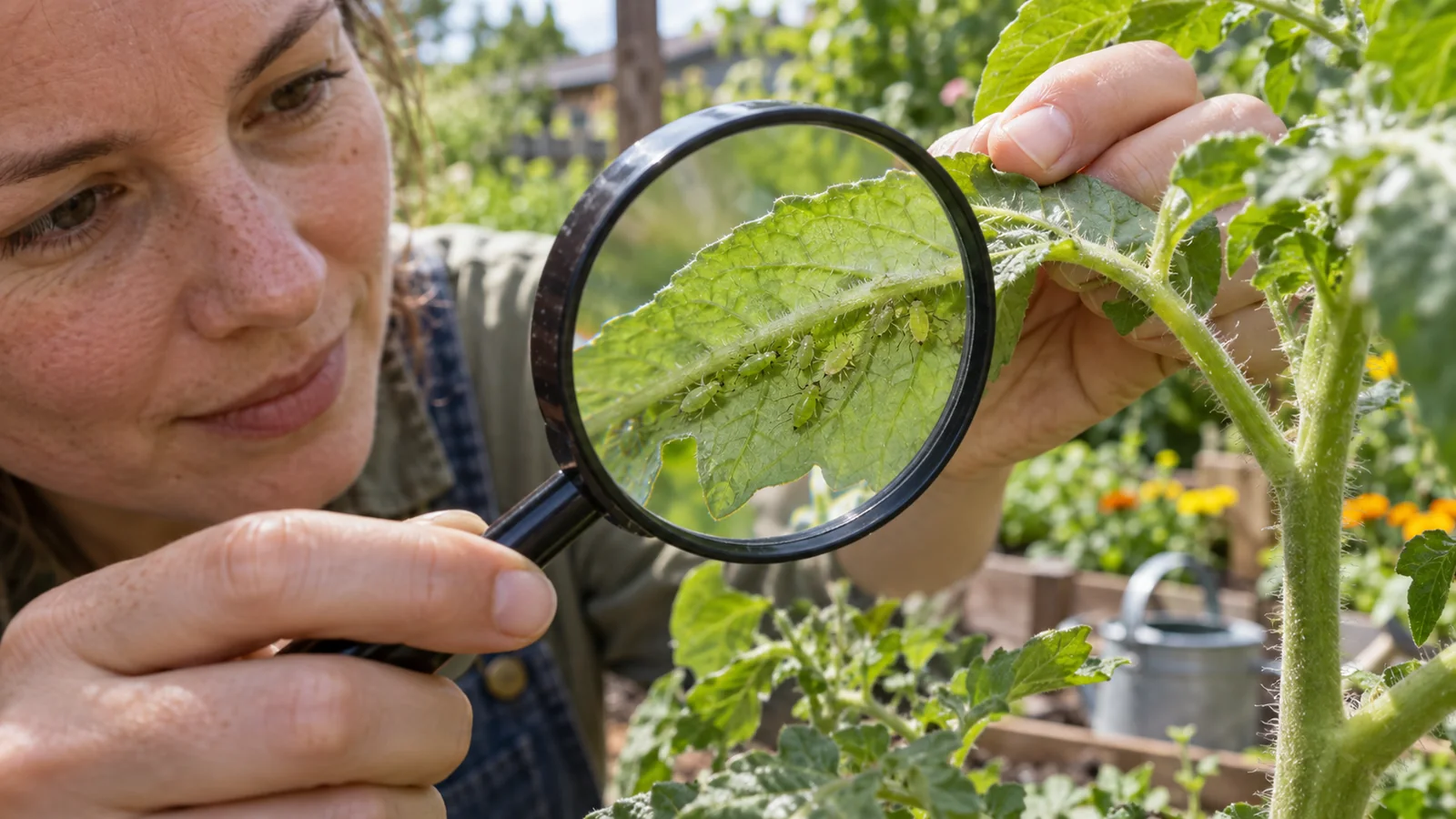
How to Identify Aphids on Your Plants
Look for small, soft-bodied insects in colonies on new growth and leaf undersides. Honeydew, ants or distorted growth may also appear, but they do not by themselves confirm aphids. Use an Extension diagnostic source if the insects are not visible or identification is uncertain.
UMN Extension’s garden pest notes explain inspection and control considerations.
Aphids are often pear-shaped, with visible legs and antennae, and may be green, black, yellow, brown or pink depending on species and host. Some individuals have wings; pale shed skins can remain where a colony has been feeding. Turn over leaves and check growing tips rather than relying on sticky residue alone, since honeydew can also come from other sap-feeding insects. A plant can curl leaves because of drought, herbicide exposure, viruses or physical damage as well.
Record the plant species and where the insects appear. Some aphids feed on one or a small group of hosts, while other species move between hosts during the year. If the insects are inside a gall, on roots, or too small to distinguish from other pests, use a close photograph and local Extension identification help before choosing a treatment.
Why Aphids Appear: Understanding the Causes
Aphids may arrive on new plants or move among host plants; numbers also fluctuate with weather and natural enemies. Excess fertilizer can create unwanted tender growth in some situations, but it is not a complete explanation for an infestation. Inspect plants and treat only a problem that is causing meaningful damage.
Warm weather and actively growing shoots can support rapid population growth in many aphids, but timing and reproduction vary by species and region. Ants may collect honeydew from a colony and sometimes protect aphids from predators, yet ants alone do not prove that aphids are feeding on the plant. Look for live insects and fresh damage. When honeydew and sooty mold are present, assess whether the sticky coating is affecting leaves or nearby surfaces; do not treat mold as the primary cause if sap-feeding insects remain.
Small colonies can be temporary and may already have predators or parasitoids nearby. Before intervention, compare the newest growth with healthy parts of the same plant, note whether the population is increasing and decide whether distortion or lost growth matters for the crop. There is no one numerical treatment threshold for every ornamental, vegetable, seedling and fruiting plant.
Aphid management: start with the least disruptive step
Check whether the plant is still growing and whether beneficial insects are present. Small aphid numbers may not need treatment. For active damage, identify the crop and aphid, then choose an approach suited to that plant.
Rinse or remove aphids
A directed water rinse can dislodge aphids from sturdy plants if the foliage tolerates it. Avoid damaging seedlings and check again as new growth appears.
Labeled insecticidal soap
Use only a product labeled for the crop and aphids; coverage must reach the insects. Test and repeat only as the label directs. Do not use dish soap as a substitute.
Neem products
Formulations and allowed uses vary. Follow the exact label and pollinator precautions; do not assume “natural” means harmless.
Conserve natural enemies
Lady beetles, lacewing larvae and parasitoids may feed on aphids. Avoid broad-spectrum sprays when beneficials are active; purchased insects are not guaranteed to stay or eliminate a population.
Companion planting
Plant combinations are not a guaranteed aphid deterrent. Choose flowers for regional suitability and potential beneficial-insect resources, not as a substitute for diagnosis.
Sticky traps
Traps may monitor flying insects but are not a complete aphid-control method and may catch beneficials. Use only where the target and setting make them appropriate.
Other pesticides
Use stronger products only when needed and labeled for the crop, pest and site. Follow pollinator, harvest and protective-equipment directions. EPA’s garden pesticide guidance explains how to evaluate a label.
For any spray, coverage is a practical constraint: aphids may remain on leaf undersides, at curled tips or inside dense new growth. Contact products must reach the insects and do not guarantee that a colony is gone. Check whether the plant is drought-stressed, recently transplanted or exposed to heat before applying a product; follow the exact label for temperature, crop stage, harvest interval, protective equipment and pollinator exposure.
How to Prevent Aphids from Returning
Inspect new growth regularly, avoid unnecessary pesticide use that could harm beneficial insects, and provide plant care suited to the crop and site. Remove a small colony by hand or rinse a sturdy plant if it tolerates the spray. Monitor afterward; aphids may return or appear on new growth.
Inspect nursery plants before purchase and isolate new indoor plants while checking their undersides and shoot tips. Outdoors, keep plants at their recommended spacing and avoid excessive nitrogen that produces soft growth without a crop need. Remove weeds only after identifying them: some are alternate hosts, while flowering weeds may provide resources to beneficial insects. Do not remove every flowering plant around the garden as a blanket prevention measure.
Conservation biological control means making the garden more hospitable to existing predators and parasitoids while reducing broad-spectrum pesticide exposure. A mix of regionally suitable flowering plants can support beneficial insects over time, but planting flowers does not immediately eliminate an aphid colony. Avoid buying and releasing lady beetles as a guaranteed solution: they may disperse, and their source, timing and conditions affect whether they remain.
Aphid Treatment Comparison Table
There is no reliable universal efficacy or cost table for pest-control methods. Select an approach by plant, aphid location, damage and non-target risk:
- Small colony: monitor, remove by hand or rinse if the plant tolerates it.
- Beneficial insects present: avoid broad-spectrum treatments and reassess whether intervention is needed.
- Ongoing damage: confirm the pest and consult Extension; if using a pesticide, check that the label includes the plant, aphid and site.
- After treatment: inspect the plant and repeat only as directed by the product label.
EPA’s garden pesticide label guidance explains why the exact directions matter.
Recognize beneficial insects before removing aphids
Lady beetle larvae do not look like the familiar spotted adults: they are elongated and alligator-shaped, often dark with orange or yellow markings. Lacewing larvae are narrow, active predators, while hoverfly larvae resemble small legless maggots near aphid colonies. Tiny parasitoid wasps can leave aphid mummies that look swollen and tan or brown. These are clues rather than a complete field-identification key, so check an Extension image guide when in doubt.
A colony with predators, mummies or only a few live aphids may be under natural control. Avoid spraying just because one leaf is curled. If removal is needed, move carefully around beneficial insects and inspect again after several days. Do not buy or release predators without confirming that the species, life stage and release conditions suit the location; local conservation is often more practical for a home landscape.
University of Maryland Extension’s aphid guide recommends mechanical control and conserving natural enemies, and explains why released insects may disperse. It also discusses host-specific cases, including aphids inside galls or feeding on roots, where a routine leaf spray would miss the pest.
Treat indoor aphids differently from outdoor colonies
Move a plant with suspected aphids away from the rest of a houseplant collection and check nearby leaves, stems and pot edges. Rinse a small, sturdy plant in a sink or shower if the species tolerates the water pressure; protect the potting mix from being washed out and allow foliage to dry. Remove heavily infested shoots only if pruning will not harm the plant’s shape or flowering.
Before using any indoor pesticide, verify that the label allows the exact houseplant and indoor location. A product labeled for outdoor vegetables may not be suitable inside a home. Keep children and pets away as the label directs, prevent spray from reaching food surfaces and consider whether the plant can be managed by washing or discarded instead. Indoor beneficial-insect releases may be impractical for a small home collection and should not be treated as an automatic fix.
Check new growth and reassess before repeating treatment
After rinsing, pruning or a labeled application, inspect fresh shoots and leaf undersides again. Old curled leaves may stay distorted even after aphids are removed, so focus on live insects, honeydew and whether new growth continues to be affected. Keep the plant’s water and light conditions stable while it recovers; avoid adding fertilizer simply to repair damage unless the plant and soil test indicate a nutrient need.
If live aphids remain, confirm that the treatment reached the colony and that the label allows a repeat. Do not shorten the interval, increase concentration or combine products. If the same problem returns, look for nearby host plants, ants tending a colony, new plants entering the garden or pesticide effects on natural enemies. Keep a photo and treatment log to guide a local Extension question. The least disruptive response may change as the colony, plant stage and beneficial-insect activity change.
Help plants recover after an aphid infestation
Once the colony is reduced, let the plant recover before adding another treatment. Aphids can distort soft growing tips and leave sticky honeydew, but yellow leaves, wilting or poor growth can also point to water, root, heat or nutrient problems. Remove only leaves that are badly damaged or no longer useful. On a flowering plant, inspect buds and the undersides of young leaves where new colonies often establish.
Check whether ants are moving along stems or protecting a colony. Ant activity can make aphids harder to manage, but it is not proof that the ants caused the plant symptoms. If ant control is needed, select a method labeled for the site and keep it away from children, pets and non-target wildlife as the label directs. Do not treat every ant or aphid sighting; first assess whether the plant is still growing and whether natural enemies are present.
On edible plants, read the label for the crop, application timing and any preharvest interval before using a pesticide. Rinse harvested produce according to food-safety guidance, but do not assume rinsing makes an off-label application acceptable. For houseplants, isolate the affected pot and inspect nearby foliage before returning it to a plant group. Clean pruners if they moved between plants with other suspected disease problems.
Keep a simple follow-up log with the plant, location, date, pest evidence, control used and response on new growth. If aphids return repeatedly, ask a local Extension office to confirm the species and check whether a nearby host, excess nitrogen or a treatment harming beneficial insects is contributing. The University of Maryland Extension aphid guide covers identification and least-disruptive management for home gardens.
Adjust aphid control to the plant setting
For a houseplant, inspect the growing tip, leaf joints and undersides, then isolate the pot while you decide whether the insects are aphids. A gentle rinse or wiping may remove a small colony if the species tolerates handling, but protect the potting mix and let leaves dry in suitable light and airflow. Check nearby plants, the saucer and decorative sleeves for hidden insects before returning the plant to a group.
For an outdoor ornamental, first assess whether the plant is continuing to grow and whether lady beetles, lacewing larvae or other predators are present. A few aphids can be part of a functioning garden food web. If a colony is damaging tender tips, prune only the affected parts when that will not remove important buds, then check for regrowth. Preserve natural enemies by avoiding broad-spectrum treatments where a targeted approach is adequate.
For edible crops, confirm the crop appears on the product label before any pesticide use and observe the stated harvest interval. Aphids may collect on leaves or flower buds that are difficult to rinse clean; follow crop-specific food-safety advice and discard badly damaged portions as appropriate. Never substitute dish soap, vinegar or a concentrated essential oil for a labeled product. The University of Maryland Extension guide explains why identification and natural-enemy conservation are part of aphid management.
If plants repeatedly develop colonies, review their growing conditions and pesticide history. Excess nitrogen can produce tender growth attractive to aphids, while drought or root stress can reduce the plant’s ability to tolerate feeding. Avoid changing fertilizer, irrigation and pest control simultaneously; that makes it difficult to tell which adjustment helped. Track the response on fresh leaves, not just the older leaves that were already curled or sticky.
Frequently Asked Questions
Use the least disruptive control that fits the plant and infestation. Check new growth and leaf undersides, identify whether beneficial insects are already present, and begin with a firm water spray on sturdy plants. If using a contact pesticide, it must reach aphids and may need repeat treatment exactly as the label directs; avoid applying to flowers visited by pollinators unless the label allows it. See UMN Extension’s aphid management notes and the EPA safety tips.