

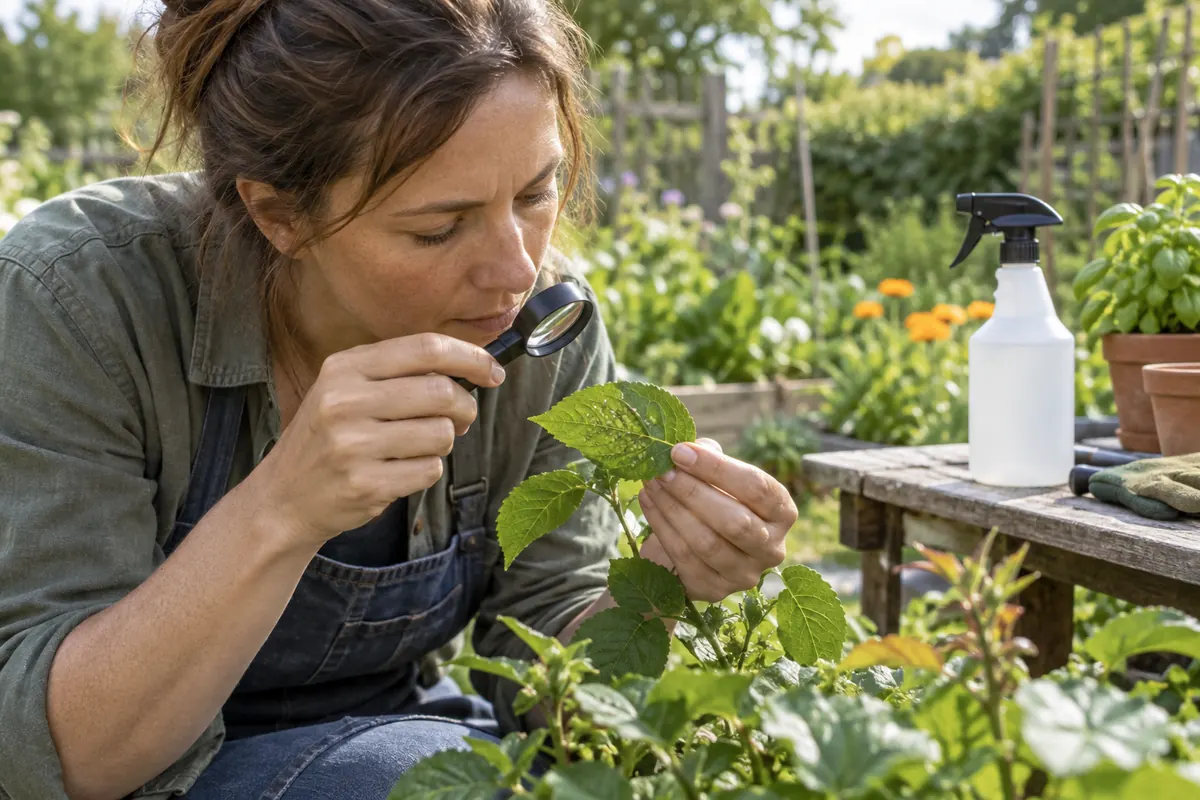
Start with diagnosis, not a recipe
“Natural,” “homemade” and “organic” do not establish that a remedy is effective, safe for plants or allowed on food crops. Household mixtures may burn foliage, expose people or pets, or harm beneficial organisms. Identify the pest first; if it is not causing meaningful damage, no treatment may be needed.
For small populations, consider hand removal, pruning affected material or a water rinse if the plant tolerates it. If using a pesticide, choose a registered product labeled for the pest, crop and site. Read directions for protective equipment, pollinator precautions and harvest intervals. EPA explains why labels matter; UMN Extension warns that homemade soap mixtures can damage plants.
Insecticidal soap: use a labeled product
Do not substitute dish soap or a home-mixed detergent for a registered insecticidal soap. Formulations and permitted uses differ. Contact soaps work only when spray reaches a susceptible insect, and some plants are sensitive.
Check the product label for target pest, plant, application rate, test instructions, temperature limits and repeat interval. UMN Extension’s indoor plant pest guide explains coverage and plant-injury risk.
Neem products: follow the exact label
Products sold as neem oil vary in active ingredients, concentration, formulation and permitted uses. Do not assume a homemade mixture has the same efficacy or safety as a labeled product. Check the plant, pest, indoor or outdoor use, temperature limits and pollinator precautions on the exact label.
“Organic” does not mean harmless to beneficial insects or plants. Avoid applying pesticides to blooming plants visited by pollinators unless the label explicitly permits the use and timing.
Garlic and pepper mixtures: avoid unverified pesticide recipes
There is no reliable universal recipe showing that garlic or hot-pepper sprays control garden pests without harming plants or non-target organisms. Do not recommend a household mixture as a pesticide for edible crops. If a pest is damaging plants, identify it and use cultural or physical controls first; choose only a crop- and pest-labeled product if treatment is needed.
Capsaicin and concentrated plant extracts can irritate skin and eyes. Avoid applying improvised mixtures where people, pets or beneficial insects may be exposed.
Baking soda: do not treat it as a proven fungicide
Home baking-soda recipes are not a universal powdery-mildew cure and may injure foliage depending on concentration, weather and plant species. Confirm the disease and host, then start with resistant cultivars and cultural practices such as spacing and airflow. If a fungicide is needed, choose one labeled for that crop and disease and follow directions.
See Oregon State Extension’s home-garden guidance.
Slug management: match the method to the site
Slug control depends on species, crop, moisture and local wildlife. Remove hiding places near vulnerable seedlings, hand-pick where practical, and protect seedlings with barriers suited to the site. Traps require regular checking and can attract pests; an eggshell barrier is not a dependable universal control.
If using bait, confirm that the exact product is labeled for the location and target, and follow storage and application instructions to protect children, pets and wildlife.
Nettle tea: do not treat an untested brew as fertilizer or pesticide
Fermented plant extracts do not have a consistent nutrient analysis or pesticide label. Their concentration and contents vary. Use a soil test and labeled fertilizer if nutrient application is needed; identify the pest and choose an evidence-based control separately.
Do not claim a home preparation controls aphids or other pests without reliable evidence for the exact mixture and use.
Diatomaceous earth: check the exact product and use
Diatomaceous-earth products differ; pool-filter material is not interchangeable with products labeled for pest management. Dust can irritate eyes and lungs, and the material can affect non-target arthropods. Use it only when the exact product is labeled for the pest and site, and follow protective and application instructions.
Do not apply dust to flowers or where pollinators forage. For many garden pests, identification and physical or cultural controls are more suitable first steps.
Prevention vs. Treatment: Building a Resilient Garden
Prevention reduces avoidable plant stress but does not guarantee pest-free plants. Use a short inspection routine and respond to the organism you actually find:
- Check leaf undersides, growing tips and stems for pests or disease symptoms.
- Remove badly affected material when appropriate and clean tools between plants.
- Water and fertilize according to the plant and site; avoid treating every symptom as a nutrient or pest problem.
- Keep records of the plant, pest, treatment and response so you can stop an ineffective approach.
For current infestation, compare the least disruptive effective controls first. Do not combine homemade mixtures or apply products to edible plants unless the exact directions allow the use.
Comparison Table: Homemade vs. Commercial Remedies
Use this decision check instead of a universal recipe table:
- Identify the pest or disease with an Extension diagnostic resource.
- Decide whether the amount of damage warrants action; beneficial insects may already be controlling the pest.
- Try a physical or cultural control suited to the plant, such as hand removal, pruning or rinsing, if it is safe for that plant.
- If a pesticide is necessary, check that the product label names the crop or plant, target pest and use site. Follow its rate, timing, protective-equipment and pollinator directions.
- Reassess the result before repeating. Use only the labeled interval and do not assume a homemade mixture is equivalent.
See the EPA guide to reading pesticide labels before using a product.
Choose a first response by the pest or symptom
There is no single natural spray that suits every problem. Match the first step to what you can actually see, how much damage is occurring and whether the plant can tolerate physical handling. These examples help you choose a useful next check without turning a symptom into an automatic treatment.
| What you observe | First check | Low-disruption next step |
|---|---|---|
| Soft-bodied insects clustered on shoots | Look under leaves and at tender tips for aphids; check whether lady beetle larvae or other predators are present. | Monitor, remove a small colony by hand or rinse a sturdy plant. See how to identify and manage aphids. |
| Fine stippling or webbing | Use a hand lens or white-paper tap test to distinguish spider mites from drought or other leaf damage. | Isolate an affected indoor plant and rinse where practical; see the spider mite diagnostic guide. |
| White powdery patches on foliage | Identify the host and compare the symptom with a plant-disease guide; powdery mildew fungi are often host-specific. | Improve spacing and avoid excess nitrogen, then follow host-specific advice in the powdery mildew guide. |
| Chewed leaves or slime trails | Inspect at dusk and check whether damage is still increasing; not every hole needs treatment. | Remove nearby hiding places or use a physical barrier suited to the bed. Do not put salt or unlabelled chemicals on soil. |
If the symptom is not identifiable, do not escalate from a homemade mixture to a stronger spray by trial and error. Photograph the whole plant and close-up symptoms, note where the plant grows and when the issue began, and ask a local Extension office or diagnostic clinic. A correct diagnosis can prevent unnecessary treatment and protect beneficial insects already reducing pest numbers.
Why a household recipe can fail or injure plants
Household cleaners are formulated for dishes, laundry or surfaces, not for contact with living leaves, fruit, roots or beneficial insects. Their concentration, pH, fragrance, degreaser and other additives vary by brand. A spoon measurement does not make two products equivalent, and a mixture that appears harmless on one plant can scorch a different species or tender new growth. Penn State Extension reviews these risks in its article on home remedies for pest control.
Coverage also matters. A contact insecticide reaches only the organisms it touches; hidden pests under leaves or inside curled growth may survive. Repeated blanket spraying can remove predators along with pests, while an ineffective recipe delays a treatment that might be needed for a vulnerable crop. Conversely, some visible damage remains after pests are gone, so spraying again without checking for live insects can increase plant stress without addressing the original cause.
Food crops add another constraint. A product must be labeled for the specific crop and use site, and its directions may set a pre-harvest interval, protective equipment, application limits or restrictions around pollinators and water. Do not infer that edible plants are safe to harvest immediately because an ingredient is sold as food or is described online as natural. Follow the product label and local law; the label is the source for approved use, rate and timing.
Before any treatment, make a short record: plant and location, symptom, pest evidence, date, what you tried and the result. Change one factor at a time. This helps distinguish improvement after a control from a weather change or a natural end to the pest cycle, and prevents repeated applications based on memory alone.
Judge a garden pest control method by its result
Evaluate a control by the pest and the plant response, not by whether a spray was applied. Before acting, photograph the affected area and note how many leaves or shoots show active damage. Afterward, inspect the same parts of the plant and nearby new growth. A reduction in visible insects does not automatically mean the cause is solved, and old leaf damage will not turn green again.
For a small, low-risk infestation, start with a targeted method that can be reversed: remove a few affected leaves, hand-pick the pest, rinse a sturdy plant or improve access for inspection. Check whether beneficial insects are already feeding on the pest. If the plant remains healthy and damage is not increasing, a broad treatment may cause more harm than the pest. If damage expands, revisit the identification and choose a labeled option that fits the crop and location.
When trying a product, read the full label before mixing or applying it. Follow directions for plant safety testing, protective equipment, weather limits, edible-crop intervals, pollinator precautions and repeat applications. Do not combine a homemade recipe with a pesticide, add household detergent to a labeled product or use a product outside its listed site. EPA’s guide to pesticide labels explains why the label is central to legal use; state and local requirements may add restrictions.
Stop if leaves scorch, curl or develop new spotting after treatment. Rinse only when the product label permits it, keep the plant away from other foliage if exposure is suspected, and record the product and conditions. A control that repeatedly fails is a reason to verify the pest and ask Extension for help, not to increase concentration or shorten the interval.
Know when a homemade garden remedy is the wrong response
Skip a home remedy when you cannot identify the target, when the plant is already stressed, or when the proposed mixture has no tested directions for that crop and site. Spraying an unknown symptom can injure leaves and make the original problem harder to diagnose. If damage is limited and the plant is still growing, observation and a careful rinse may be safer than a homemade extract.
Do not apply a mixture to edible crops simply because its ingredients are foods or herbs. A plant can absorb or retain residues, and household products are not formulated to provide crop-specific application rates, protective equipment or preharvest intervals. On flowering plants, avoid sprays that contact pollinators or beneficial insects. Never pour leftover mixture into a storm drain, pond or soil where the label or local waste guidance does not permit it.
Escalate thoughtfully when a pest is spreading, a valuable plant is declining or the same issue returns. Take a clear photo, identify the plant, note where the damage appears and ask a county Extension office or diagnostic clinic to confirm the cause. If a pesticide is warranted, select a registered product labeled for the plant, pest and site. A label gives the permitted rate, conditions, application method and disposal instructions; a homemade recipe cannot supply those safeguards.
Keep home remedies out of reach of children and pets, and do not store an unlabeled liquid in a food or drink container. Even a mixture intended for plants can be mistaken for something safe to consume. The safest garden pest remedy is the least disruptive method that is effective for the identified pest and can be used exactly as directed.
Frequently Asked Questions
“Natural” and “homemade” do not mean proven, harmless or suitable for every crop. Avoid fixed recipes and repeat schedules unless a reliable source supports them for the identified pest and plant. Start with physical controls such as removing badly affected material or rinsing pests off; if a pesticide is warranted, follow the product label for crop, pest, rate, protective equipment and harvest interval. UMN Extension specifically cautions that homemade soap mixtures can burn plants. See UMN’s treatment overview and the EPA garden-label guidance.