

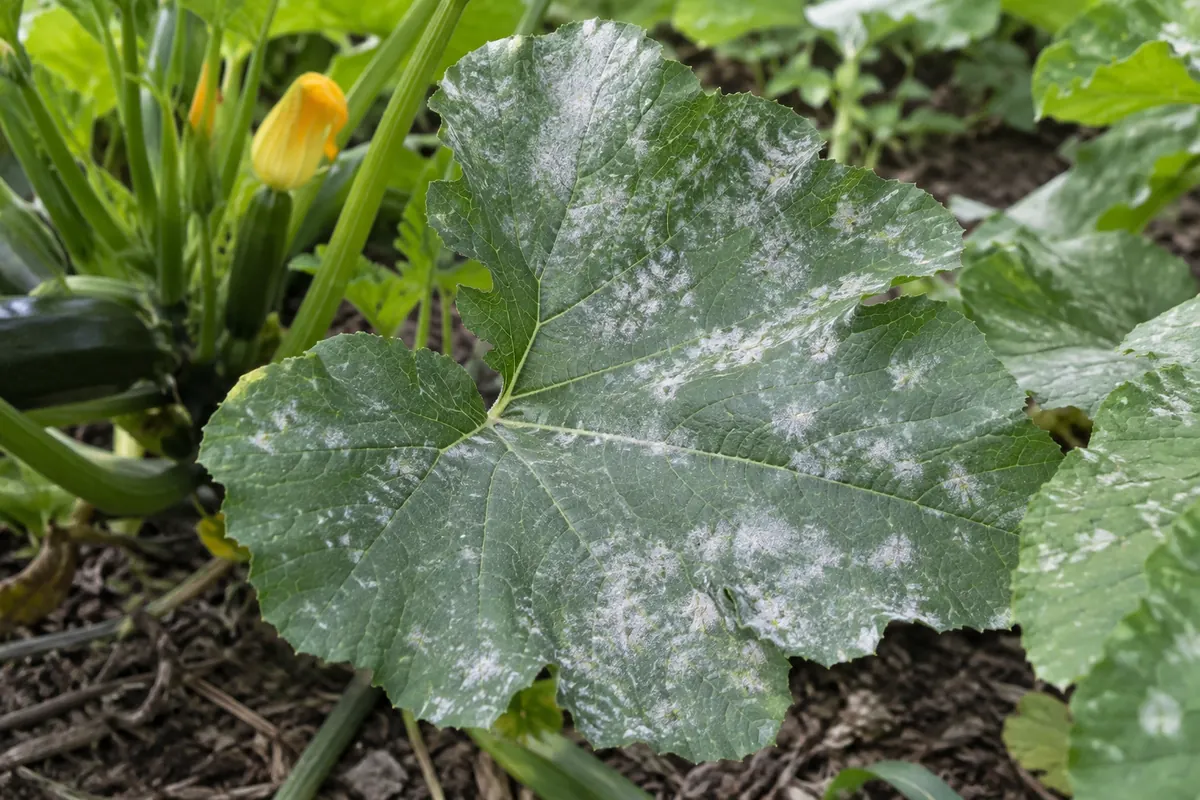
What Is Powdery Mildew?
Powdery mildew is a group of fungal diseases that commonly appear as white or gray powdery growth on leaves or stems. Different fungi affect different hosts, and weather and susceptibility vary. The name alone is not enough to identify the organism or select treatment.
Compare symptoms with host-specific sources such as Oregon State Extension’s home-garden guidance and Utah State Extension’s disease notes.
How to Identify Powdery Mildew
Look for patches of white or gray powdery growth on leaves, stems or buds. Some plants develop yellowing or distorted tissue, but similar symptoms can have other causes. Check both leaf surfaces and the host plant’s Extension guidance; seek a diagnosis when symptoms do not match.
Rule out lookalike leaf symptoms
White material on a leaf is not automatically powdery mildew. Water or mineral deposits may dry into spots, residue from a spray may collect along leaf edges, and downy mildew or other leaf diseases can also produce pale growth. The location of the growth, host species and pattern of tissue injury all matter. Some powdery mildew species grow mainly on the leaf surface, while downy mildew symptoms often appear differently on the underside; a photo alone may not settle the diagnosis.
Inspect a new and an older affected leaf, the underside as well as the top, and nearby plants of the same species. Note whether the coating expands in patches, whether leaves yellow or distort, and whether the problem tracks one plant or an entire bed. Avoid scraping or spraying a sample before photographing it, since that can remove the best evidence. If the plant is valuable, edible or badly affected, send a clear sample or image to a university plant clinic or local Extension service.
Host identity is especially useful because powdery mildew fungi are commonly specialized to a plant species or related host group. A mildew on phlox is not necessarily the same organism affecting squash, and treatment advice for one crop may not apply to another. Utah State Extension notes host-specific differences in its ornamental disease guide; its vegetable powdery mildew guide covers crop scouting and management.
Plants Most Affected by Powdery Mildew
While powdery mildew can affect hundreds of plant species, certain groups are especially vulnerable and deserve close attention:
| Plant Group | Specific Plants | What to verify |
|---|---|---|
| Roses | Hybrid teas, floribundas, old garden roses, climbers | Identify the rose and compare the leaf pattern with a local disease guide. |
| Cucurbits | Zucchini, cucumber, melon, watermelon, pumpkin | Check the crop and leaf surfaces; do not use a calendar date as diagnosis. |
| Grapes | All Vitis vinifera; European varieties are most susceptible | Use grape-specific Extension guidance and local disease pressure. |
| Ornamentals | Zinnia, dahlia, phlox, monarda (bee balm), lilac | Match the ornamental host to its own Extension notes. |
| Vegetables | Peas, occasionally tomatoes, peppers | Confirm the crop; similar white growth may have a different cause. |
| Fruit trees | Apple, peach, nectarine | Use a fruit-specific guide before pruning or applying a fungicide. |
| Ornamental shrubs | Lilac, euonymus, viburnum, photinia | Check the plant and whether symptoms affect appearance or vigor. |
Conditions That Favor Powdery Mildew
Risk varies by host and pathogen. Dense growth, susceptible varieties and site conditions can contribute to disease. Use spacing and pruning guidance for the particular plant rather than generic measurements, and do not infer a mildew diagnosis solely from the weather.
Powdery mildew behaves differently from many fungi that need a film of free water on foliage. Some species can infect under humid or dewy conditions while leaves are not visibly wet, and disease may continue during relatively dry weather after infection. Therefore, the blanket advice to keep leaves dry is not a complete treatment. Irrigation should suit the crop and conserve water, but spacing, host resistance, canopy growth and early scouting are usually more useful parts of a plan.
Young, succulent growth may be especially vulnerable on some hosts. Excess nitrogen can promote that growth, so avoid a fertilizer application that is not supported by a soil test or crop-specific recommendation. Shade, crowding and poor air movement can also change the local canopy environment, but do not thin a plant so aggressively that pruning stress becomes a new problem. Follow the host’s normal spacing and pruning guidance.
Manage powdery mildew by host and severity
There is no single treatment schedule for all plants. First confirm powdery mildew rather than another leaf problem, identify the host and assess how much tissue is affected. Improve spacing and airflow, remove infected leaves when appropriate, and choose resistant cultivars for future plantings.
Baking soda recipes
Unlabeled home mixtures are not a proven cure and may injure foliage. Do not present them as a reliable treatment.
Milk sprays
Evidence and results vary by host and conditions. Do not rely on a homemade milk spray instead of diagnosis and host-specific Extension advice.
Sulfur fungicide
Use only a product labeled for the host and disease. Labels can include temperature and plant-sensitivity restrictions; follow the exact instructions rather than a generic repeat interval.
Other fungicides
Consider a fungicide only when the diagnosis, crop and label support its use. For many home vegetable gardens, cultural management is enough; OSU Extension says pesticide treatment is usually unnecessary for home squash and cucumber gardens. See OSU’s guidance.
Before treating, answer three questions: Is the plant correctly identified? Is the disease confirmed as powdery mildew? Is the amount of damage important for the crop or the gardener’s goal? A late-season coating on an established ornamental may be tolerable, while early infection on a crop with developing leaves or fruit may warrant closer monitoring. Removing a few affected leaves can be reasonable if doing so does not strip the plant; bag and discard material when the local disease guide advises against composting it.
If a labeled fungicide is appropriate, understand its purpose: many products protect healthy tissue rather than restore leaves that are already heavily colonized. Timing, repeat interval and active ingredient depend on the label, host and disease stage. Do not mix products or alternate ingredients based on a generic online schedule. Keep the label, application date and treated plant in your garden notes so you can compare new growth and avoid repeating an ineffective treatment.
How to Prevent Powdery Mildew
Choose varieties with documented resistance where available, follow spacing instructions for the host, and remove affected material when Extension guidance recommends it. Avoid unnecessary nitrogen and keep irrigation suited to the plant. Do not compost diseased foliage unless the local guidance confirms the process will manage it.
At planting time, give susceptible plants the room indicated for their mature size and select a location with the light and air movement suited to that species. During the season, inspect susceptible new growth rather than waiting for a whole plant to turn white. Where a disease has recurred, record the host, cultivar, location and approximate onset. That record can help choose a resistant cultivar or a better site next season; it cannot predict the exact date an infection will appear.
Scout early and review the plant after treatment
Start checking susceptible plants when they begin producing new growth or when local Extension guidance identifies a risk period. Look first at leaves in dense interior growth and at the lower surfaces and young shoots. Repeat inspections after weather or growth changes, and compare new leaves rather than expecting old damaged leaves to recover. A small, dated photo log makes it easier to tell whether disease is spreading.
After sanitation or treatment, record what was removed or applied and follow the label’s re-entry, harvest and repeat directions. Check whether healthy new growth stays clear and whether the host remains vigorous. If symptoms continue to advance, revisit the identification and host-specific recommendation rather than increasing the dose. Extension resources such as Oregon State’s home-garden guidance and USU’s vegetable scouting notes provide useful starting points, but local labels and regional advice govern any treatment.
Choose a response based on host and disease progress
Use three questions to decide what to do next: is the white growth actually powdery mildew, how much healthy tissue remains, and is the plant still producing useful growth or harvest? A few affected leaves on an otherwise vigorous ornamental may call for monitoring and cultural changes, while disease spreading through a vegetable crop near harvest deserves a more specific Extension recommendation. Neither situation justifies an unlabelled household spray.
Start with the plant name and the affected parts. Powdery mildew fungi are host-associated, so a recommendation for one crop may not transfer to a different ornamental or vegetable. Photograph the upper and lower leaf surfaces, stems and nearby plants. Compare the images with a regional diagnostic guide; a wiped-off deposit, spray residue, downy mildew or another leaf spot can look different and need a different response. If the diagnosis remains uncertain, submit a sample using your local Extension service’s instructions.
For an established infection, remove only the tissue that is badly affected or already dying, and avoid pruning so much foliage that the plant loses the leaves it needs. Bag or discard diseased cuttings according to local guidance rather than leaving them beside susceptible plants. Clean tools after work when they have contacted diseased tissue. Continue to inspect new growth; a single cleanup does not guarantee that spores or nearby infected hosts are gone.
Improve the conditions that contribute to disease where the plant and site allow: give susceptible plants their recommended spacing, reduce dense overlapping growth without harming the plant, and choose a sunny, well-ventilated location at the next planting. Water at the soil line when practical to limit unnecessary leaf wetness, but do not treat watering time as a cure: powdery mildew can develop without free water on the leaf surface. Avoid excess nitrogen that drives tender growth, and follow crop-specific fertilizer recommendations.
If considering a fungicide, use only a product whose label lists the exact crop or site and target disease. Check application limits, protective equipment, temperature restrictions, pollinator cautions and any preharvest interval. “Organic” or “natural” products still have labels and can injure plants or non-target organisms. The label’s repeat interval is not interchangeable with a generic online schedule.
Track the disease with dated photos of representative leaves and note weather, host and treatment. If fresh growth remains affected or the disease returns, verify the identification and compare the management advice from USU Extension’s ornamental guidance or its vegetable powdery mildew notes. These are regional references; your state Extension service and the product label should guide a local treatment decision.
Compare powdery mildew treatment options before applying one
Choose a response according to how much of the plant is affected and what the plant is used for. The table is a decision aid, not a treatment prescription; the host species, local disease pressure and product label still determine what is appropriate.
| What you observe | What to do next | What to avoid |
|---|---|---|
| A few powdery patches on a vigorous ornamental | Confirm the diagnosis, improve spacing where practical and monitor new growth | Applying a fungicide automatically or removing most of the plant’s foliage |
| Symptoms spreading on an edible crop | Identify the crop and compare regional Extension advice; check harvest timing | Using an ornamental-only product or ignoring preharvest directions |
| White residue without clear fungal growth | Check whether it wipes away, inspect both leaf surfaces and compare a trusted diagnostic reference | Assuming any white mark is mildew and spraying before identifying it |
| Severe, recurring disease or uncertain host | Photograph symptoms and ask Extension or a diagnostic clinic for confirmation | Increasing concentration, combining products or repeating off-label |
Do not remove healthy growth solely to make a plant look tidy. Cutting away affected leaves can reduce disease-bearing tissue, but excessive pruning reduces the plant’s ability to photosynthesize and may expose tender foliage to sun or heat. Disinfect tools between plants when recommended by local guidance, and collect removed material rather than scattering it through the bed.
Before treating, check whether the plant is under drought, heat, nutrient or root stress. Correcting those conditions supports recovery but does not erase an established infection. Resistant cultivars and suitable spacing can reduce future problems, yet resistance is not identical across species and cultivars. For this reason, a resistant squash variety is not evidence that another squash or ornamental has the same resistance.
When a labeled fungicide is considered, read the full label, including application limits, temperature restrictions, protective equipment and any re-entry or harvest interval. Some products require coverage before infection or may be ineffective once disease is advanced; use the label’s intended timing. If the first labeled use does not help, verify the diagnosis and conditions instead of adding more product.
Frequently Asked Questions
Identify the host and the disease before choosing a treatment. Powdery mildew species are often host-specific, and similar leaf symptoms can have other causes. For home gardens, begin with resistant cultivars, spacing and airflow; remove infected material when the relevant Extension guidance recommends it. OSU Extension says pesticide treatment is usually unnecessary for a home squash or cucumber garden and advises against composting diseased debris. See OSU’s home-garden guidance and USU’s disease notes.