

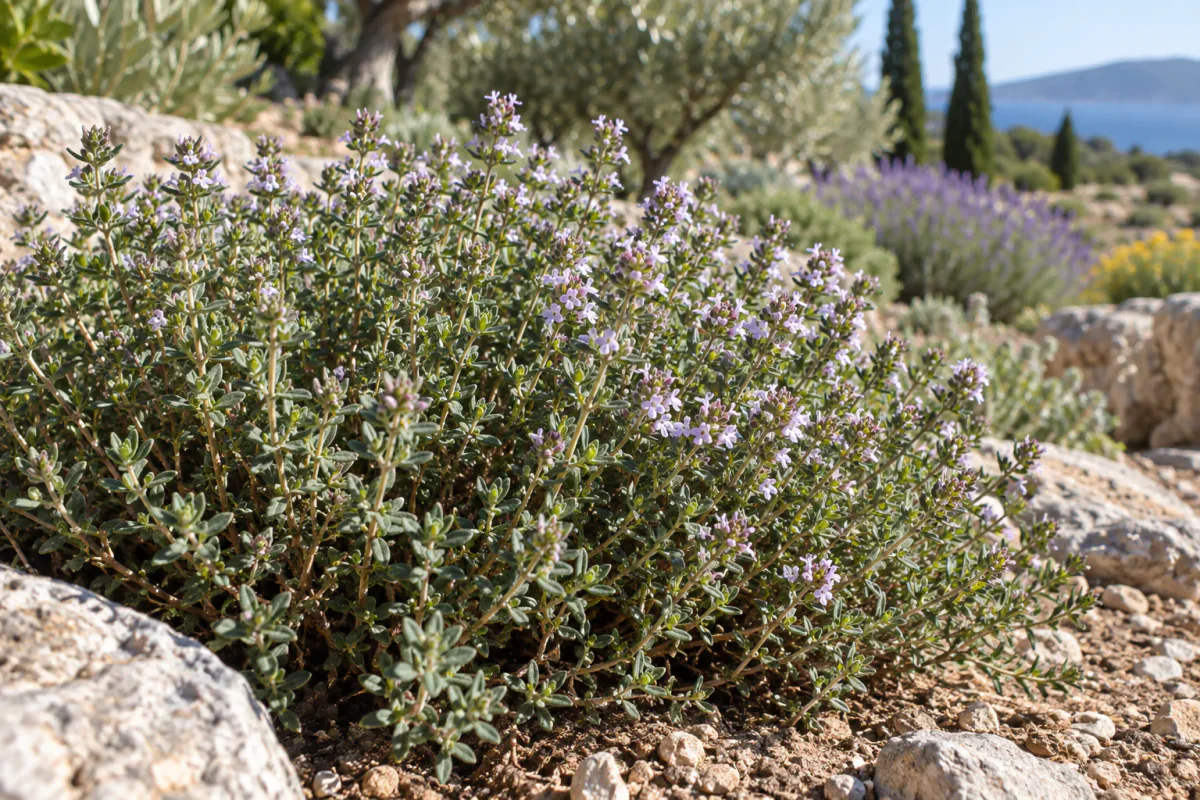
Plant thyme in sun and draining soil
Choose a position with good light and avoid a site that stays soggy. In containers, use a pot with drainage holes and a loose potting mix; do not leave water standing in a saucer. Illinois Extension’s thyme guide notes that poor drainage, particularly in winter, can shorten a thyme plant’s useful life. Container plants may need different checks from plants in a garden bed.
Water based on soil moisture and weather rather than a weekly calendar. If growth becomes sparse, inspect the light, drainage and age of the plant before feeding it. Different cultivars can vary in height, spread, flavor and cold tolerance.
Harvest leaves and stems
Use clean scissors to cut healthy leafy stems. Illinois Extension suggests harvesting stems through the season and notes that leaves are often cut before flowering for drying. Wash and dry herbs using a method suitable for food preparation, then store them in a clean, labeled container. Do not remove so much growth that a young or stressed plant cannot recover.
Refresh an older plant
Woody stems and a thinning center can indicate that a thyme plant needs renewal, but severe pruning is not appropriate for every cultivar or climate. Follow regional guidance for the variety and take a few healthy cuttings as a backup before making major changes. Compare its needs with rosemary and our aromatic herb guide.
Select a thyme type for cooking or ground cover
Thyme is a group of culinary and ornamental plants rather than one uniform plant. Common thyme is used for cooking, while lemon-scented and creeping forms may have different flavors, heights and habits. Read the botanical and cultivar names on the label and check the intended use before buying; a decorative ground cover may not behave like an upright kitchen herb.
Compare mature spread with the space between paving, stones or neighboring plants. Low-growing types can spill over edges, while upright forms need room for stems and airflow. Illinois Extension describes common thyme as a low-growing perennial and lists several culinary and ornamental types, which is a useful reminder to choose by both habit and purpose.
Plant thyme where winter drainage will work
Choose a sunny site where water does not collect after rain. In a garden bed, observe the area when wet before planting and avoid a low spot that remains saturated. In a container, use an open drainage hole and a loose potting medium, then make sure the pot can drain freely after watering. Poor drainage, especially during winter, can shorten the life of thyme.
Space plants according to the label so they have room to spread and air can move through the foliage. Do not use a rich, water-retentive mix simply to make the plant grow faster. Once established, thyme generally suits a lower-input herb bed better than a position that is irrigated as frequently as leafy annual herbs.
Water thyme according to the root zone
Check the soil or potting mix before watering. A newly planted thyme needs monitoring while it establishes, while an established plant in a suitable bed may need less frequent attention. Container plants dry faster in heat and wind, so inspect them more often. Water at the soil line and allow excess to drain instead of keeping the pot continuously wet.
If the plant looks wilted, distinguish dry soil from damaged roots. A saturated mix can produce symptoms that look like drought because injured roots cannot take up water normally. Check drainage, smell the root zone if the plant is declining, and avoid adding fertilizer before correcting persistent wetness. Adjust watering with rainfall and temperature rather than a weekly calendar.
Harvest thyme for fresh use or drying
Cut healthy leafy stems with clean scissors, taking only a portion of the plant so it can continue to grow. Illinois Extension notes that stems may be harvested through the season and are often cut just before flowering for drying. That timing is a useful option, not a rule that every thyme must follow; harvest according to the intended use and the plant’s condition.
Keep culinary and ornamental thyme labeled
Thyme varieties can differ in flavor and form. Write the plant name on a stake after planting so you know which stems are intended for cooking and which are ornamental. If the label is lost, identify the variety before relying on a culinary use. Keep the growing area clean and avoid any treatment that is not labeled for edible herbs.
For drying, remove damaged material, use small bunches or an appropriate dehydrator, and allow air to circulate. When the leaves are dry, strip or crumble them according to the storage method and keep them in a clean, labeled container away from light and moisture. Fresh and dried thyme have different intensity, so start with less dried herb when substituting it in a recipe.
Renew woody thyme without removing all living growth
Older thyme can become woody and open in the center. Lightly trim healthy leafy stems after flowering or harvest to keep the outline compact, but avoid repeatedly cutting into bare wood without knowing how the variety responds. Illinois Extension recommends renewal of older plants and describes severe spring cutting as one approach for common thyme; local climate and cultivar should guide whether to use that method.
Trim a container plant without cutting into bare wood
A potted thyme may need a light trim to keep it within the container, but repeated deep cuts can leave little living growth. Use clean scissors to remove leafy tips and monitor new shoots. If the plant is too woody or crowded, division or replacement may be better than severe pruning. Check drainage before repotting so the same problem does not continue.
If the plant has little fresh growth, divide or replace it instead of forcing recovery from a declining woody base. Take a few healthy shoots for culinary use, then inspect the root area for crowding and poor drainage. For creeping thyme, preserve the spreading edge unless it is entering a path. Clean tools after removing diseased or dead stems.
Propagate thyme by division or cuttings
Thyme can be started from seed, division or stem cuttings, but the best route depends on the species and whether you want to preserve a named cultivar. Division can renew a vigorous clump; separate pieces that have their own healthy roots and leafy growth. Replant promptly and water the root zone as the plant settles.
For a cutting, select healthy green growth, use a clean tool and keep the propagation medium lightly moist. Label the new plant and keep it out of harsh sun until it is established. Do not distribute cuttings from a plant with unexplained discoloration or pests. If seed is used, expect variation in some forms; check the seed packet for its identity and growing conditions.
Grow thyme indoors only where light is strong
A pot of thyme can be brought indoors for winter if the plant and climate suit it, but an ordinary dim room may not provide enough light. Illinois Extension advises a bright, sunny location, a well-drained pot and keeping the mix on the dry side. If stems become long and pale, reassess light before increasing fertilizer.
Use a container with drainage and rotate it if growth leans toward the window. Indoor air can be dry, yet frequent watering is not a reliable fix for dry air; check the potting mix and root health. Keep the plant away from drafts and excessive heat from radiators. Inspect it for pests before placing it near other houseplants.
Troubleshoot a thyme plant that is thinning
Sparse growth can reflect shade, old age, wet roots, crowding or a variety that naturally forms a low mat. Check the label, recent weather and the condition of the stems. If the foliage is healthy at the tips but bare in the center, consider whether the plant needs renewal or division. If the root zone smells sour or stays wet, address drainage first.
Remove dead leaves and weeds that restrict airflow, then correct one likely cause at a time. Do not assume that a yellow leaf means the plant needs feed; excess nutrients and moisture can worsen a poor site. If damage spreads or unusual marks appear, take a clear sample or photograph to a local extension service for diagnosis.
Plan thyme care through the seasons
At planting, identify the variety and choose a sunny, well-drained position. During active growth, pick lightly and watch new stems for signs that the plant is spreading beyond its intended space. In wet weather, avoid adding water to an already saturated bed and remove weeds that shade low-growing thyme.
After flowering or a major harvest, shape the plant with a light trim if it remains leafy and healthy. Review older plants in spring and decide whether to divide, renew or replace them. For a compact herb setup with compatible sun and watering requirements, compare thyme with rosemary and mint in our aromatic plants guide.
Use thyme in a pot without hiding drainage
Choose a container with one or more open drainage holes and position it where runoff can escape. A gravel layer inside a pot does not replace an opening at its base. If you want to protect a deck, use feet or a saucer that can be emptied, and lift the pot after heavy rain to confirm it is not holding water. Small containers dry sooner, so inspect them more often in hot weather.
Let flowering fit the purpose of the plant
Thyme flowers are part of the plant’s normal seasonal cycle. If you grow it for foliage, you can harvest stems before flowering when that timing suits your use; if you value flowers or a low ornamental edge, leave some stems to bloom. Observe the variety rather than assuming all thyme grows or flowers at the same pace. Keep the planting labeled when culinary and ornamental forms share a bed.
Preserve a harvest with clean, dry storage
For drying, cut healthy stems and arrange them so air can move around the material. Follow food-safety guidance for the chosen drying method, then store fully dry leaves in a clean, sealed container away from moisture and heat. Label the variety and date. If herbs are not fully dry, condensation can form in storage, so check the container and discard material that becomes damp or moldy.
Know when to divide or replace thyme
An old plant may thin because it is woody, crowded or growing in unsuitable wet soil. If healthy shoots remain, division can renew the patch; if the crown and roots are failing, replacing the plant in a better-drained position may be more effective. Do not keep adding fertilizer to a declining thyme without checking drainage, light and root condition first.
Use a quick check before replacing the plant
Before discarding thinning thyme, inspect the center, the soil surface and the drainage holes. A woody middle with healthy green tips may call for careful renewal or division, while soft dark stems and a persistently wet root zone point to a different problem. Check whether nearby plants or a pot saucer are keeping the base damp. If only one section has declined, remove dead material with clean shears and observe the remaining growth before feeding. Do not cut into bare old wood unless the plant has visible live buds there. The University of Illinois thyme guide notes the importance of drainage and periodic renewal; use it alongside your local winter conditions when deciding whether to refresh or replace a plant.