

Choose a bright, well-drained site
Give rosemary strong light and soil or potting mix that drains freely. In containers, use a pot with drainage holes and avoid leaving water in the saucer. Penn State Extension lists rosemary among herbs that need direct sun indoors and recommends allowing the mix to dry slightly between waterings in its indoor herb guide. Adjust for your climate and the plant’s actual conditions rather than following a fixed schedule.
Check the cultivar and your local winter conditions before planting in the ground. A plant that overwinters in one region may need a sheltered position or a movable container elsewhere. If you move it indoors, acclimate it gradually and provide the brightest available location.
Harvest and prune carefully
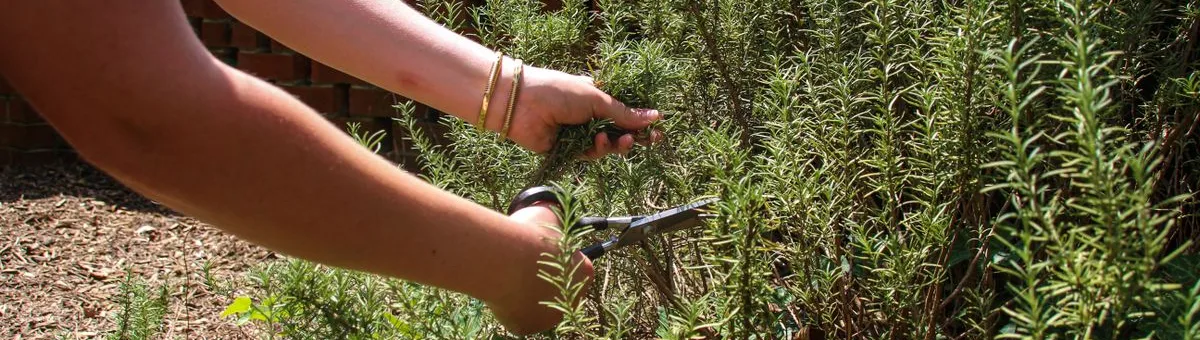
Snip small amounts of healthy leafy growth with clean scissors. Avoid cutting back into old bare wood unless reliable local guidance for your plant supports that cut; many woody herbs do not recover well from severe pruning. Remove damaged stems and maintain airflow around the plant. Illinois Extension describes rosemary as a woody perennial and notes that indoor plants can decline where humidity is low; see its herb growing notes.
Troubleshoot leaf and root problems
Yellowing or soft stems can have several causes, including excess moisture, low light, root problems or temperature stress. Check the drainage opening and roots before adding fertilizer. If the plant is healthy but growing slowly indoors, first assess light and season. For related crops, see our profiles of thyme and mint.
Choose rosemary for the climate and growing space
Rosemary is an evergreen woody herb, now botanically named Salvia rosmarinus. Upright forms suit a border or a pot that can be moved; trailing forms are often grown over a wall or in a container. Nursery labels may describe different habits and cold tolerances, so check the cultivar name and expected mature dimensions before planting. Do not assume a generic rosemary will fit every climate.
In a cold or wet-winter region, a container gives you more control over exposure, but it also means roots can chill and dry more quickly than roots in the ground. In a mild climate with well-drained soil, rosemary may grow as a long-lived shrub. Compare the nursery guidance with local climate advice before committing a plant to a permanent bed.
Grow rosemary in a container with dependable drainage
Select a pot with open drainage holes and a medium that does not stay saturated. The container should be large enough for the root ball and stable enough to support the shrub as it becomes taller. Avoid choosing an oversized decorative planter that holds a large volume of wet mix around a small root system. If you use an outer cover pot, lift the nursery pot after watering and empty trapped runoff.
Place the container where the plant can receive strong light and good air movement. On a balcony, protect it from persistent cold wind while avoiding a dark indoor corner. Repot only when roots fill the container or the mix has broken down; move up gradually and avoid burying the woody stem deeper than it was growing before.
Water rosemary according to roots and weather
Rosemary needs drainage more than a fixed watering schedule. Check moisture below the surface because a dry-looking top layer can hide a damp root zone. In a container, water deeply enough to wet the root ball, then let excess drain; in the ground, water newly planted shrubs while they establish and reassess after rain or heat.
Persistent wetness can be more damaging than a brief dry interval for a plant in unsuitable soil. If leaves turn yellow and stems weaken, check whether the pot drains and whether the root zone stays wet. Do not respond automatically with fertilizer. Penn State Extension’s indoor herb guidance describes rosemary as needing strong light and a mix allowed to dry somewhat between waterings; conditions outdoors and by region still require adjustment.
Harvest rosemary in small, clean cuts
Use clean scissors to snip a few leafy tips from different parts of the plant. Leave enough green growth on each stem for the shrub to continue photosynthesizing, and avoid taking so much at once that the plant loses its shape. If you grow rosemary for cooking, cut only what you need and wash it before use when appropriate.
To dry sprigs, remove damaged material and follow food-preservation guidance for herbs. Store fully dried leaves in a clean, labeled, airtight container away from heat and light. The aroma and texture differ between fresh and dried leaves, so use the form that fits the recipe. Never use a garden treatment on an edible plant unless the label permits the crop and explains safe harvest timing.
Prune rosemary without cutting back blindly
Lightly trim soft, leafy tips to shape the plant or collect sprigs. Remove dead, broken or crossing stems with clean tools, making cuts back to a healthy branch. Avoid cutting deep into old bare wood unless advice for the cultivar and climate specifically supports it; many woody plants replace leafy shoots more readily from living growth than from a leafless stump.
If a rosemary shrub has become too large for the space, repeated hard pruning is not a substitute for choosing a better location or a more compact cultivar. Prune after considering the local flowering and growth cycle, and keep enough foliage for recovery. For a container specimen, selective tip pruning can keep the canopy balanced while allowing air and light into the center.
Propagate rosemary from a healthy parent plant
Rosemary is commonly propagated from stem cuttings, though success varies with the timing, cultivar and growing conditions. Take a healthy, non-flowering shoot using clean scissors, remove leaves from the part that will sit in the medium, and place it in a clean propagation mix. Keep the medium lightly moist rather than soaked and give the cutting bright, indirect light while it establishes.
Keep new cuttings separate from established plants until they show steady growth. Label the variety so you know its habit and source, and do not propagate a plant that has unexplained decline or visible pests. Seed-grown plants may not reproduce the exact traits of a named cultivar, so choose the propagation method based on whether uniform habit or simply a new herb plant matters to you.
Use leaf changes as clues, not as a diagnosis
Pale foliage, blackened tips, leaf drop and weak stems can follow stress from low light, root damage, temperature swings or poor drainage. Inspect the whole plant and the growing medium. Check whether only one branch is affected, whether the problem appeared after a move, and whether the roots are firm or soft. A single symptom rarely identifies one cause.
Remove dead material, improve drainage or light when appropriate, and avoid changing several conditions at once. If a pest is visible, identify it before choosing a treatment. Do not spray an edible herb with a product unless its label explicitly allows use on that crop. If a plant continues to decline, compare the conditions with local extension advice and the cultivar information rather than escalating feeding.
Prepare rosemary for the local winter
Rosemary’s ability to survive outdoors depends on cultivar, exposure, soil drainage and the severity and duration of cold. A sheltered wall may reduce wind exposure, but it does not change the plant’s underlying hardiness. Check local guidance and the nursery label before choosing a permanent planting site or assuming that a container will stay outside year-round.
Protect container roots during a cold spell
A pot sitting on paving or a balcony is exposed to colder air on more sides than a shrub in the ground. Follow local advice for the cultivar and avoid moving a dormant rosemary into a warm, dim room. If protection is needed, choose a sheltered, bright place that still allows drainage and airflow. Check the root ball during dry winter weather as well as after rain.
Before moving a potted rosemary indoors, inspect for pests and bring it in gradually when practical. Choose the brightest available location and keep it away from hot, dry air from heaters. Reduce watering only as the plant’s growth and mix require; do not let the root ball become bone dry. In spring, reacclimate it to outdoor conditions over time. See our aromatic plants guide to compare rosemary with mint and thyme.
Place rosemary beside herbs with compatible needs
Rosemary can share a sunny herb area with plants that also prefer good drainage, but it should not be forced into a potting arrangement with species that need constantly moist soil. Group pots by watering needs rather than by appearance alone. A separate container makes it easier to move rosemary for winter and to avoid disturbing roots when other herbs are renewed.
Leave space for mature growth and airflow, and label the plants so culinary herbs are not confused with ornamentals. A small herb collection can use separate pots along one bright path; this also makes it easier to inspect each plant for stress. For a broader plan covering container and bed herbs, follow the aromatic plants guide.
Help a newly planted rosemary establish
After planting, water the root ball and surrounding soil so the transition between nursery mix and garden soil does not remain dry. Check the moisture again before watering; the schedule depends on rainfall, soil and exposure. Keep competing weeds away from the base while leaving the woody stem visible. Avoid strong feeding immediately after transplanting unless the label or local guidance calls for it.
Expect seasonal flowers without changing the care plan
Established rosemary may produce small flowers, but timing and amount vary with cultivar and climate. Flowers do not mean the plant has stopped being useful as a culinary herb. If you want to collect sprigs, take modest cuts from healthy growth and leave enough foliage for recovery. Do not prune heavily just to remove every flower unless the plant’s shape or health requires attention.
Respond to prolonged rain and wet soil
After a rainy spell, inspect containers and low areas for standing water. Clear blocked drainage holes and move a pot under shelter only if it can still receive suitable light and airflow. In a bed that stays waterlogged, adding more fertilizer is unlikely to solve the root problem; consider whether a raised position or a better-drained planting site is needed for a future replacement.
Keep the cultivar label with the plant
Save the nursery label or record the botanical name, cultivar, purchase date and local planting location. That information helps you compare growth and check winter guidance for the exact plant rather than for rosemary in general. If a label gives only a common name, ask the nursery for the cultivar and expected habit before using the plant for a hedge, container display or exposed border.
Keep a short care record
When a rosemary plant struggles, a brief record is more useful than changing several conditions at once. Note the cultivar if known, the hours of direct light, recent rain or watering, and whether the pot drains freely. Also record when you last pruned or repotted it. Compare new growth over the following weeks rather than judging recovery from older brown stems, which may not turn green again. If the plant is indoors, note how far it sits from the window and whether the room becomes warm and dry. This helps separate low light, persistently wet roots and normal seasonal change. Penn State’s indoor herb guidance also stresses strong light and drainage for Mediterranean herbs.